창립자에게 문의하기
아직도 궁금한 점이 있으신가요?
저희 창립자와 직접 연결하세요. 가격이든 기술적인 세부 사항이든 명확한 답변을 받고, 첫 주문을 위한 독점 ‘창립자 보너스’도 받아보세요.




900명 이상의 만족 고객
🏆 1,000건 이상의 맞춤 프로젝트를 성공적으로 납품했습니다.

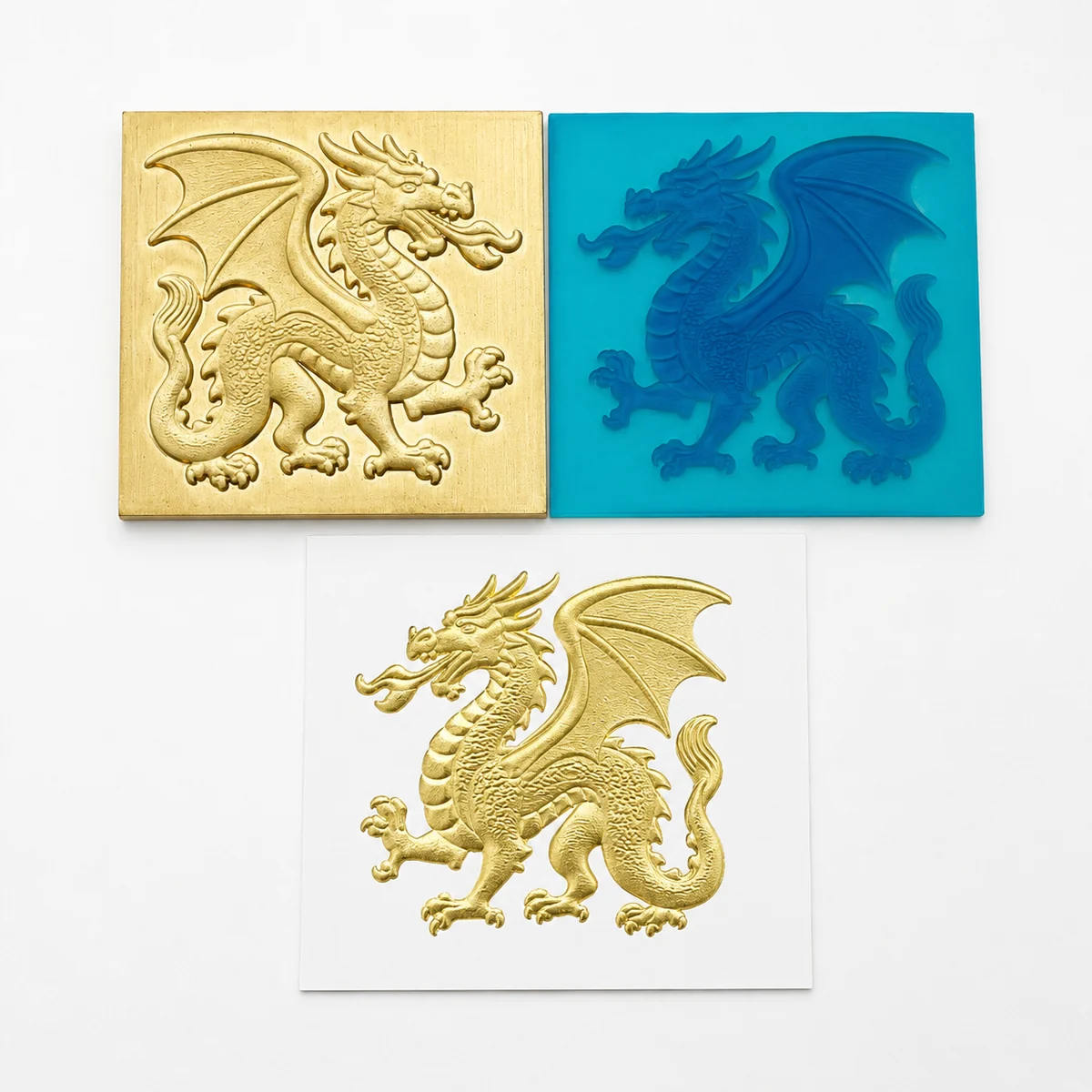
We tested 3D embossed foil stamping on paper with a 3T pneumatic hydraulic hot stamping machine and a 3D relief die at 90°C, 100°C, 110°C, and 120°C. The best result came at 110°C for 2 seconds, with full foil transfer, clear relief depth, sharp edges, strong metallic gloss, and lower risk of paper damage.
What is the best temperature for 3D embossed foil stamping on paper? In the documented ZHENGFEI test, the best reference result came from 110°C for 2 seconds using a 3T pneumatic hydraulic hot stamping machine, a 3D relief die, 및 paper.
The test compared 90°C, 100°C, 110°C, and 120°C. At 90°C, foil transfer was weak and the embossed relief was not obvious enough. At 100°C, the metallic gloss and relief outline improved, but some larger designs or fine text could still show slight missing foil. At 110°C, the foil released fully, the relief depth became clearer, the edges stayed sharp, and the paper surface remained stable. At 120°C, foil transfer was strong, but the risk of edge spread, duller fine details, deeper pressure marks, and slight paper deformation increased.
This article is for packaging production managers, print finishing factories, invitation card suppliers, book cover producers, wine box manufacturers, cosmetics packaging suppliers, and luxury paper packaging brands that need raised metallic logos, decorative patterns, or high-end embossed foil effects on paper.
For the tested combination of 3T pneumatic hydraulic hot stamping machine, 3D relief die, and paper, start with:
| Process item | Documented test reference |
|---|---|
| 기계 | 3T pneumatic hydraulic hot stamping machine |
| Mold | 3D relief die |
| 재료 | Paper |
| Temperature comparison | 90°C, 100°C, 110°C, 120°C |
| Recommended reference | , PU 표면이 너무 부드러워지고 가장자리가 흐릿해졌습니다. |
| Dwell time at recommended setting | 2 seconds |
| Best observed balance | Full foil transfer, clear relief depth, sharp edges, stable paper surface |
| Main high-temperature risks | Edge spread, dull details, pressure marks, paper deformation |
Use 110°C for 2 seconds as the first sampling point when your paper, foil, relief depth, and die structure are similar. If foil transfer is incomplete, check pressure, foil type, die contact, and paper surface before increasing temperature. If the paper shows marks, edge spread, or deformation, reduce heat, reduce pressure, or shorten dwell time.
For regular flat foil stamping on paper, compare our related test on foil stamping on paper and napkins. For coated envelopes, see the pearl paper foil stamping temperature test.
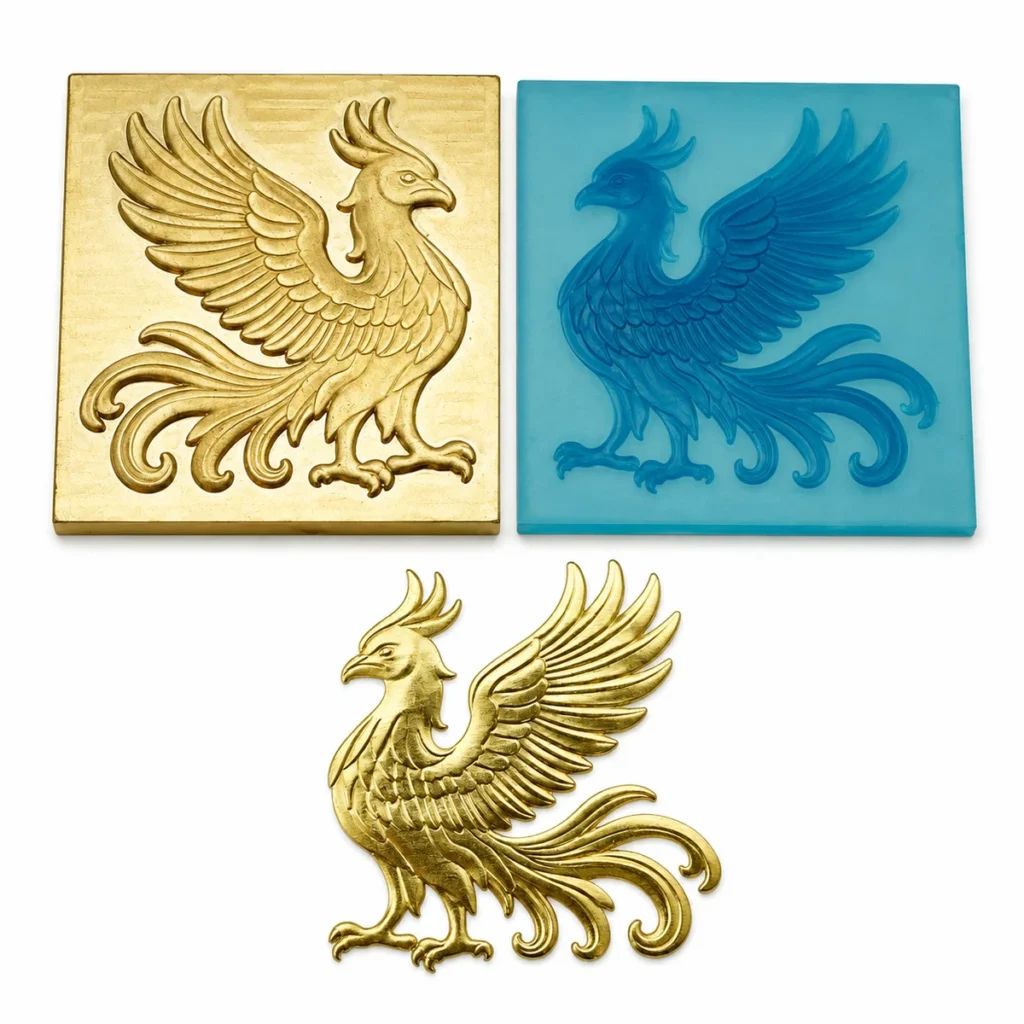
3D embossed foil stamping combines hot foil transfer with a raised or recessed relief effect. Instead of only placing a flat metallic layer on paper, the process uses heat, pressure, foil, and a 3D relief die to create both metallic color and physical depth.
This gives the printed piece a more dimensional look. Logos, monograms, decorative frames, product names, and luxury packaging patterns can appear raised, layered, and more tactile. This effect is used on premium boxes, invitation cards, book covers, wine packaging, cosmetics packaging, luxury gift boxes, and boutique printed products.
The general embossing concept is explained in this reference on embossing in manufacturing. The foil transfer side of the process is related to hot stamping, where heat and pressure transfer a decorative foil layer onto a substrate.
The material still matters. Paper can compress, mark, deform, or lose detail when pressure and heat are not balanced. That is why 3D embossed foil stamping must be tested on the real paper stock, not only on a generic sample.
A 3D relief die does more than transfer foil. It must also press shape into the paper. That means the process must balance three goals at the same time:
This is why 3D embossed foil stamping is more sensitive than ordinary flat foil stamping. A flat foil mark may look acceptable when the foil is complete, but a 3D relief mark also needs depth, contour, and clean transitions between raised and recessed areas.
If temperature is too low, the foil may not fully release, and the relief may look weak. If temperature is too high, the foil may transfer strongly, but fine details can become less sharp. Excessive heat can also increase pressure marks or slight deformation on the paper surface.
For tooling, the die structure is critical. You can review ZHENGFEI’s 3D relief brass hot stamping dies 및 포괄적인 워크플로우 솔루션을 위한 승화 인쇄 서비스에 대해 알아보십시오. when planning raised metallic logos or packaging details.
The report identifies the following process:
The test evaluated both the foil effect and the embossed relief effect. The main judging points were:
This matters for real packaging. A premium box or invitation card must look clean under close viewing. If the relief is weak, the product looks ordinary. If the foil spreads or the paper marks too deeply, the premium effect is lost.
If your design is still in artwork preparation, review custom brass stamp artwork file requirements 및 solid-area design rules for a foil stamp before making the die.
The following summary follows the original paper 3D relief foil stamping test report.
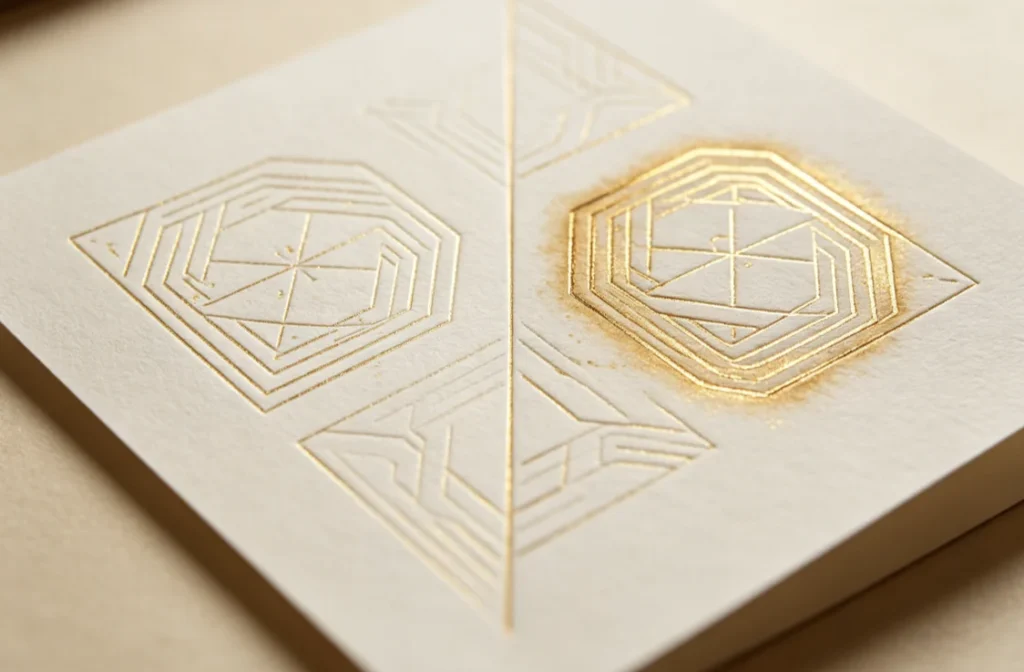
| 온도 | Observed transfer and relief behavior | Surface and production judgment |
|---|---|---|
| , 호일 전이가 약하고 얼룩이 있었습니다. 110°C에서 | Foil adhesive activation was insufficient. Missing foil, broken lines, weak gloss, and weak 3D relief were more likely. | Too low for production |
| 초대장, 포장 카드, 명함, 책 표지 또는 소형 종이 제품을 만드는 고객에게는 | Foil transfer improved, gloss increased, and relief contour became clearer, but larger designs or fine text could still show slight missing foil. | Better, but not the best setting |
| , PU 표면이 너무 부드러워지고 가장자리가 흐릿해졌습니다. | Foil released fully, metallic gloss was full, edges were sharp, details were clear, and relief depth looked natural and stable. | Best reference in this test |
| 가죽을 손상으로부터 보호하세요: 120℃에서 화상 및 재료 변형이 발생하며, 이는 우리 공장에서 테스트한 매개변수가 귀하의 프로젝트를 안전하게 유지한다는 것을 증명합니다. | Foil transfer remained strong, but paper heat exposure increased. Edge spread, dull details, pressure marks, and slight deformation became higher risks. | Not recommended as a long-run default |
At 90°C, the foil adhesive layer was not activated enough. The metallic layer did not transfer completely, so small text, thin lines, and detailed areas could show missing foil, broken lines, or a pale appearance.
The 3D relief effect was also not strong enough. Although the paper was less likely to show heat damage at this lower temperature, the finished effect lacked the metallic brightness and dimensional depth needed for premium packaging.
For this test, 90°C is not suitable as a formal production parameter.
At 100°C, the foil transfer became more stable. Most of the pattern could appear, metallic gloss improved, and the relief contour became clearer than at 90°C.
However, the report notes that larger areas or fine text could still show slight missing foil. This means 100°C may work for simpler artwork, but it did not provide the best balance for 3D embossed foil stamping.
If a project has detailed branding, small letters, or decorative textures, 100°C may still leave too much quality risk.
에서 110°C for 2 seconds, the foil released sufficiently and attached evenly to the paper surface. The edges were sharp, the details were clear, and the metallic gloss looked full and natural.
The 3D relief die also produced a more obvious dimensional effect. The raised and recessed areas looked more complete, the relief height was more even, and the final result had a stronger premium packaging feel.
Just as important, the paper surface remained stable. The report notes that this setting did not cause obvious heat damage. The paper stayed relatively flat, and the relief effect remained clean rather than crushed or distorted.
For this tested combination, 110°C / 2 seconds is the best starting reference for batch sampling.
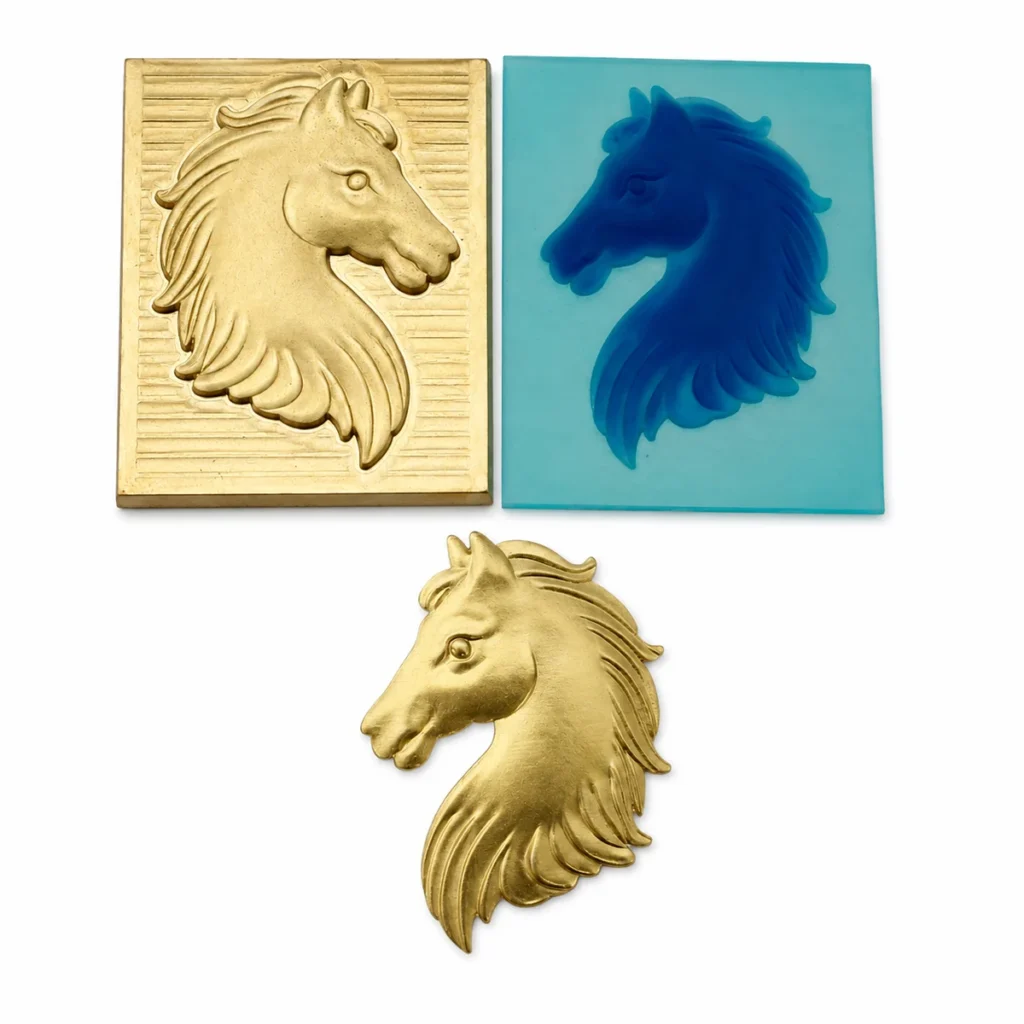
At 120°C, the foil could still transfer completely and the metallic gloss remained strong. However, the higher temperature increased heat exposure on the paper.
The report warns that edges may spread slightly, fine text or complex textures may become less sharp, and relief edges may lose clarity. Continued production at this higher temperature may also increase pressure marks or slight paper deformation.
This is a common finishing problem: a higher temperature can make foil coverage stronger, but it can reduce precision. For 3D embossed foil stamping, detail and relief quality matter as much as foil coverage.
Use 110°C / 2 seconds as a reference point for similar paper, foil, and 3D relief die combinations. Then adjust based on the actual stock and die structure.
Different papers respond differently to heat and pressure. Before sampling, record:
A flat sheet test may not behave the same as the final folded package. If the final product has seams or layered areas, test the real structure.
The die must be clean and sharply made. Dust, paper fiber, foil residue, or worn relief details can reduce sharpness.
확인:
If the die is too large for the machine pressure or the artwork has heavy solid areas, temperature adjustment alone will not solve the problem. Consider revising the design or tooling.
For a similar paper and foil combination, start at 110°C and 2 seconds. Test both fine details and larger design areas.
The sample should be checked for:
If the foil is missing and the relief is weak, temperature may be too low, pressure may be too light, or the foil may not match the paper surface. Check pressure and die contact before increasing temperature.
If edges spread or the paper shows marks, reduce temperature or pressure first. Long dwell time can also increase heat damage, so avoid extending time without a clear reason.
For a practical explanation of process interaction, read our hot stamping temperature, pressure, and time guide.
| Defect | Likely cause | First checks |
|---|---|---|
| Missing foil | Temperature too low, pressure too weak, foil mismatch, poor die contact | Check foil, pressure, and die cleanliness before raising heat |
| Weak relief depth | Insufficient pressure, short dwell time, shallow die, paper too stiff | Check die depth, paper stock, and machine pressure |
| Blurry relief edges | Temperature too high, pressure too heavy, paper compression too strong | Reduce heat or pressure and inspect die details |
| Edge spread | Overheating, excessive pressure, aggressive foil release | Reduce temperature or pressure |
| Fine text looks dull | High heat, worn die, artwork too fine | Lower heat and review artwork line weight |
| Paper pressure marks | Pressure too high or backing support unsuitable | Adjust pressure and use proper support board |
| Paper deformation | Excessive heat, dwell time, or pressure | Lower temperature, shorten time, and test another paper stock |
| Foil peeling | Weak adhesion, wrong foil, insufficient heat, surface mismatch | Test a better foil and verify the 110°C range |
If your issue is only poor embossing clarity without foil transfer, read why a paper embosser is not making a clear impression. If you need to decide whether to pre-emboss first, read do you need to pre-emboss before foil stamping.
For broader process comparison, see embossing vs foil stamping vs heat branding.
Good 3D embossed foil stamping begins before production. Artwork and die design strongly affect the result.
Check these design points before making the die:
If the design has large solid areas, review how much solid area a brass foil stamp can have. If the artwork file is not ready, use the custom brass stamp artwork file requirements checklist.
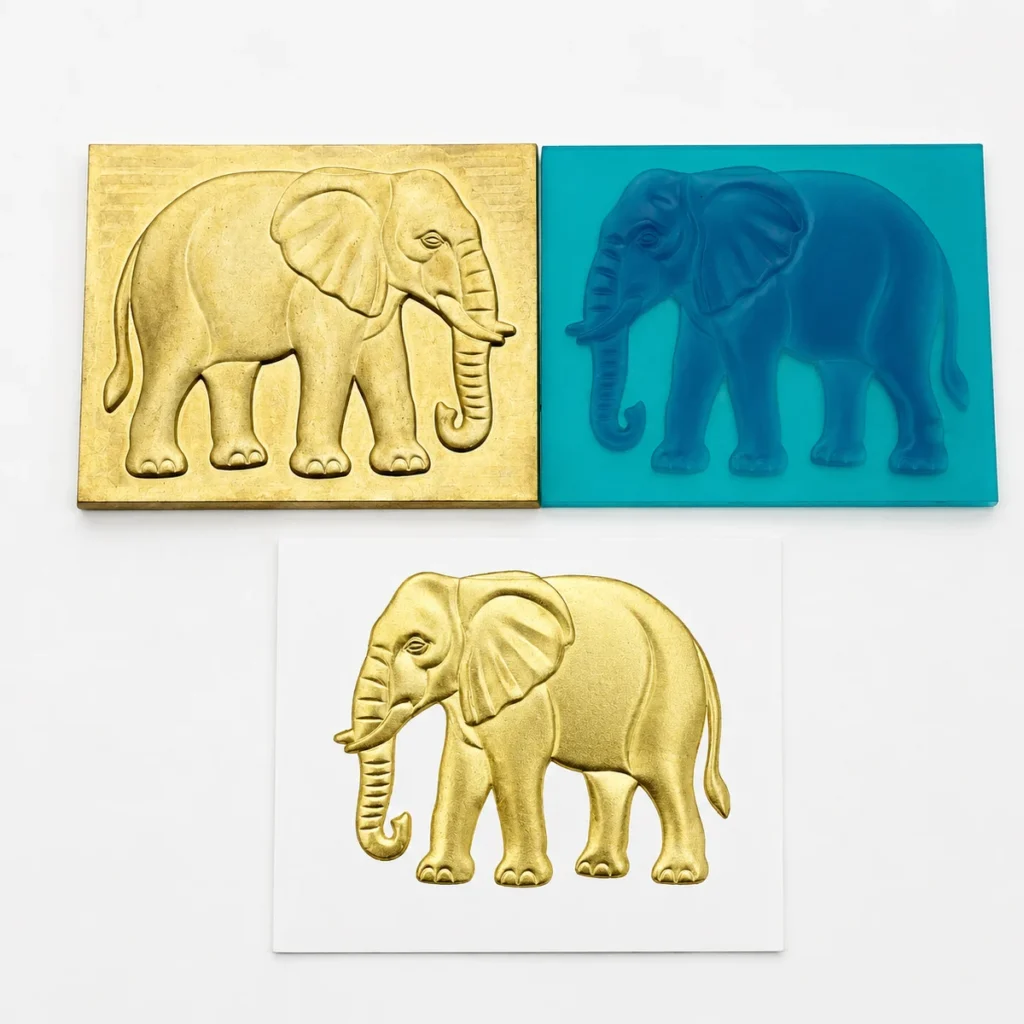
The source test used a 3T pneumatic hydraulic hot stamping machine. At the time of this article draft, the ZHENGFEI sitemap does not show a dedicated live product page for that exact 3T model, so the schema related product should use the 3D relief brass hot stamping dies product page.
For machine comparison and production planning, you can also review:
When selecting a machine for 3D embossed foil stamping on paper, compare:
The right machine must provide enough pressure for the 3D relief die while keeping heat and time stable across the full design area.
Continue the material and process test series with:
For a project-specific paper test, 3D relief die review, machine recommendation, or packaging sample plan, contact ZHENGFEI.
In the documented ZHENGFEI test, 110°C was the best reference temperature for 3D embossed foil stamping on paper. The recommended condition was 110°C for 2 seconds using a 3T pneumatic hydraulic hot stamping machine and 3D relief die.
At 120°C, foil transfer remained strong, but paper heat exposure increased. The test report notes higher risk of edge spread, less sharp fine details, pressure marks, and slight deformation. At 110°C, foil transfer, relief depth, edge clarity, and paper stability were better balanced.
No. Use 110°C / 2 seconds as a starting reference, not a universal rule. Paper type, paper weight, coating, foil model, die depth, pressure, and final product structure can all change the best setting.
Weak relief can come from low pressure, low temperature, short dwell time, shallow die design, stiff paper, or poor backing support. Check die depth and pressure before increasing temperature.
Edge spread is often caused by excessive temperature, excessive pressure, aggressive foil release, or artwork that is too fine for the die and paper combination. Reducing heat or pressure can help restore sharper edges.
Not always. A matched 3D relief foil stamping setup can create relief and foil transfer in one process. However, some difficult papers or complex designs may benefit from a separate pre-embossing step. Test both workflows when the project requires very deep relief or very fine details.
For the tested combination of 3T pneumatic hydraulic hot stamping machine + 3D relief die + paper, the best 3D embossed foil stamping temperature was 110°C for 2 seconds.
At 90°C, foil transfer and relief depth were weak. At 100°C, the result improved but still did not fully balance large areas and fine details. At 110°C, foil transfer was complete, edges were sharp, details were clear, metallic gloss was full, and the paper surface remained stable. At 120°C, transfer remained strong, but edge spread, dull details, pressure marks, and deformation risk increased.
Use 110°C / 2 seconds as a practical starting reference, then confirm the result with the actual paper stock, foil model, die depth, pressure, dwell time, and packaging structure. If you need help designing a 3D relief die, choosing a machine, or testing a paper packaging project, contact ZHENGFEI.
This article is based on a ZHENGFEI process test prepared by John Zhao, founder of ZHENGFEI. The company has more than 21 years of experience covering graphic design, book and packaging printing, hot stamping processes, equipment selection, custom mold production, and production support. The test value is a practical reference; it should not replace a sample test on the buyer’s actual paper, foil, die, and packaging structure.

 English English
 Japanese
 Spanish
 French
 Korean
 German
 Russian