창립자에게 문의하기
아직도 궁금한 점이 있으신가요?
저희 창립자와 직접 연결하세요. 가격이든 기술적인 세부 사항이든 명확한 답변을 받고, 첫 주문을 위한 독점 ‘창립자 보너스’도 받아보세요.




900명 이상의 만족 고객
🏆 1,000건 이상의 맞춤 프로젝트를 성공적으로 납품했습니다.

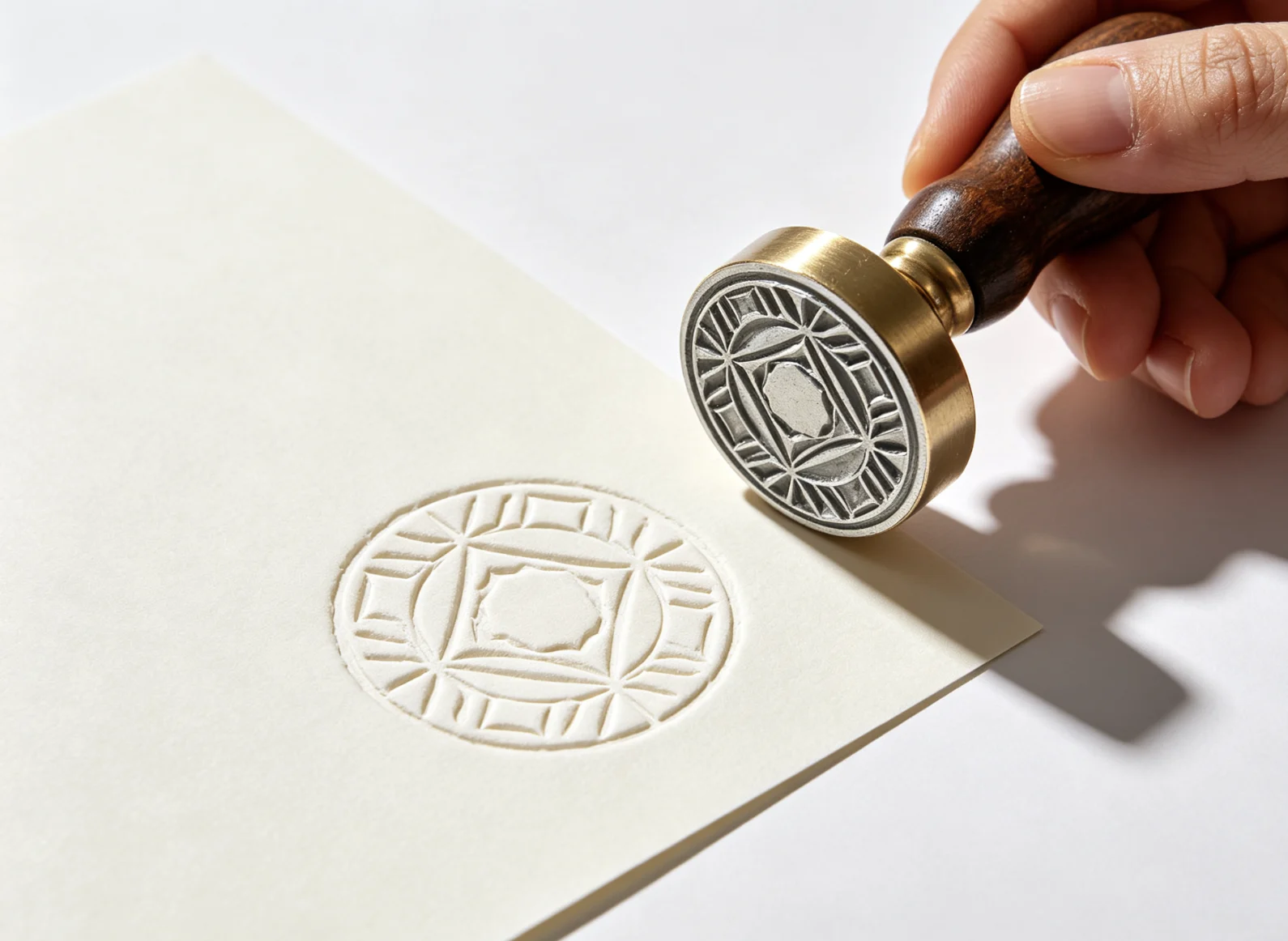
If your paper embosser is not making a clear impression, the most common causes are paper that is too thick or too hard, artwork that is too detailed, weak hand pressure, incorrect die installation, poor paper positioning, or a die size that is too large for the paper and tool.
A handheld paper embosser works best on suitable paper-based materials with clean line artwork and a correctly installed upper and lower die pair. Before embossing final envelopes, business cards, certificates or wedding invitations, test the same paper first and check whether the die is clipped in place, the paper is flat, and the handle is pressed fully.
A paper embosser creates a raised or recessed blind impression by pressure. It does not need ink, foil or heat. The paper is placed between an upper die and a lower die, and the tool presses the paper fibers into the shape of the design.
This process is commonly used for:
For small paper seals and stationery work, the Trodat Handheld Custom Steel Embosser Seal Stamp is a practical tool because it uses a matched steel die pair and works without heat. But like any pressure tool, the final result depends on paper, artwork, die setup and hand force.
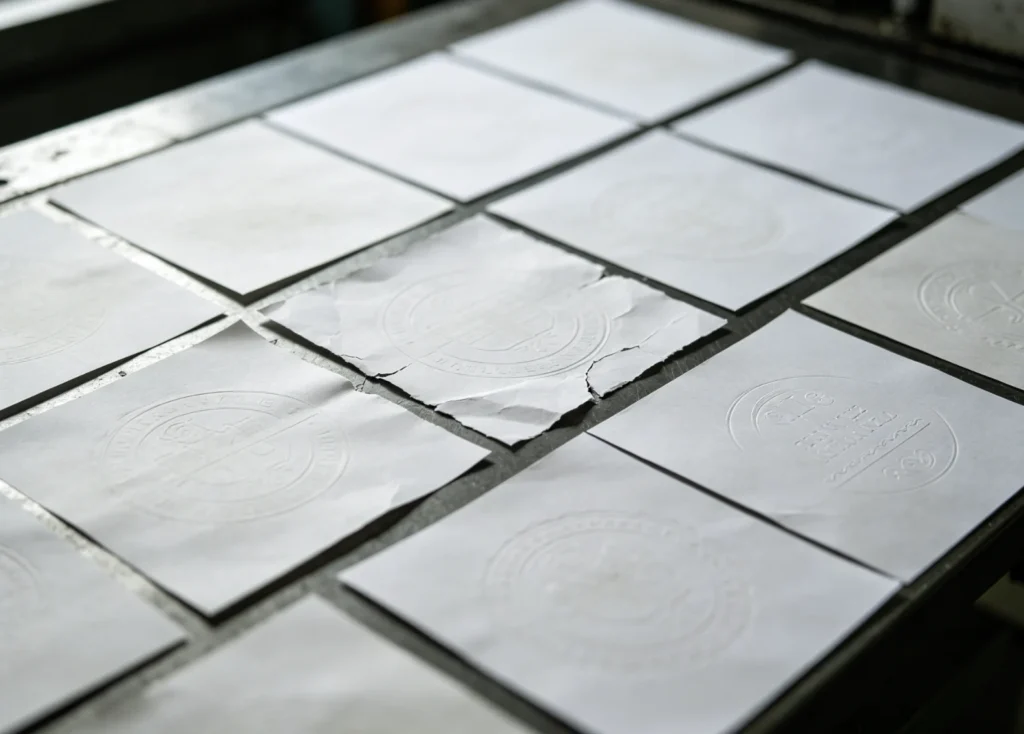
| 문제 | What It Looks Like | Likely Cause |
|---|---|---|
| Weak impression | design is visible but shallow | paper too hard, pressure too light, or large die area |
| Missing details | logo outline appears but small text disappears | artwork too small, thin or crowded |
| Paper cracks | raised area breaks or splits | paper is brittle, too dry, too thin, or pressed too hard |
| Paper wrinkles | sheet bends around the seal | paper is too soft, too thin, or not supported evenly |
| One side is clear, one side is weak | uneven raised impression | paper not flat, die not seated, or pressure is not centered |
| Impression is off-position | mark is clear but in the wrong place | paper inserted without a guide or orientation mark |
| No impression at all | almost nothing appears | die not installed correctly, paper too thick, or tool not pressed fully |
If you are comparing blind embossing with gold foil or heat branding, read Embossing vs Foil Stamping vs Heat Branding first. The tools, materials and results are different.
Paper thickness is one of the first things to check. A handheld embosser has limited leverage. If the paper is too thick, too rigid or too heavily coated, the die may not press deeply enough.
This can happen with:
Thicker paper is not always better. A strong raised impression needs paper that can deform under pressure. Some premium papers feel luxurious but resist pressure, especially if they are coated or compacted.
For a handheld embosser, smooth medium-weight paper often gives a clearer result than very thick board.
Thin paper can also cause problems. It may wrinkle, crease, tear or show a weak raised shape because there is not enough fiber depth to hold the design.
Very soft paper may collapse around the die instead of forming a clean raised edge. Napkin-like paper, thin envelopes and lightweight stationery can work for some simple designs, but they need careful testing.
If the paper wrinkles:
Do not assume every envelope or invitation paper will emboss the same way. Paper fiber, coating and surface texture matter as much as thickness.
A custom steel embossing die can only reproduce what the artwork allows. If the logo has very small letters, thin lines, tight spacing or dense decorative borders, the paper may not show every detail clearly.
Common artwork problems:
For clean embossing, use black-and-white line artwork. Vector files are preferred. Text should be outlined before production so the design shape is fixed.
If the same artwork also needs a brass foil stamp, the file preparation rules are similar. See 가죽 로고를 위한 맞춤 황동 스탬프: 어떤 파일 형식이 필요합니까? for general artwork guidance.
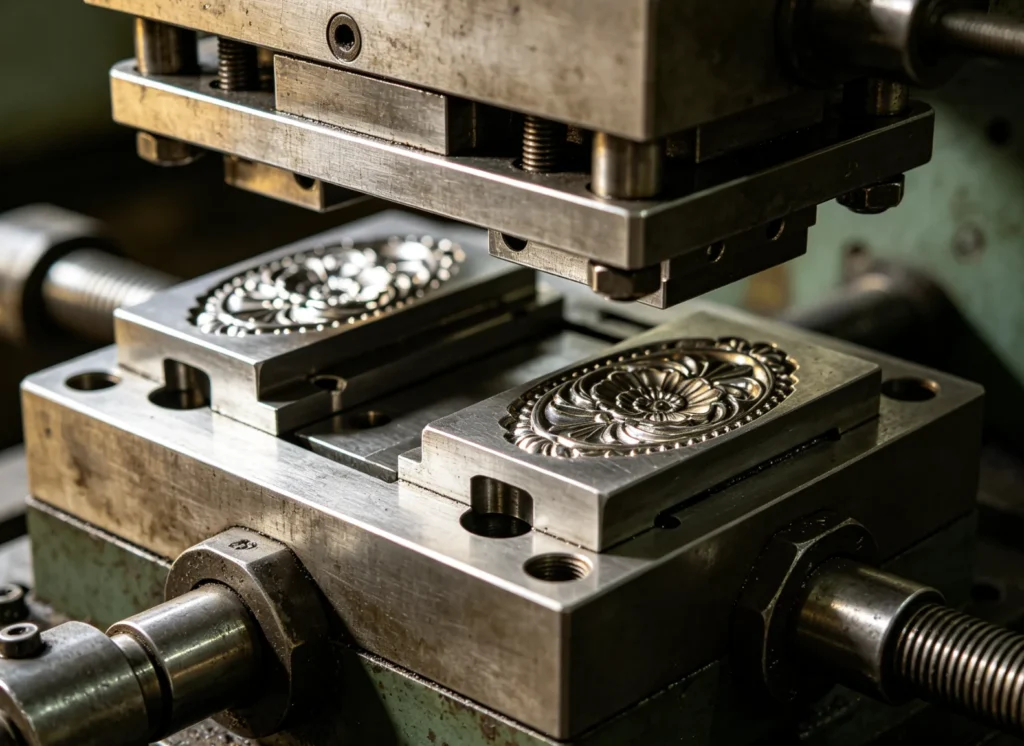
A handheld embosser uses a matched upper and lower die pair. If the die set is not clipped into the tool correctly, the raised and recessed parts may not meet accurately.
Before testing the paper, check:
If the die is reversed, loose or not seated fully, the impression can be weak, offset or incomplete.
For Trodat-style handheld embossers, the click sound helps indicate that the press action is complete, but you should still inspect the impression after the first test.
Some users stop pressing too early because they are afraid of damaging the paper. But a paper embosser needs enough force to reshape the paper fibers.
Press the handle firmly and evenly. If the tool design includes a click indication, press until the embossing action is complete. Then release the handle smoothly and check the mark.
Avoid quick half-presses. They often create shallow impressions. Also avoid twisting the tool while pressing, because that can shift the paper and blur the edge of the design.
For repeated work, use the same hand position and pressure each time so the impressions look consistent.
The larger the die area, the more force is needed. A small monogram may emboss clearly with a handheld tool, while a large seal with thick borders and many letters may appear shallow on the same paper.
This is why die size and artwork density should be considered together.
| Die Style | Easier or Harder? | Why |
|---|---|---|
| Simple initials | Easier | small contact area and open spacing |
| Clean round logo | Moderate | depends on line width and paper |
| Dense official seal | Harder | many small details need even pressure |
| Large solid emblem | Harder | more surface area needs more force |
| Thin script text | Harder | fine strokes can disappear |
If the impression is weak with a large design, simplify the artwork, reduce solid areas or choose a paper that accepts pressure more easily.
A clear impression can still look unprofessional if it is crooked or placed too close to the edge.
Before embossing final products, decide:
For envelope flaps, business cards and certificates, make a simple paper guide or mark a reference line outside the visible area. If you are embossing a batch, test the first few pieces and keep one approved sample beside you.
Trodat states that Ideal Seal press positioning marks help align the impression, but the user still needs to insert the paper consistently.
A handheld paper embosser is mainly for paper-based materials. It is not the right tool for every surface.
Avoid using it on:
For leather logos, gold names or heat marks, use a hot stamping machine, brass die or branding iron instead. A paper embosser and a leather hot stamping machine are different tools.
For choosing between marking methods, read 가죽, 나무 및 종이를 위한 올바른 핫 스탬핑 기계 선택 방법.
Use this checklist before ordering a new die or replacing the tool.
If standard paper embosses clearly but your final card does not, the issue is probably the paper material, not the embosser body.
| Paper Type | Expected Result | 노트 |
|---|---|---|
| Smooth letter paper | usually clear | good for testing basic die contact |
| Envelopes | often good | test flap thickness and orientation |
| Medium cardstock | usually workable | depends on coating and stiffness |
| Cotton paper | can show elegant depth | test because softness varies |
| Textured paper | variable | texture may hide fine details |
| Laminated card | often difficult | coating resists pressure and can crack |
| Very thick board | not recommended | handheld pressure may not be enough |
| Thin paper | risk of wrinkling | use simple designs and gentle testing |
For wedding invitations, business cards and certificates, always test the actual paper before confirming the die design.
Good embossing starts with artwork that can survive pressure.
사용:
Avoid:
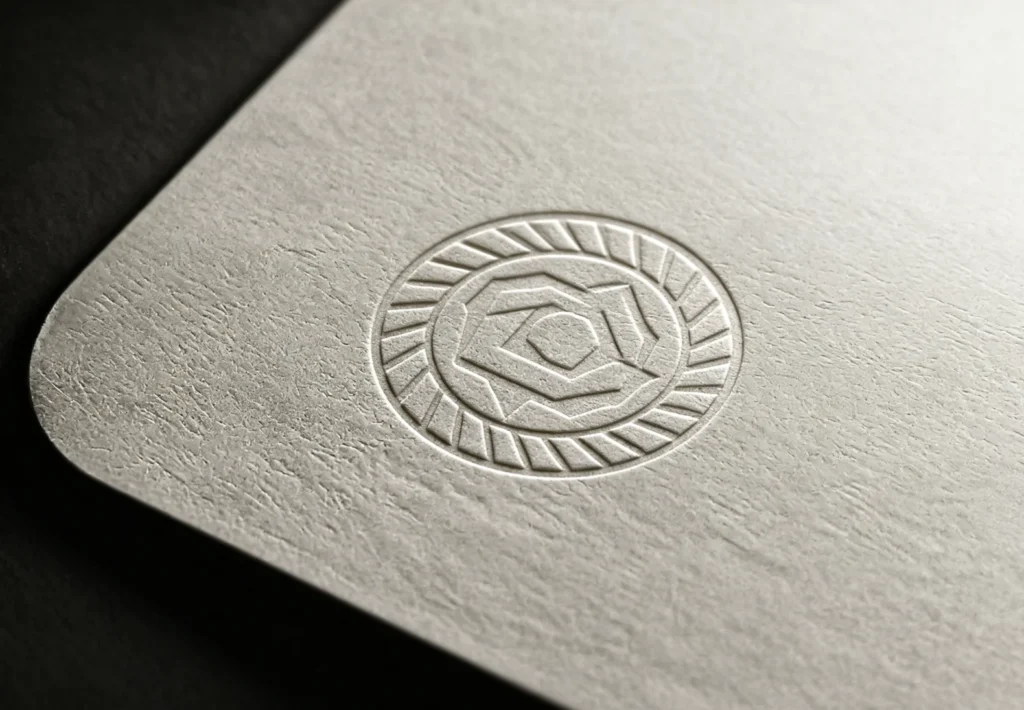
If your design includes a company name around a round seal, keep the text large enough to read after embossing. The screen preview may look sharp, but paper embossing has physical limits.
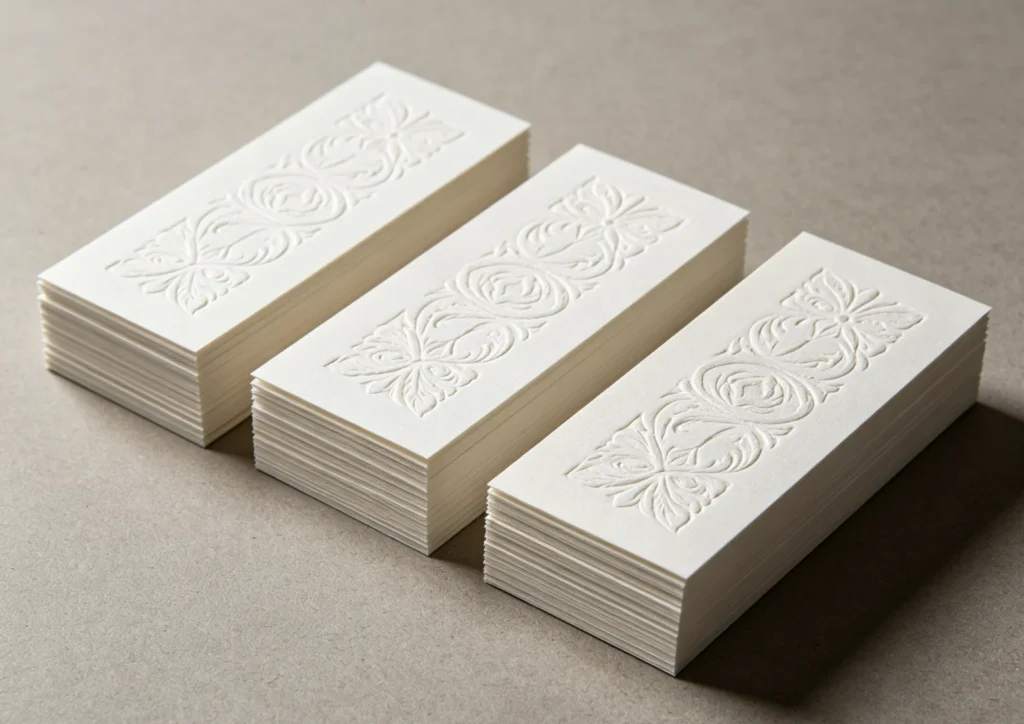
Choose a handheld embosser when you want a subtle raised blind mark on paper.
Choose foil stamping when you need gold, silver or colored metallic decoration.
Choose 3D relief embossing when you want a stronger dimensional effect for premium paper, book covers or packaging.
| Desired Effect | Better Process | Related Product |
|---|---|---|
| Raised seal on envelopes | Handheld embossing | Trodat Handheld Custom Steel Embosser Seal Stamp |
| Gold logo on paper cards | 핫 포일 스탬핑 | EC-17 수동 열압 인쇄기 |
| Large packaging logo | 핫 포일 스탬핑 | 618-M 공압식 핫 스탬핑 기계 |
| Raised foil effect | 3D embossed foil | 3D 릴리프 황동 핫 스탬핑 다이 |
| Deeper production embossing | Hydraulic press + die | YTJ-5T 유압식 핫 스탬핑 프레스 |
For paper foil settings, also see Best Temperature for Foil Stamping on Paper and Napkins.
To avoid unclear impressions, prepare this information before ordering:
If the design is for official, notary, company or regulated document use, confirm local legal requirements before ordering.
For decorative branding, wedding stationery and packaging, focus on artwork clarity, die size and paper compatibility.
An embosser seal is usually not clear because the paper is too thick, too hard, too thin, or too textured, or because the artwork is too detailed for the die size. Also check whether the die is installed correctly and whether the handle is pressed fully.
It can work on some cardstock, but very thick, laminated or hard cardstock may not emboss completely. Test the actual card before production. If standard paper embosses well but the thick card does not, the card is probably too rigid for the handheld tool.
Paper can crack when it is brittle, dry, too thin, heavily coated or pressed too hard. Fine details and sharp raised edges can also increase cracking risk. Test a smoother paper and avoid overly dense artwork.
No. A paper embosser creates a raised blind impression by pressure only. It does not need ink, foil or heat. If you need metallic gold or silver color, you need a foil stamping process instead.
A handheld paper embosser is not recommended for leather. Leather usually needs a stronger press, a suitable brass die, and controlled heat or pressure. For leather logos, use a hot stamping machine or branding iron.
Vector artwork is preferred, such as AI, vector PDF, SVG or EPS. Text should be outlined, and the design should be clean black and white. Avoid photos, gradients and tiny details.
One weak side can come from uneven paper insertion, a die not seated fully, uneven hand pressure, or a paper surface that is not flat. Reinstall the die, test on flat paper and press the handle evenly.
Need a clear raised paper seal for envelopes, certificates, business cards, wedding invitations or branded stationery?
Send ZHENGFEI your logo file, paper type, paper thickness, seal size and target position. Our team can help check whether your artwork is suitable for a custom steel embosser die and recommend the right embossing or foil stamping solution.

 English English
 Japanese
 Spanish
 French
 Korean
 German
 Russian