창립자에게 문의하기
아직도 궁금한 점이 있으신가요?
저희 창립자와 직접 연결하세요. 가격이든 기술적인 세부 사항이든 명확한 답변을 받고, 첫 주문을 위한 독점 ‘창립자 보너스’도 받아보세요.




900명 이상의 만족 고객
🏆 1,000건 이상의 맞춤 프로젝트를 성공적으로 납품했습니다.

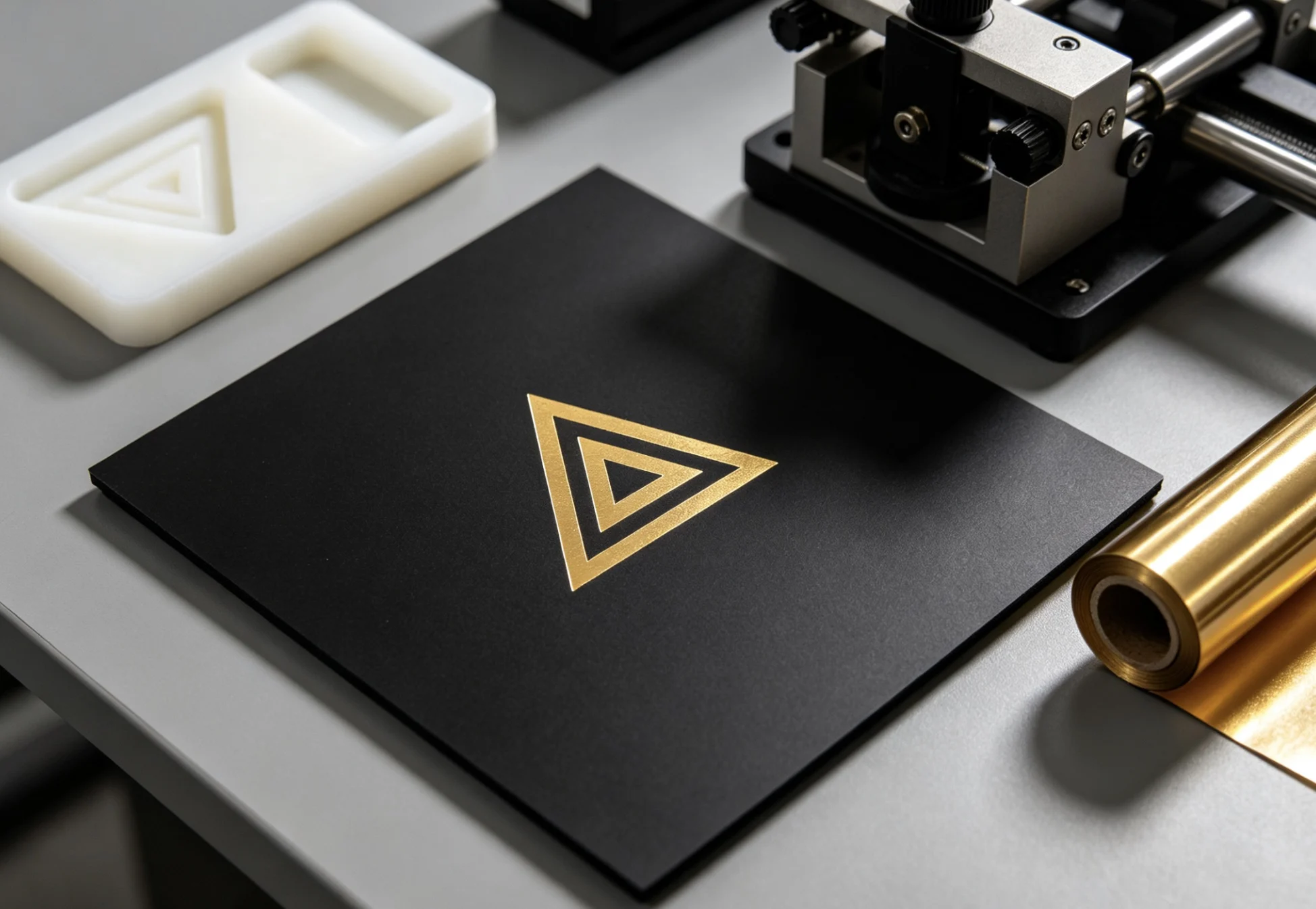
We tested hot foil stamping on ABS plastic with a TJ8020PS hot stamping machine and silicone mold at 170°C, 180°C, 190°C, and 200°C. The best result came at 190°C for 1 second, with stable foil transfer, clear edges, good metallic gloss, and lower risk of ABS surface softening or deformation.
What is the best ABS plastic foil stamping temperature? In the documented ZHENGFEI test, the best reference result came from 190°C for 1 second using a TJ8020PS hot stamping machine, a silicone mold, 및 ABS plastic.
The test compared 170°C, 180°C, 190°C, and 200°C. At 170°C, the foil release was not complete enough, so fine lines and complex details could show missing foil or weak transfer. At 180°C, transfer improved, but some fine or complex areas could still be slightly incomplete. At 190°C, the foil transferred more fully with better gloss, cleaner edges, and stronger overall stability. At 200°C, transfer could become fuller, but the ABS surface faced higher risk of softening, deformation, pressure marks, and edge spread.
This article is for plastic product manufacturers, electronic shell factories, automotive interior suppliers, appliance accessory makers, daily-use product factories, and OEM buyers who need metallic logos, lettering, or decorative graphics on ABS parts. The 190°C setting is a test reference, not a fixed rule for every ABS grade, foil, mold, or product shape.
For the tested combination of TJ8020PS, silicone mold, and ABS plastic, start with:
| Process item | Documented test reference |
|---|---|
| 기계 | TJ8020PS hot stamping machine |
| Mold | Silicone mold |
| 재료 | ABS plastic |
| Temperature comparison | 170°C, 180°C, 190°C, 200°C |
| Recommended reference | 190°C |
| Dwell time at recommended setting | 1초 |
| Best observed balance | Stable transfer, good gloss, clear edges, high detail restoration |
| Main high-temperature risks | Softening, deformation, pressure marks, edge spread, blurred details |
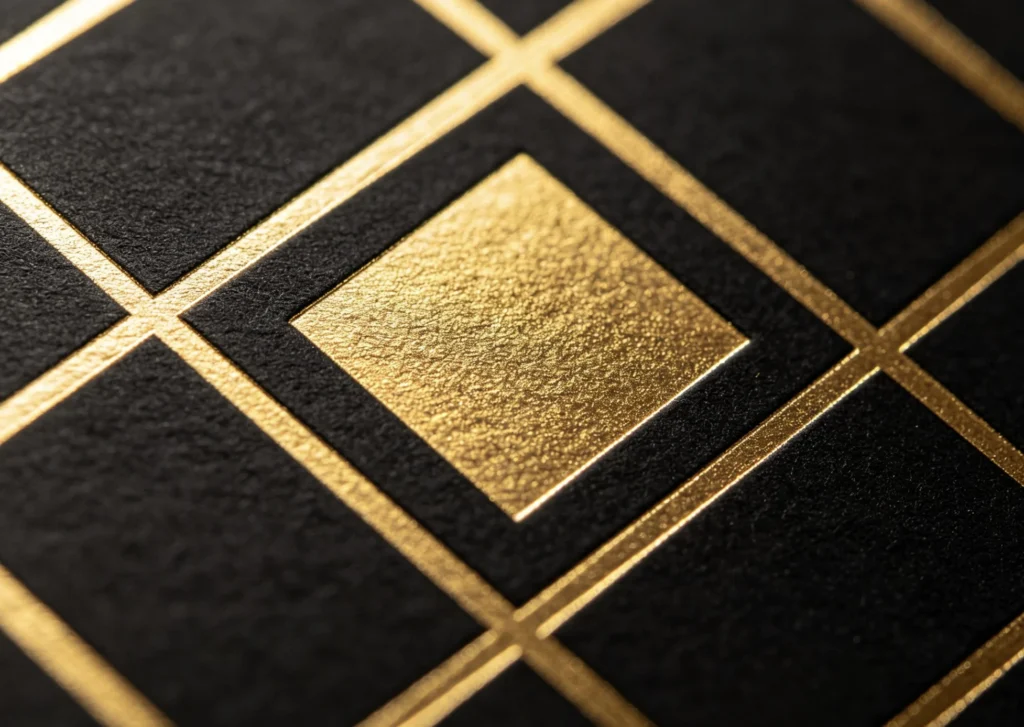
Use 190°C for 1 second as the first sampling point when your ABS part, foil, and silicone mold are similar. If transfer is incomplete, check mold contact, pressure, foil type, and surface cleanliness before raising the temperature. If the ABS surface softens, deforms, or shows marks, reduce heat, shorten dwell time, or lower pressure.
For another plastic material, compare our acrylic foil stamping temperature test. Acrylic and ABS both need heat control, but they do not behave the same under pressure and temperature.
ABS plastic, short for acrylonitrile butadiene styrene, is widely used because it has good mechanical strength and practical surface processing performance. It is common in electronic housings, automotive interior parts, appliance accessories, daily-use plastic products, and industrial components. A general material reference is available from this overview of acrylonitrile butadiene styrene, and the material classification system is covered by ASTM D4673-23.
ABS is useful for decorative finishing because logos, brand text, symbols, and metallic lines can improve the product’s perceived value. A clean foil logo on an ABS shell can make a functional plastic part look more premium, especially for electronics, cosmetic packaging components, control panels, and branded accessories.
However, ABS is a thermoplastic material. That means the surface can respond visibly when heat and pressure are too high. During hot foil stamping, the process must provide enough heat for the foil layer to release and bond, while avoiding surface softening, abnormal pressure marks, or shape change.
The result depends on several variables working together:
This is why one number cannot be copied blindly across every ABS product. The documented 190°C / 1-second condition is a strong starting reference, but final production should always be confirmed with the real product.
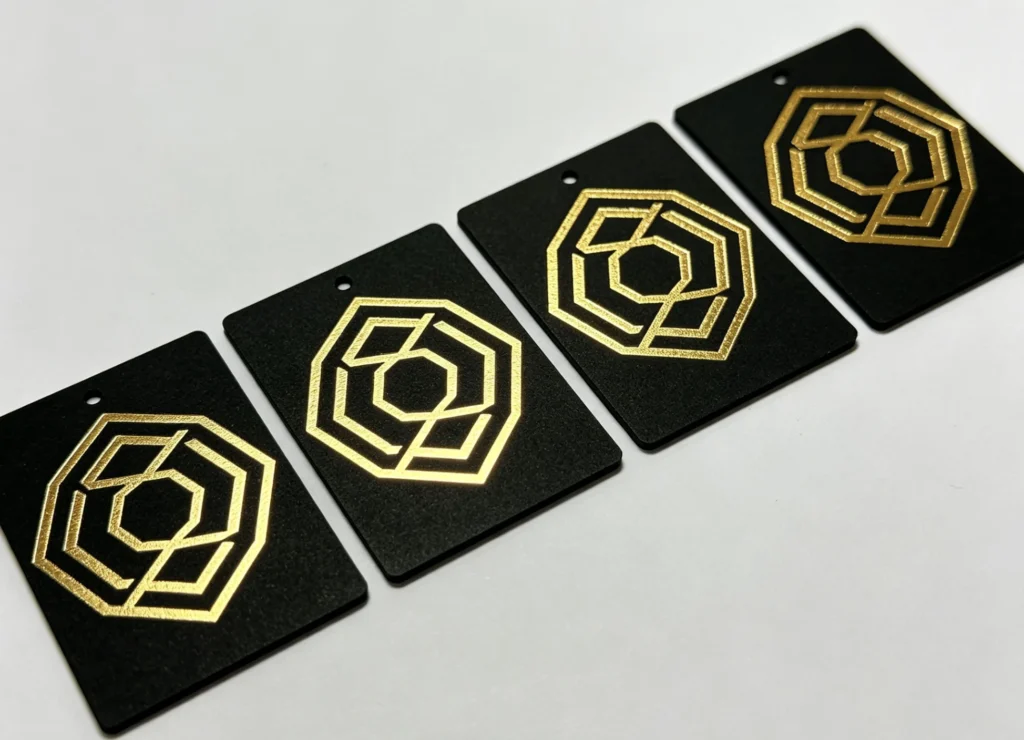
The source test used a silicone mold instead of a rigid metal die. Silicone has elasticity and flexibility; a general material reference is available here: silicone.
This matters because ABS products are often not perfectly flat. Many parts have slight curves, raised areas, recessed edges, ribs, or local height differences. A silicone mold can adapt better to these surfaces during pressure, helping the foil stay in more complete contact with the plastic.
Compared with a hard metal die, a silicone mold can reduce local pressure concentration and improve the consistency of foil transfer across slightly uneven areas. This is especially useful for small logos, curved plastic surfaces, and decorative patterns on molded parts.
That does not mean silicone solves every problem. The mold still needs to be clean, correctly mounted, and matched to the part shape. If the silicone surface has foil dust, residue, wear, or uneven contact, the result can still show missing foil, blurry details, or inconsistent gloss.
For projects that require engraved metal tooling, sharper logo edges, or long-run flat-surface production, compare 포괄적인 워크플로우 솔루션을 위한 승화 인쇄 서비스에 대해 알아보십시오., custom brass stamps for leather and wood branding, 및 3D relief brass hot stamping dies. Tooling choice should follow the product surface and design requirement.
The report identifies the following process:
The test focused on whether the foil layer could transfer cleanly and whether the ABS surface remained stable. The main evaluation points were:
This test method is practical because ABS parts often contain both simple logos and complex design features. A setting may work for large block lettering but fail on fine lines or small decorative details. Before final tooling, review custom brass stamp artwork file requirements 및 solid-area design rules for a foil stamp.
The following summary follows the original ABS plastic test report.
| 온도 | Observed transfer behavior | Surface and production judgment |
|---|---|---|
| 170°C | Foil release was not sufficient. Fine text, thin lines, and complex patterns could show missing foil or incomplete transfer. | Too low for a stable reference result |
| 180°C | Transfer improved. Most graphics became visible, with better gloss and clearer edges, but fine or complex areas could still be incomplete. | Improved, but not the best result |
| 190°C | Foil transferred more fully and evenly. Gloss, edge clarity, and detail restoration were more balanced. | Recommended reference in this test |
| 200°C | Transfer could become fuller, especially on larger areas, but ABS heat risk increased. | Use cautiously; not recommended as a default |
At 170°C, the metallic layer did not release and transfer sufficiently to the ABS surface. Fine text, thin strokes, and complicated artwork were more likely to show missing foil, broken lines, or local incomplete transfer.
The metallic gloss was also weaker at this setting. For ABS, the lower temperature helps reduce heat impact, but it does not create a good production result if the foil cannot attach fully.
If a factory sees incomplete transfer at a low temperature, it should not only raise heat. First check whether the foil is suitable for ABS, whether the silicone mold is touching evenly, whether the pressure is too light, and whether the plastic surface is clean. For a broader diagnostic path, read why foil does not transfer.
At 180°C, foil transfer became more stable compared with 170°C. Most of the artwork could appear, the metallic gloss improved, and the edges became clearer.
However, the report still notes possible transfer insufficiency in fine text and complex texture areas. This means 180°C may be usable for simple designs, but it may not be stable enough for detailed logos or demanding product surfaces.
For sample development, 180°C can be useful as a lower-risk comparison point. It helps show whether the foil and ABS surface are generally compatible before moving toward the 190°C reference condition.
The report identifies 190°C as the recommended reference temperature. At 190°C for 1 second, the foil transferred more sufficiently to the ABS surface. The metallic gloss looked better, the graphic edges were clearer, and the design details were restored more accurately.
The silicone mold helped by conforming to the ABS surface and improving pressure contact. This made the transfer more uniform and reduced the risk of local incomplete areas.
The 1-second dwell time is important. ABS does not benefit from long heat exposure. A short cycle allows the foil layer to transfer while reducing the risk that the plastic surface will soften, deform, or show abnormal marks.
For this tested combination, 190°C / 1 second is the best sampling reference. It should still be verified on the actual ABS grade, product surface, foil model, silicone mold, and production fixture.
At 200°C, foil transfer may become more complete, and larger areas can look fuller. But the report warns that higher temperature can increase the risk of ABS surface softening, deformation, or pressure marks.
Fine details may also suffer. When heat is too high, edges can spread and small features can become less sharp. This is a common production trap: a higher temperature may improve coverage, but it can also reduce precision.
For ABS products, do not raise temperature just to make the foil look more saturated. Check pressure, dwell time, foil type, and mold contact first. The goal is not maximum heat; the goal is the most stable balance between foil transfer and surface protection.
Use 190°C / 1 second as a starting point for similar ABS plastic parts. Then make small adjustments based on product structure and test results.
ABS products can be flat, curved, textured, ribbed, coated, painted, or assembled with other parts. The product shape affects pressure distribution and heat response.
Before testing, confirm:
Dust, oil, release agent, fingerprints, and foil residue can interrupt transfer. Clean both the ABS surface and silicone mold before testing.
The silicone mold should also be inspected for wear. If the mold surface is damaged or contaminated, the stamping problem may look like a temperature issue even when the machine setting is correct.
For a similar ABS part and silicone mold, begin with 190°C and 1 second. Test both fine detail and larger areas.
Do not approve production from a single simple logo sample. A complete test should include:
If transfer is incomplete, first check pressure and contact. If those are stable, increase temperature slightly or test another foil model.
If edges spread, details blur, or the surface shows marks, reduce temperature, pressure, or dwell time. Avoid changing everything at once, because then you will not know which adjustment actually fixed the problem.
For a practical explanation of how temperature, pressure, and time interact, read the hot stamping temperature, pressure, and time guide.
ABS plastic parts may vary between batches. Foil rolls, mold wear, operator pressure, and machine temperature stability can also affect the final result.
Before batch production, record:
This record helps reduce batch-to-batch differences. It also makes future reorders easier to control.
| Defect | Likely cause | First checks |
|---|---|---|
| Missing foil | Temperature too low, weak pressure, poor mold contact, unsuitable foil | Check surface, mold contact, pressure, and foil before raising heat |
| Broken thin lines | Fine artwork, incomplete foil release, dirty mold | Clean the mold and test near the 180-190°C range |
| Weak metallic gloss | Foil not fully transferred or pressure is uneven | Improve contact and confirm foil compatibility |
| Blurry edges | Temperature too high or pressure too heavy | Reduce heat or pressure and inspect artwork size |
| Surface softening | Heat exposure is too high | Lower temperature or shorten dwell time |
| Pressure marks | Excessive pressure or uneven support | Improve product support and reduce pressure |
| Deformation | Too much heat, too long dwell time, weak fixture support | Shorten dwell time and support the part from below |
| Foil peeling | Weak adhesion or foil/surface mismatch | Test a better-matched foil and allow stable cooling |
If the foil transfers but later peels, read why gold foil peels off after stamping. If unwanted foil appears around the artwork, read why extra gold foil appears around a stamp.
The ABS test and the acrylic foil stamping temperature test both used a 190°C / 1-second reference with TJ8020PS and a silicone mold. That similarity is useful, but it does not mean ABS and acrylic behave the same.
Acrylic is valued for transparency and gloss. Surface marks and gloss changes are very visible. ABS is more common in molded functional parts, and the key risks often include surface softening, deformation, pressure marks, and loss of edge definition.
Both materials require controlled heat, short dwell time, suitable foil, and stable pressure. But the final setting should still be confirmed separately for each material and product shape.
For more material comparison, you can also read pearl paper foil stamping temperature test, foil stamping on paper and napkins, 및 PU leather foil stamping temperature with 90XTS.
The documented source test used a TJ8020PS hot stamping machine. At the time of this article draft, the ZHENGFEI sitemap does not show a live TJ8020PS product page, so the schema related product should use the ZHENGFEI hot stamping machines category until a dedicated TJ8020PS page is available.
For different production needs, these machine pages may also be useful:
When selecting a machine for ABS plastic, compare:
The best machine is the one that can hold stable temperature and pressure while supporting the actual ABS product shape.
Before approving ABS foil stamping for batch production, confirm all of the following:
If your logo artwork is still being prepared, check the custom brass stamp artwork file requirements before making a mold. If the design includes heavy filled areas, review the solid-area design rules for a foil stamp to reduce heat buildup and edge problems.
Continue the material-based test series with:
For a project-specific ABS test, fixture review, foil selection, or machine recommendation, contact ZHENGFEI.
In the documented TJ8020PS test, 190°C was the best reference temperature for ABS plastic with a silicone mold. The recommended condition was 190°C for 1 second. Always test the actual ABS grade, product surface, foil, mold, and fixture before batch production.
Yes. ABS plastic can be hot foil stamped when temperature, pressure, dwell time, foil type, and mold contact are matched correctly. Silicone molds are useful for ABS products with slight curves, height differences, or surfaces that need flexible pressure contact.
Common causes include low temperature, weak pressure, uneven silicone-mold contact, unsuitable foil, dirty ABS surface, or artwork details that are too fine. Check surface cleanliness and mold contact before increasing temperature.
ABS can deform when heat exposure is too high, dwell time is too long, pressure is too heavy, or the product is not supported properly from underneath. Reducing heat, shortening dwell time, and improving fixture support can lower the risk.
In this test, 200°C could make foil transfer fuller, but it also increased the risk of ABS softening, deformation, pressure marks, edge spread, and blurred details. It should not be used as the default setting without product-specific testing.
A silicone mold is often better for ABS parts with curved, uneven, or slightly irregular surfaces because it can provide flexible contact. A brass die may be better for flat parts that need very sharp engraved edges and long-term repeated production.
For the tested combination of TJ8020PS hot stamping machine + silicone mold + ABS plastic, the best ABS plastic foil stamping temperature was 190°C for 1 second.
At 170°C, foil transfer was incomplete. At 180°C, transfer improved but was not fully stable in fine or complex areas. At 190°C, the result was more balanced, with good gloss, clearer edges, and stronger detail restoration. At 200°C, transfer could become fuller, but the risk of ABS softening, deformation, pressure marks, edge spread, and blurred details increased.
Use 190°C / 1 second as a practical starting reference, then confirm the result with the actual ABS material, foil, silicone mold, artwork, pressure, dwell time, and product support. If you need help choosing a machine, designing a mold, or testing ABS product decoration, contact ZHENGFEI.
This article is based on a ZHENGFEI process test prepared by John Zhao, founder of ZHENGFEI. The company has more than 21 years of experience covering graphic design, book and packaging printing, hot stamping processes, equipment selection, custom mold production, and production support. The test value is a practical reference; it should not replace a sample test on the buyer’s actual ABS material and production structure.

 English English
 Japanese
 Spanish
 French
 Korean
 German
 Russian