창립자에게 문의하기
아직도 궁금한 점이 있으신가요?
저희 창립자와 직접 연결하세요. 가격이든 기술적인 세부 사항이든 명확한 답변을 받고, 첫 주문을 위한 독점 ‘창립자 보너스’도 받아보세요.




900명 이상의 만족 고객
🏆 1,000건 이상의 맞춤 프로젝트를 성공적으로 납품했습니다.

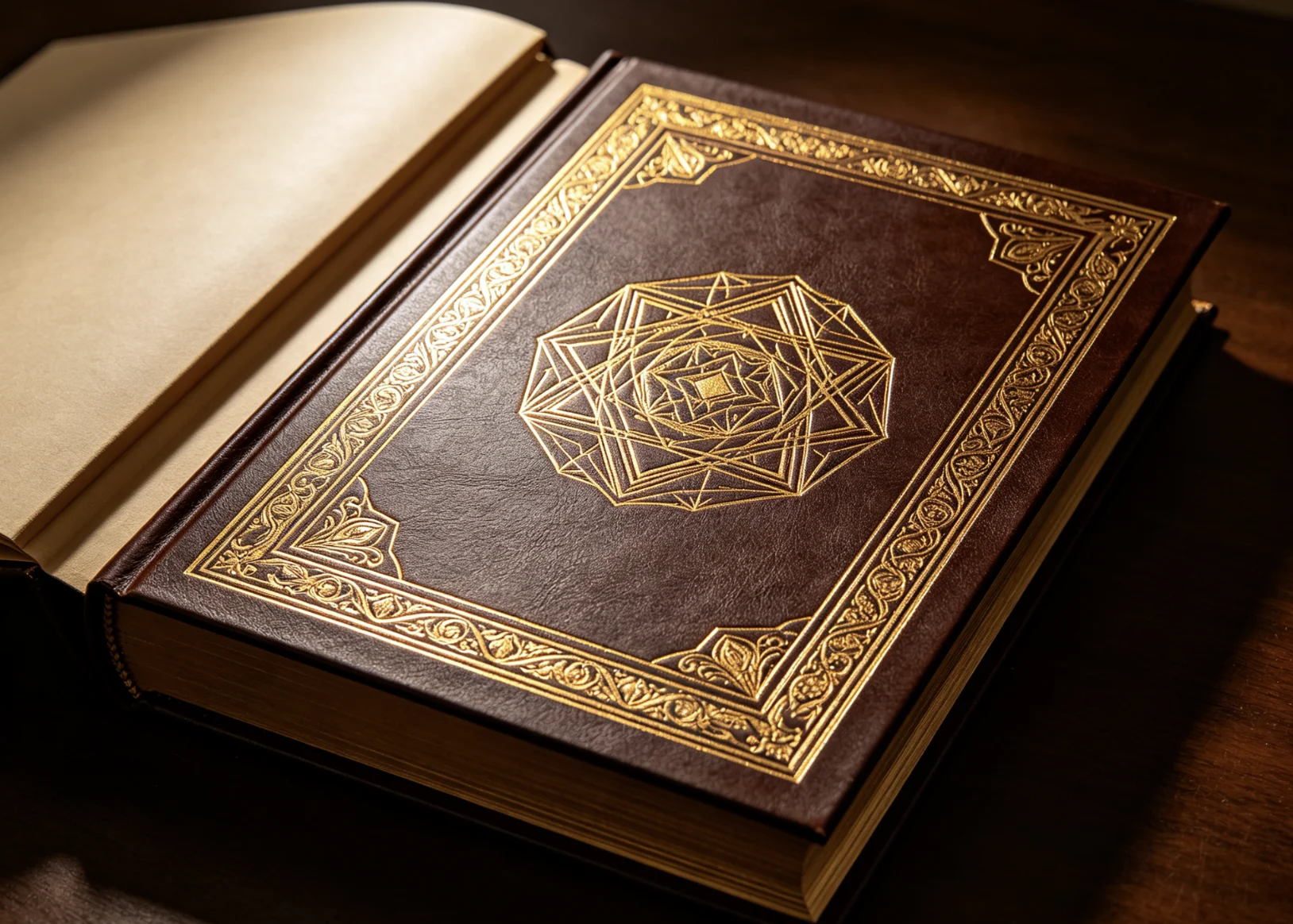
대형 가죽 책 표지는 겉보기에는 단순해 보이지만, 제대로 완성하기 까다로운 핫 스탬핑 작업 중 하나입니다.
The cover is wide, the material can stretch, the spine area can move, and the logo or title often sits in a more visible position than a normal small leather mark. If the die is too small, the machine is too light, or the cover is not fully supported, the result can shift, blur or transfer unevenly.
This guide shows when to hot foil stamp large leather book covers, which machine to use, how to prepare the artwork and die, and how to keep the title clean and centered on the final cover.
For large leather book covers, the best result usually comes from a stable flat setup, a well-made brass die, and a machine that can apply even pressure across the full logo or title area.
For smaller titles or simple logos, a manual machine such as the EC-27 수동 열압 인쇄기 또는 WT-90XTS 수동 핫 스탬핑 기계 can work well.
For wider book covers, the 618-M 공압식 핫 스탬핑 기계 is often the more practical choice because it offers a 300 x 400 mm stamping area.
If the cover needs deeper pressure or 3D relief effects, the YTJ-5T 유압식 핫 스탬핑 프레스 is a stronger option.
Large book covers create more problems than small leather logos because the work area is bigger and the material is less forgiving.
Leather can stretch, especially near the spine and folding lines. If the cover is already assembled or partially wrapped, the position of the title may shift between setup and pressing. The bigger the cover, the more important alignment becomes.
Another issue is pressure distribution. A small die may transfer cleanly in one area but miss contact on the opposite side if the cover is not level or the machine is too light. This is why large covers often need a stronger press or a more stable worktable.
The third issue is artwork. A large title can look great on screen but become too heavy on the cover if the solid area is too large or the lines are too thin. Before engraving, check the artwork against the logo size and material thickness.
| Cover Type | Recommended Setup | Why It Works | Zhengfei 제품 |
|---|---|---|---|
| Small leather notebook cover | Manual machine | Easy to position and fast to set up | EC-27 수동 열압 인쇄기 |
| Medium leather book cover | Manual machine with stable jig | Good for names, titles and compact logos | WT-90XTS 수동 핫 스탬핑 기계 |
| Wide leather book cover | Pneumatic press | Better pressure balance for larger areas | 618-M 공압식 핫 스탬핑 기계 |
| Thick cover or 3D title | Hydraulic press | Stronger pressure for deeper effects | YTJ-5T 유압식 핫 스탬핑 프레스 |
| Custom logo title plate | 황동 금형 조각 | Best for repeatable fixed artwork | 사용자 정의 황동 금형 |
| Raised foil cover effect | Relief die | Better for dimensional graphics | 3D 릴리프 황동 핫 스탬핑 다이 |
If you are choosing a machine for leather work in general, our guide on how to choose the best hot stamping machine for leather goods is a good companion article.
The right method depends on the cover material.
Genuine leather can produce a beautiful premium title, but it needs careful testing. The surface may respond differently depending on tannage, thickness and finish. Some leather covers work best with foil stamping; others look better with blind debossing.
PU leather is usually more sensitive to heat and can react faster than genuine leather. That makes it easier to damage if the temperature or dwell time is too high. For PU leather book covers, test on scrap first and start with your established leather reference settings.
Some book covers are not real leather but still need the same visual result. Those surfaces may accept foil well, but the board structure underneath matters a lot. If the cover flexes too much, the foil can shift or look uneven.
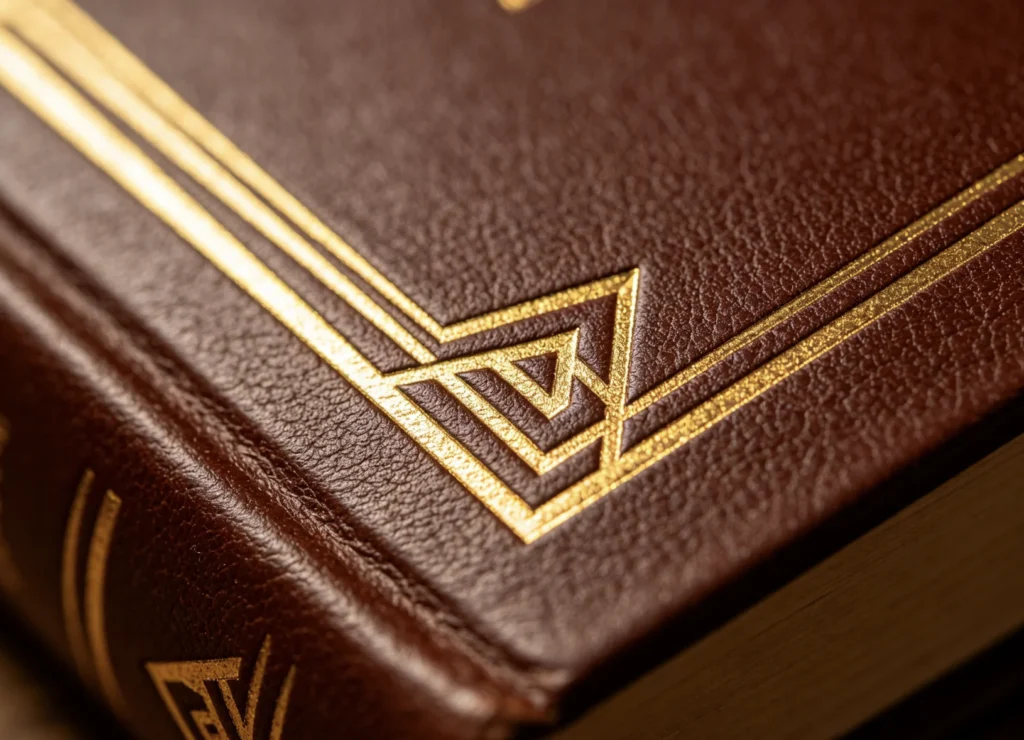
These covers often need better support and more careful positioning because the board, wrap and hinge all affect how the die contacts the surface.
Good book cover stamping starts with good artwork.
For clean results, keep the title or logo:
If your design has too much solid area, it may not transfer evenly. For design limits, read 황동 포일 스탬프는 얼마나 넓은 실면적을 가질 수 있나요?.
If the artwork is a logo or custom brand mark, send it in AI, vector PDF, SVG or EPS format when possible. For file preparation details, see 가죽 로고를 위한 맞춤 황동 스탬프: 어떤 파일 형식이 필요합니까?.
Measure the full cover area before you design the title placement. Large leather covers often look different once the board, hinges and wrap are assembled.
Pick a brass die that fits the title without crowding the cover. Small dies can look lost on a wide book cover. Oversized dies can become hard to register if the press is not stable.
Lay the cover flat and make sure the surface is evenly supported. If the cover is already attached to the book block, make sure the hinge area is not flexing during the press.
Mark the placement lightly and confirm that the title sits square to the cover. Check the top margin, side margin and distance from the spine before you heat the die.
Before pressing the final cover, test on a material sample from the same batch. This matters even more for leather because different batches can behave differently.
Apply even pressure across the full die. On large covers, uneven pressure is one of the easiest ways to get a dull or patchy transfer.
Let the cover cool and inspect the foil or blind impression. If the edges are weak, do not just press harder on the final cover. First check the material, die, foil and alignment.
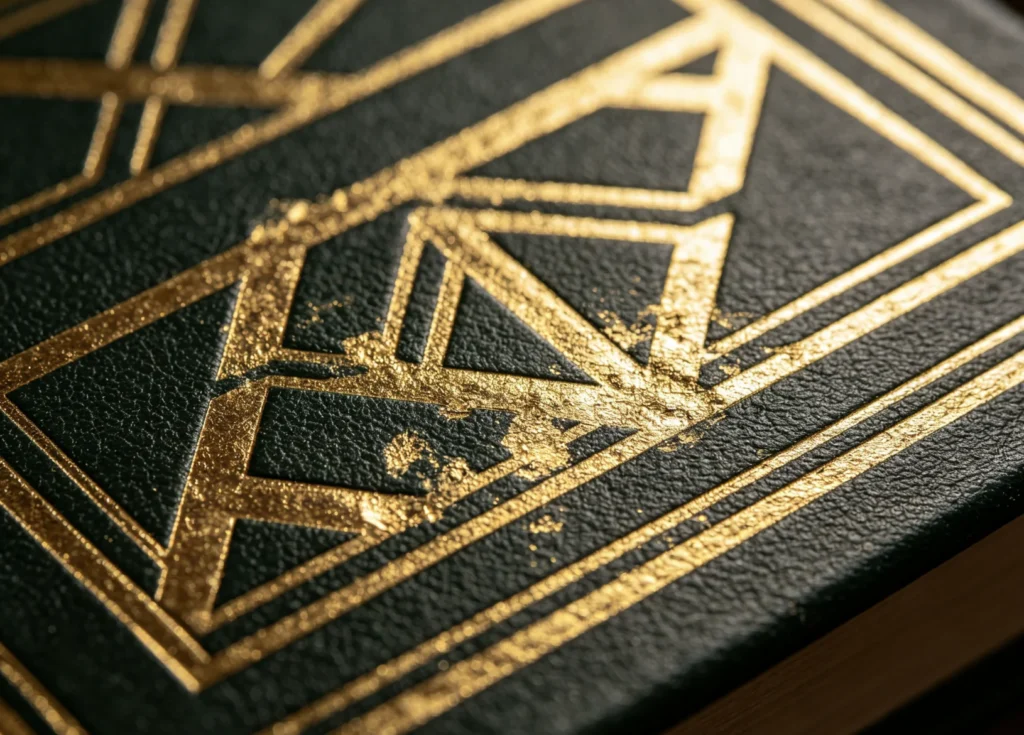
Sometimes yes, but not always.
If the cover needs more depth or a raised pocket for the foil to sit inside, pre-embossing can help. It is especially useful for decorative titles, premium notebooks and some bookbinding effects.
But if the cover is soft, stretchy or difficult to position, a second pass can make alignment worse. In many cases, a planned relief die is cleaner than embossing first and foiling second.
If you want a deeper breakdown, read 포일 스탬핑 전에 사전 엠보싱이 필요할까요?.
The spine area moves more than the center panel. If the title sits too close to the hinge, it may distort when the cover is wrapped or opened.
When the cover is wider than the active work area, pressure becomes inconsistent. This is one reason the 618-M is a better fit for large flat covers than a small desktop machine.
Large filled shapes can trap heat and increase the chance of messy edges or foil buildup. If the logo has heavy solid zones, review the artwork before engraving the die.
If foil starts to blur, peel or leave extra residue, the issue is usually temperature, pressure, dwell time, foil type or die contact. For troubleshooting, see 스탬프 주변에 금박 포일이 더 묻어나는 이유는 무엇인가요? 및 왜 포일이 가죽에 전이되지 않으며 이를 고치는 방법.
There is no single setting that works for every leather cover, but these are useful starting points:
For many leather jobs, the best result comes from a clean die and controlled pressure, not from pushing the machine harder.
If your cover is a leather-bound journal or notebook, the guide on how to hot stamp leather: temperature, pressure, and time explained is worth using alongside this article.
Before you start production, confirm:
That checklist saves more mistakes than trying to fix a bad cover after it is already pressed.
A small hand tool is fine for tiny titles, but it is not ideal for large covers. Match the machine to the work area instead of forcing the cover into a cramped setup.
If the cover will stretch or move later, the title may not stay where you placed it. Large leather covers are especially sensitive to this problem.
Fancy artwork can look impressive on a screen and fail on a real cover. Keep the logo readable, especially if the title must work at a distance.
The board, wrap, hinge and spine all change how the press lands. A cover is not just a flat sheet of material.
A test on another leather batch is not enough. Always test the actual cover material before committing to a full production run.
넓은 표지에는 618-M 공압식 핫 스탬핑 기계 같은 공압 프레스가 크기와 안정성의 균형 면에서 가장 적합한 경우가 많습니다. 더 깊거나 더 강한 압력이 필요한 작업에는 YTJ-5T 유압식 핫 스탬핑 프레스 가 더 강력한 선택입니다.
Yes, if the cover is small to medium and the title is simple. For larger covers, a manual machine can still work, but alignment and pressure balance become harder as the cover gets wider.
It depends on the construction. Some covers are easier to stamp before final assembly, while others are safer to stamp after the leather is stabilized. The key is to avoid material movement between setup and pressing.
A custom brass die is usually the best choice for a fixed title or logo. If you want a more dimensional effect, a 3D relief die is better.
Check temperature, pressure, dwell time, foil type and die contact before changing the design. For edge blur and extra residue, see 스탬프 주변에 금박 포일이 더 묻어나는 이유는 무엇인가요?.
Yes. ZHENGFEI can make custom brass molds, 3D relief dies and matching machine recommendations based on your artwork, cover size and target effect.
To hot foil stamp large leather book covers successfully, start with a stable cover, a well-made die and a machine that matches the size of the job.
For smaller titles, a manual machine can be enough. For wider leather covers, a pneumatic or hydraulic press usually gives better alignment and more even pressure. If your design needs more depth, a relief die or pre-emboss workflow may be better than forcing a flat setup.
If you are unsure which route fits your cover, send your artwork, cover dimensions and material photo to ZHENGFEI. We can help you choose the right machine, die and process for a clean large leather book cover stamp.

 English English
 Japanese
 Spanish
 French
 Korean
 German
 Russian