We use cookies to ensure that we give you the best experience on our website.
Contact Founder
Still have doubts?
Connect directly with our Founder. Whether it’s about pricing or technical details, get a straight answer and an exclusive “Founder’s Bonus” for your first order.
900+ Satisfied Clients
🏆 Over 1000+ Custom Projects Successfully Delivered.
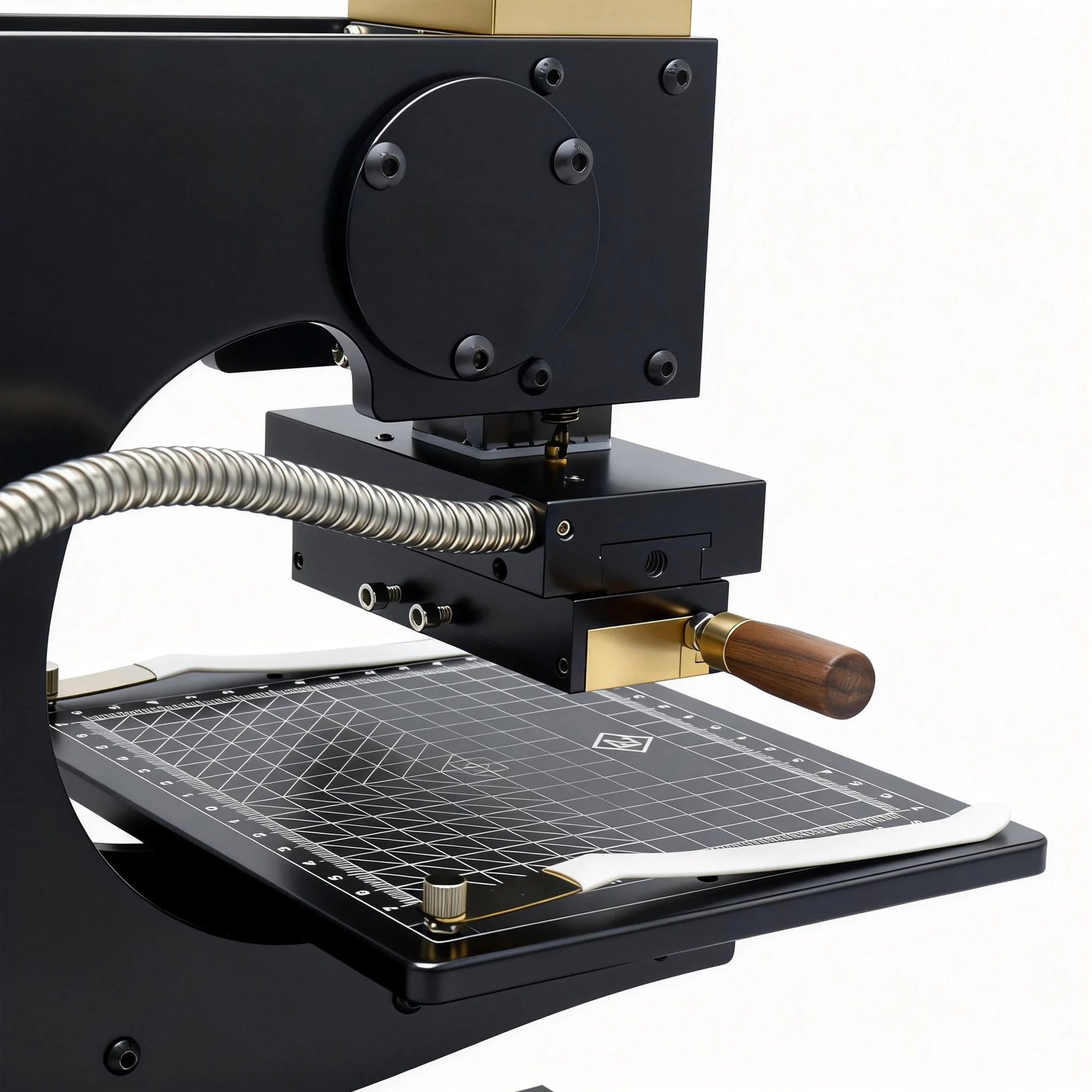
Grid worktable and ergonomic handle make precise positioning fast and easy for high-volume production.
Best Temperature for Foil Stamping PU Leather with 90XTS
Find the best temperature for foil stamping PU leather with the ZHENGFEI 90XTS hot stamping machine. In this real workshop test, we compare 100°C, 110°C, 120°C, and 130°C using a thick movable type mold and explain which setting gives the cleanest foil transfer and the most stable result.
Choosing the right temperature is one of the most important parts of PU leather foil stamping. If the temperature is too low, the foil will not transfer completely. If it is too high, the PU surface may become soft, wrinkled, or damaged.
In our recent workshop test, we used the ZHENGFEI 90XTS hot stamping machinewith a thick movable type mold on PU leather. After comparing different temperatures under the same pressing time, we found that 110°C with 1 second pressing time delivered the best overall result.
This article shares the real test results and explains why this setting works well for PU leather hot foil stamping.
Temperature Range Tested: 100°C, 110°C, 120°C, 130°C
The goal was to identify the most stable temperature for clean foil transfer, strong adhesion, and sharp text edges without damaging the PU leather surface.
Why PU Leather Requires Careful Temperature Control
PU leather is softer and more heat-sensitive than many natural materials. It can produce a clean and attractive foil stamping effect, but only when heat and pressure are controlled properly.
If the temperature is too low, the adhesive layer of the foil does not activate fully. This causes weak transfer, pale color, and poor durability. If the temperature is too high, the PU surface may soften, harden, wrinkle, or show visible heat marks.
That is why precise temperature control matters so much when stamping PU leather, especially for small letters, symbols, and detailed text.
Test Results by Temperature
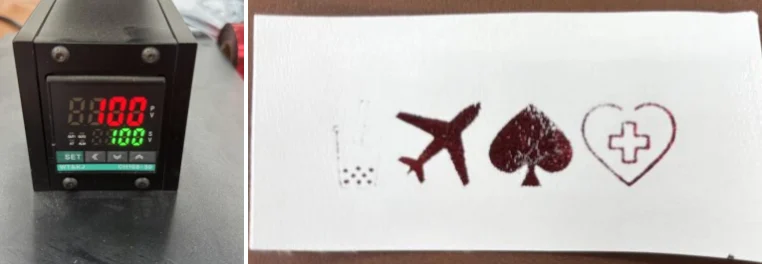
100°C
At 100°C, the foil transfer was incomplete.
The metallic layer looked lighter and weaker than expected. Some parts of the text did not transfer fully, and the edges were less defined. Adhesion was also weaker, and the stamped area could lose quality more easily with rubbing or handling.
This temperature may be enough for very basic transfer, but it is not ideal if you want a strong, sharp, and professional finish.
Foil transfer incomplete
Weak adhesion
Pale metallic finish
Edges slightly blurred
See the risk of underheating: 100℃ fails to fully activate the foil, leading to weak, faded prints that rub off easily.
110°C
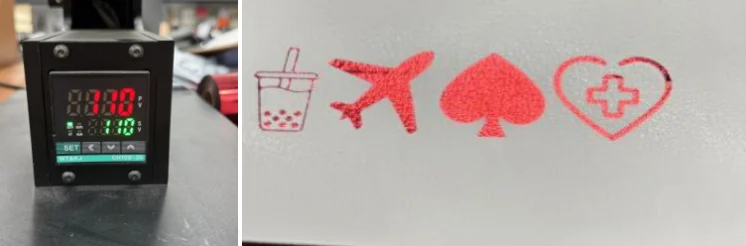
At 110°C, the result was the best.
The foil layer transferred evenly and completely. The metallic finish looked bright and full, the character edges stayed clean, and the stamped text showed strong adhesion without damaging the PU leather surface.
This setting gave the best balance between transfer quality, appearance, and material safety. For this test setup, it was the most reliable temperature.
Complete and even foil transfer
Bright metallic finish
Sharp text edges
Strong adhesion
No obvious damage to PU leather
Our factory-calibrated sweet spot: 110℃ delivers perfect, vibrant gold transfers with sharp edges and permanent adhesion.
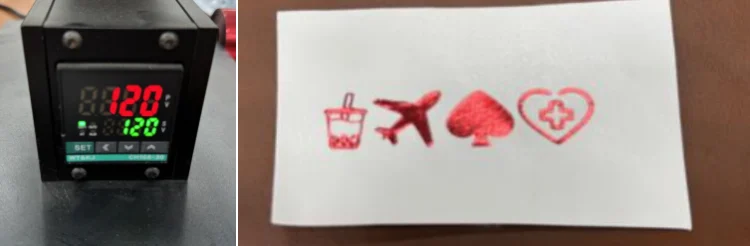
At 120°C, the foil became slightly brighter, but the process started to become less stable.
We began to see slight bleeding around the edges, especially around the joints of the thick movable type mold. Small text areas became more likely to blur, and the PU leather started to feel slightly harder after stamping.
While the result was still usable, the overall finish was less clean than at 110°C.
Slightly stronger gloss
Minor edge bleeding
Possible blur in smaller characters
PU leather begins to harden slightly
Too much heat costs you quality: 120℃ increases gloss but causes edge bleeding and risks damaging your leather.
At 130°C, the temperature was too high for this PU leather application.
The PU leather became much more vulnerable to heat damage. The surface could soften, wrinkle, or show visible pressing marks. In some cases, the edges became heavily blurred, the foil layer wrinkled, and the stamped text lost definition.
This temperature creates a high risk of material waste and should be avoided for this setup.
Severe edge bleeding
Blurred character outlines
Risk of wrinkles and heat marks
Possible yellowing or surface damage
High reject rate
Protect your leather from ruin: 130℃ causes burns, warping, and blurred prints—showing why our precise controls are essential.
Best Temperature for PU Leather Foil Stamping with 90XTS
Based on this test, the best setting was:
Temperature: 110°C
Pressing Time: 1 second
This combination produced the most stable and attractive result when using the 90XTS hot stamping machine with a thick movable type mold on PU leather.
It gave us:
Clear and sharp text
Good foil adhesion
Bright metallic appearance
Low risk of surface damage
Better consistency for repeat work
Why 90XTS Works Well for This Application
The 90XTS is a practical choice for small-batch foil stamping on PU leather because it offers:
Stable temperature control
Even pressing force
Good compatibility with movable type molds
Flexibility for text, symbols, and short-run personalization
Efficient setup for small leather goods and labels
For workshops making PU leather tags, personalized accessories, branding labels, or short custom text runs, this kind of setup can reduce cost while maintaining a professional finish.
Practical Tips Before Production
Even with a tested reference temperature, it is always important to run a small sample before mass production.
Here are a few practical recommendations:
Test on scrap material before starting a full batch
Adjust temperature if your foil type changes
Recheck settings when mold size or text thickness changes
Avoid using excessive heat for small letters
Watch carefully for edge bleeding on combined movable type molds
Fine-tune pressure and dwell time if the surface finish of the PU leather is different
A good starting point does not mean every PU leather will behave exactly the same. Surface coating, foil quality, mold thickness, and pressure can all affect the final result.
Final Recommendation
If you are using a ZHENGFEI 90XTS with a thick movable type mold for PU leather foil stamping, start with:
110°C and 1 second
This was the best-performing setting in our real workshop test and gave the most balanced result in terms of clarity, adhesion, and product appearance.
If your production involves different foil types, different text sizes, or a different PU surface finish, do a quick sample test first and then make small adjustments from this baseline.
At ZHENGFEI, we continue to share real test data from everyday production to help our customers choose the right machine, mold, and process settings more confidently.
Need Help Choosing the Right Stamping Setup?
If you need a hot stamping machine, custom brass mold, or movable type solution for leather applications, ZHENGFEI can help. We support customers with machine selection, mold customization, and practical stamping advice based on real production experience.
Contact us to discuss your project and get the right setup for your material and design.
If you are preparing a custom logo die for PU leather stamping, the artwork file matters just as much as the temperature setting. Here is what to send for a custom brass stamp for leather logos.
FAQ
What is the best temperature for foil stamping PU leather with 90XTS?
In our workshop test, 110°C with 1 second pressing time gave the best result when using the 90XTS hot stamping machine with a thick movable type mold on PU leather.
Why did 100°C not work as well?
At 100°C, the foil adhesive layer was not activated enough. The stamped result looked lighter, weaker, and less complete, with lower adhesion.
Is 120°C too high for PU leather foil stamping?
120°C is still usable in some cases, but it already increases the risk of slight edge bleeding, blurry small letters, and a harder PU leather surface after stamping.
What happens at 130°C?
130°C is too high for this test setup. It can cause wrinkling, heat marks, blurred text edges, foil distortion, and possible damage to the PU leather surface.
Can I use the same setting for every PU leather product?
Not always. Different foil types, mold thicknesses, pressure levels, and PU leather finishes can all affect the final result. It is always best to test on scrap material first.
Is 90XTS suitable for small-batch leather personalization?
Yes. The 90XTS is a practical option for short-run foil stamping on PU leather, especially for names, short text, symbols, and small branding applications.
Share your love
ZHENGFEI Technical Team
ZHENGFEI Technical Team shares practical hot stamping knowledge from real production tests, including brass die design, foil stamping parameters, machine setup, leather, paper, acrylic, plastic, wood and packaging applications.






 English
 Japanese
 Spanish
 French
 Korean
 German
 Russian