We use cookies to ensure that we give you the best experience on our website.
Contact Founder
Still have doubts?
Connect directly with our Founder. Whether it’s about pricing or technical details, get a straight answer and an exclusive “Founder’s Bonus” for your first order.
900+ Satisfied Clients
🏆 Over 1000+ Custom Projects Successfully Delivered.
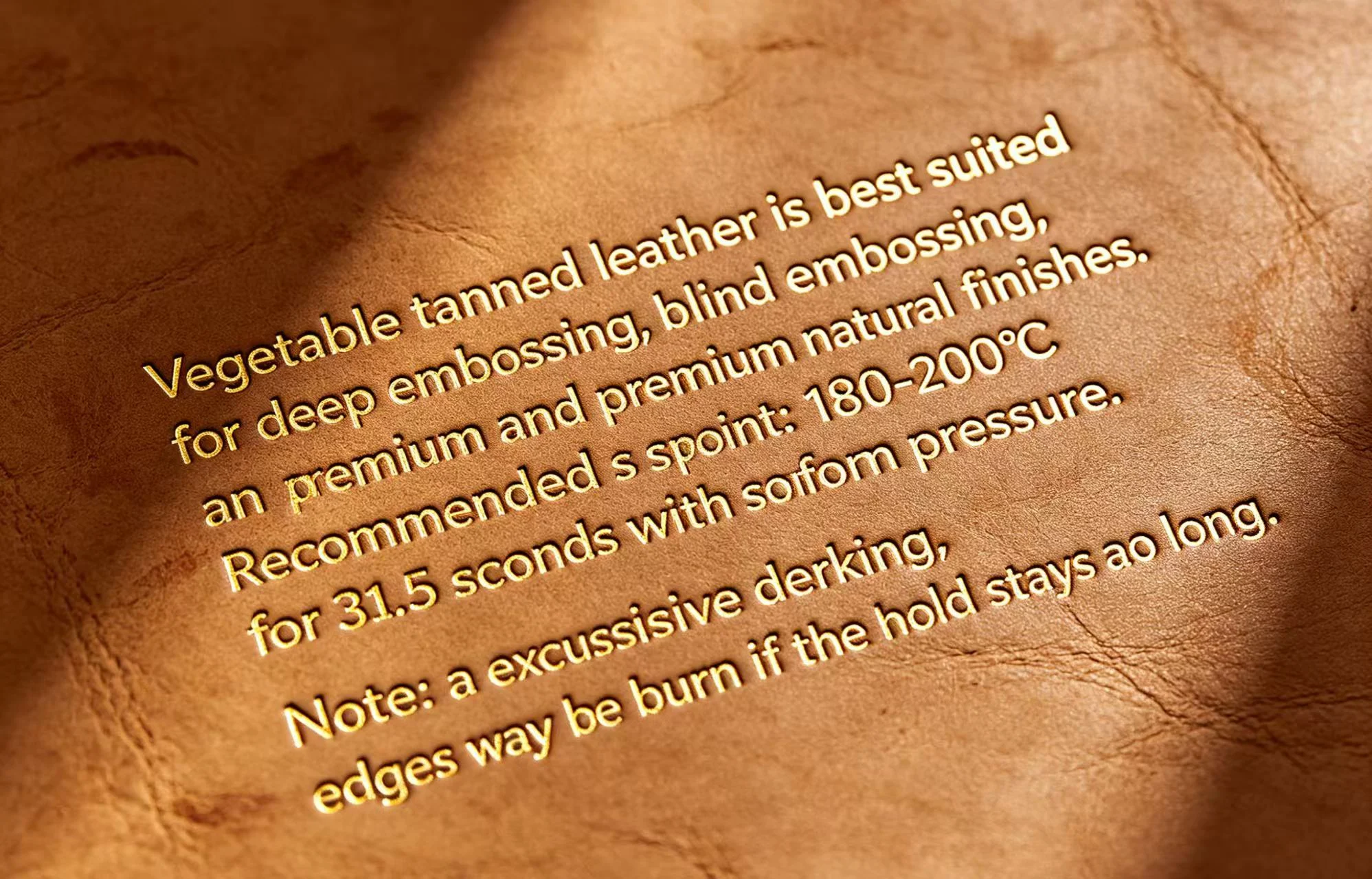
Achieve deep, premium embossing on vegetable tanned leather with our calibrated settings, designed for natural, long-lasting finishes.
Why Foil Does Not Transfer on Leather and How to Fix It
Foil stamping on leather should produce a clean, bright, and well-defined result. But in real production, one of the most common problems is simple and frustrating: the foil does not transfer properly.
Sometimes the foil looks weak and patchy. Sometimes parts of the logo stick while other areas stay blank. In other cases, the foil peels off easily after stamping. The good news is that this problem is usually caused by a small number of factors: temperature, pressure, dwell time, foil type, die quality, or material surface.
This guide explains why foil does not transfer on leather and how to fix it step by step.
The Most Common Reasons Foil Does Not Transfer
Poor foil transfer usually comes from one or more of these problems:
temperature is too low
pressure is too weak or uneven
dwell time is too short
foil is not suitable for the leather surface
brass die is not making full contact
leather coating resists transfer
stamping surface is not flat
machine temperature is unstable
In most cases, the issue is not the foil alone. It is the combination of material, settings, and tooling.
1. Temperature Is Too Low
This is the most common cause of weak foil transfer.
If the die is not hot enough, the adhesive layer on the foil will not activate fully. As a result, the foil may look:
faded
incomplete
broken along edges
easy to peel off
How to Fix It
Raise the temperature gradually instead of making a large jump.
A useful starting point for PU leather is often:
100-110°C
1 second
even medium pressure
If transfer is weak at 100°C, try 105°C or 110°C before increasing further.
For genuine leather, the correct range depends more on finish and density, so testing is essential.
Even with correct heat, foil will not transfer properly if the brass die does not contact the leather evenly.
Signs of pressure problems:
one side transfers well, the other side does not
center is clear but edges are weak
some letters stamp while others disappear
How to Fix It
Check:
die is mounted level
machine descends evenly
product is placed flat
pressure is strong enough but not excessive
A stable manual press often gives better results than forcing the handle too hard.
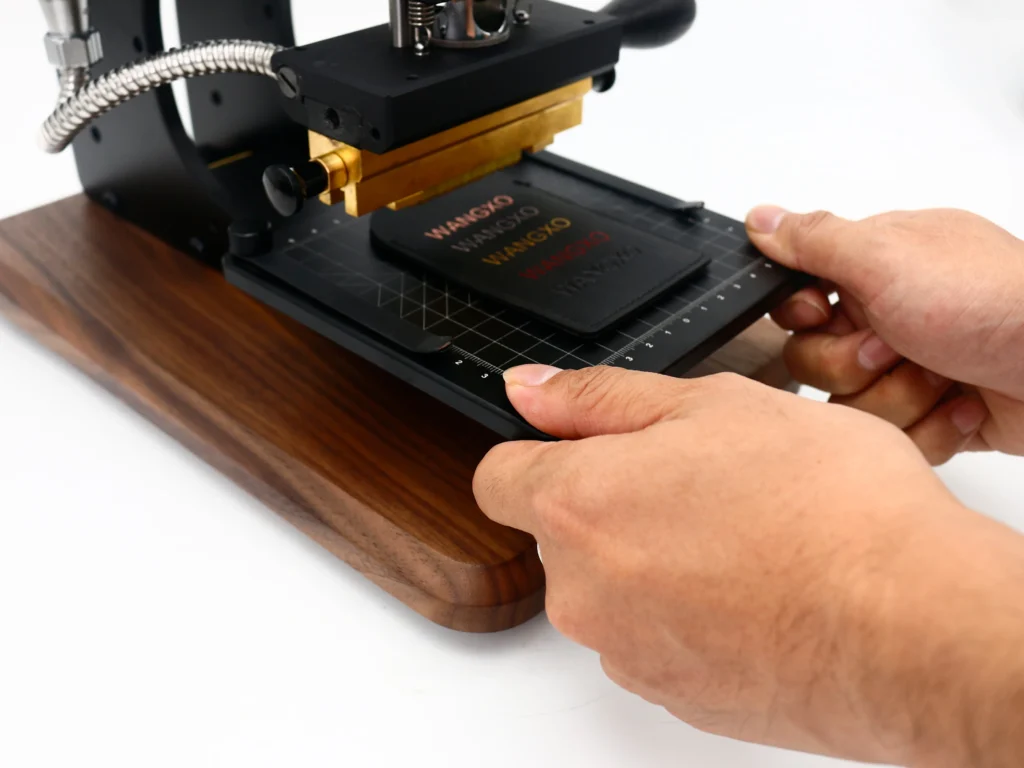
The adjustable worktable makes it easy to align your leather pieces perfectly, even for intricate multi-step designs.
3. Dwell Time Is Too Short
If the die touches the foil for too little time, the adhesive may not have enough time to bond to the leather surface.
Signs:
foil looks incomplete
metallic color is weak
transfer improves slightly when you press longer by accident
How to Fix It
Increase dwell time in small steps.
For many PU leather jobs:
start with 1 second
if needed, test 1.5 seconds
Do not automatically increase time too much. If the heat is already high, longer dwell time may create blurry edges instead of better transfer.
4. The Foil Is Not Suitable for Leather
Not all hot stamping foil works equally well on leather. Some foils are designed more for paper, plastic, or packaging film and may perform poorly on PU leather or genuine leather.
Signs:
transfer is inconsistent even when settings seem correct
foil works on one material but fails on another
adhesion looks weak after cooling
How to Fix It
Confirm that the foil is suitable for:
PU leather
genuine leather
coated leather
soft synthetic surfaces
If possible, test more than one foil type on the same die and material. Sometimes changing the foil gives a better result than changing the machine settings.
5. The Leather Surface Is Too Difficult to Transfer Onto
Leather surface finish matters a lot. Some materials have coatings that resist foil bonding, while others soften too quickly under heat.
PU Leather
PU leather can stamp very well, but different surface coatings behave differently. A glossy or heavily coated PU surface may need more careful testing.
Genuine Leather
Natural leather is less uniform. Grain, oil content, coating, and finish all affect transfer.
How to Fix It
Always test on the exact material batch before production. Even materials with the same name may behave differently.
6. The Brass Die Is Not Ideal
A poor die can reduce transfer quality even when heat and pressure are correct.
Common die issues:
uneven engraving depth
weak edge sharpness
poor flatness
incomplete contact surface
text or logo too fine for the leather type
How to Fix It
Use a precision custom brass die with:
clean engraving
proper depth
balanced layout
correct line thickness for the application
For small text and detailed logos, die quality becomes even more important.
When foil does not transfer on leather, the cause is usually not complicated. In most cases, the problem comes from low temperature, weak or uneven pressure, short dwell time, unsuitable foil, or poor die contact.
The fastest way to fix it is to test methodically instead of changing everything at once. Start with stable settings, confirm the foil is suitable for leather, and make sure the brass die and machine are working evenly.
Need help troubleshooting a leather foil stamping problem? ZHENGFEI provides manual hot stamping machines, custom brass dies, interchangeable brass letters, and factory-direct support for leather foil stamping and branding. If you send your material photo, logo size, and current settings, we can help suggest a better setup.
FAQ
Why is my foil not sticking to leather?
The most common reasons are low temperature, short dwell time, weak pressure, or foil that is not suitable for the leather surface.
What temperature should I start with for PU leather?
A practical starting range is usually 100-110°C with about 1 second dwell time.
Can the brass die cause poor foil transfer?
Yes. If the die is not flat, sharp, or evenly engraved, transfer quality can drop even when the machine settings are correct.
Why does foil transfer on some parts of the logo but not all?
This usually points to uneven pressure, unlevel die contact, curved product shape, or inconsistent surface material.
Is the foil always the problem?
No. Foil matters, but poor transfer is often caused by the interaction between foil, leather surface, machine settings, and die quality.
Share your love
ZHENGFEI Technical Team
ZHENGFEI Technical Team shares practical hot stamping knowledge from real production tests, including brass die design, foil stamping parameters, machine setup, leather, paper, acrylic, plastic, wood and packaging applications.






 English
 Japanese
 Spanish
 French
 Korean
 German
 Russian