We use cookies to ensure that we give you the best experience on our website.
Contact Founder
Still have doubts?
Connect directly with our Founder. Whether it’s about pricing or technical details, get a straight answer and an exclusive “Founder’s Bonus” for your first order.
900+ Satisfied Clients
🏆 Over 1000+ Custom Projects Successfully Delivered.
Create professional leather branding with EC-27, free design support.
How to Choose the Right Hot Stamping Machine for Leather, Wood, and Paper
Choosing the right hot stamping machine is not only about budget. The best machine depends on three things: the material you work with most, the level of precision you need, and your daily production volume. Leather, wood, and paper react very differently to heat and pressure, so a machine that works well for one material may not be the best choice for another.
At ZHENGFEI, we usually recommend starting with the material first, then checking mold compatibility, temperature control, pressure stability, and positioning accuracy. Based on our production experience and real workshop tests, here is a practical way to choose the right machine.
Start with the Material You Work With Most
For Leather
Leather stamping usually requires precise temperature control and stable pressure, especially for small logos, letters, and fine details. If your main business is PU leather personalization, leather labels, wallets, journals, or small leather goods, a machine with accurate temperature control and good positioning is the safest choice.
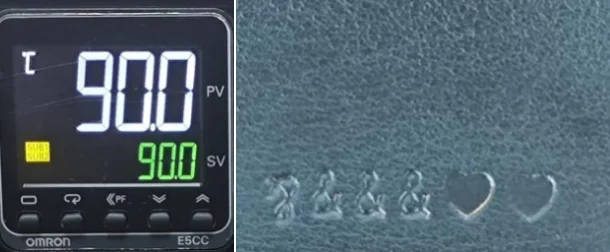
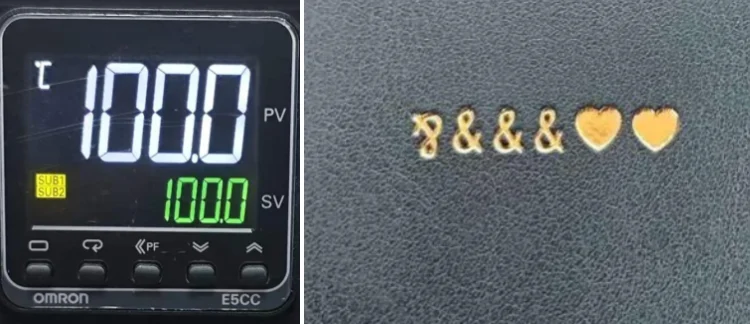
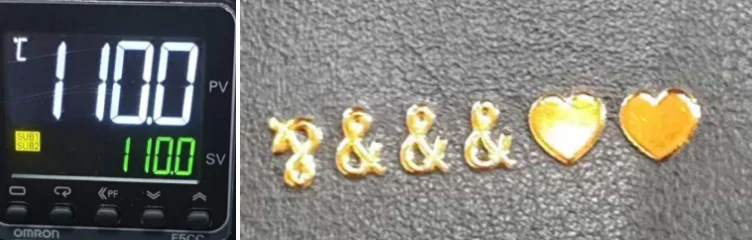
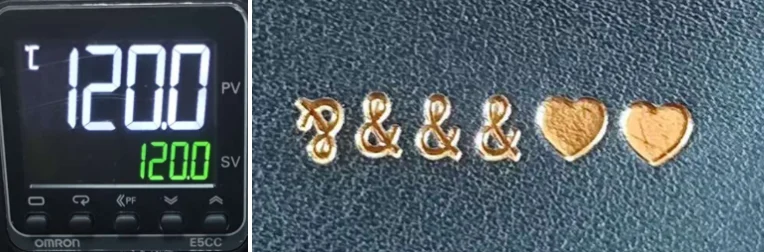
In our PU leather foil stamping tests, both machine stability and temperature control made a big difference. With the EC-27 and brass type, 100°C and 1 second gave the cleanest result: clear edges, good adhesion, and no obvious damage to the PU surface. At 90°C, the foil transfer was weak and patchy. At 110°C, the metallic effect became stronger, but small letters started to show slight bleeding. At 120°C, the PU surface became too soft and the edges turned fuzzy.
See the difference in real-time testing: 90℃ shows weak adhesion, proving why our precision temperature control matters for quality leather stamping.Our factory-tested sweet spot: 100℃ delivers perfect, vibrant gold transfers with crisp edges—proven for PU leather durability and quality.Too hot can ruin your design: 110℃ increases gloss but risks smearing, showing why our precise control is critical for fine details.Protect your leather from damage: 120℃ causes burns and material deformation, proving our factory-tested parameters keep your projects safe.
We also tested a brass mold on PU leather with the QS201. The result was very similar: 100°C and 1 second was the most balanced setting for clean logo transfer and stable adhesion.
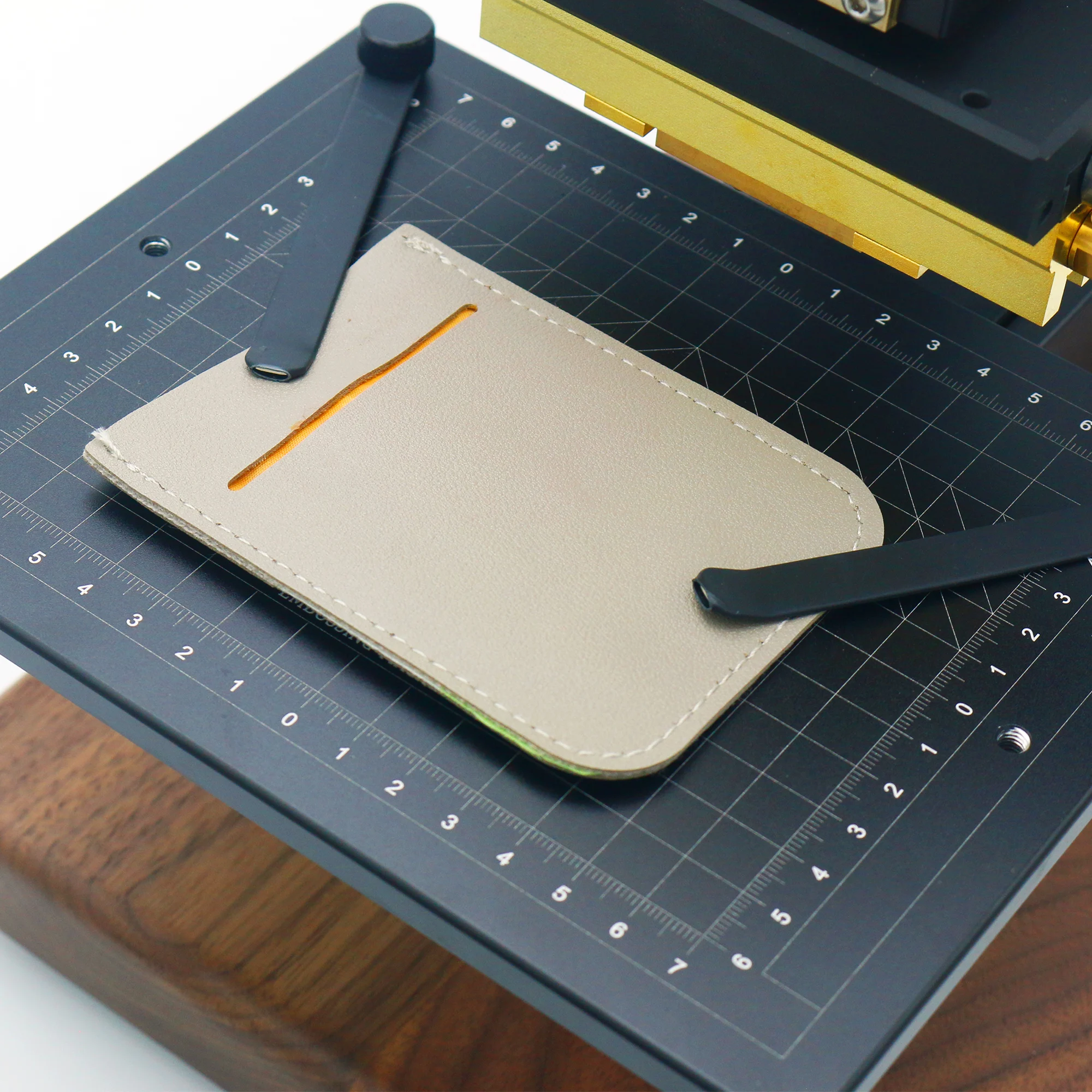
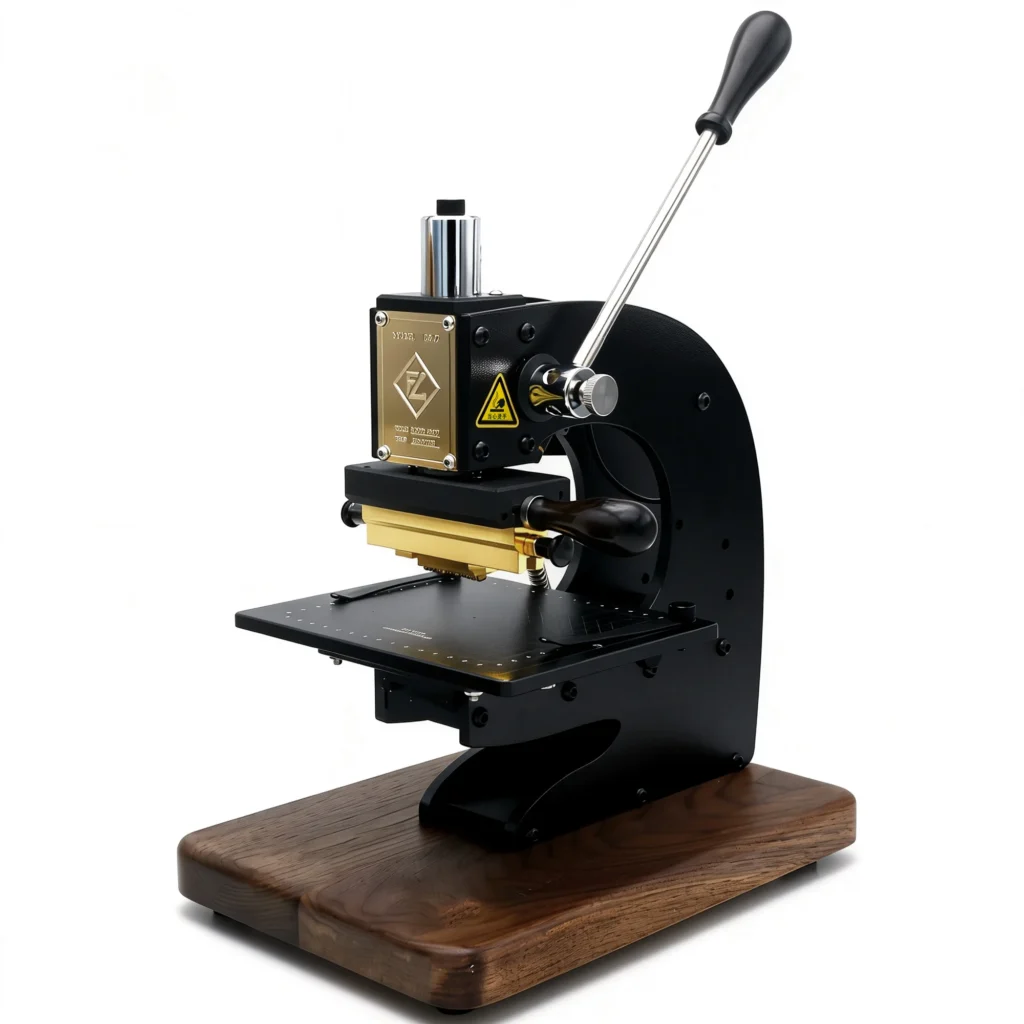
If your work focuses on leather branding with accurate logo placement, the EC-27is a strong choice because laser positioning helps reduce waste on expensive materials. If you mainly do small-batch custom text or names, a machine compatible with movable brass type is also very practical.
High-precision leather hot stamping with EC-27, factory direct 30-50% lower cost.
For Paper and Cardstock
Paper and cardstock need a different approach. They usually require lower heat than wood, but they are also more sensitive to overheating, yellowing, and edge bleeding.
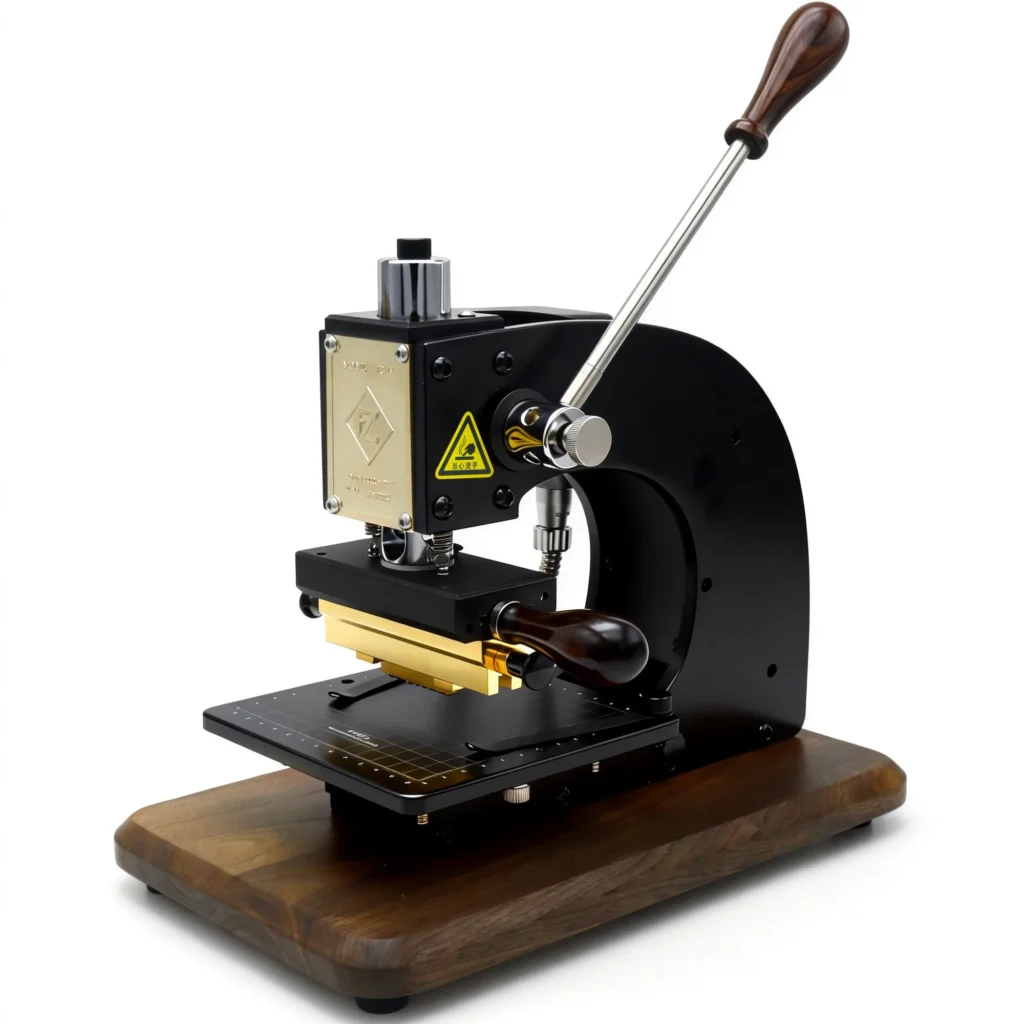
In our white cardstock foil stamping test with the EC17and movable type, 110°C and 1 second gave the best result. The foil transferred evenly, the gold color looked bright, and the text edges stayed sharp and clean. At 100°C, the foil looked light and incomplete. At 120°C, the shine improved slightly, but small letters became more likely to blur. At 130°C, the cardstock began to yellow and the finished piece could easily be ruined.
For customers making invitations, packaging cards, business cards, book covers, or small paper goods, the EC17 is a good fit because it offers stable temperature control and works well for flexible text layouts.
Wood usually needs more heat and a stronger visual impression than leather or paper. If your goal is foil decoration on wood veneer or certain coated surfaces, a hot stamping machine with digital temperature control can work well. But if your goal is a darker burned logo on solid wood, you may need higher heat tolerance and a machine or branding tool better suited for branding.
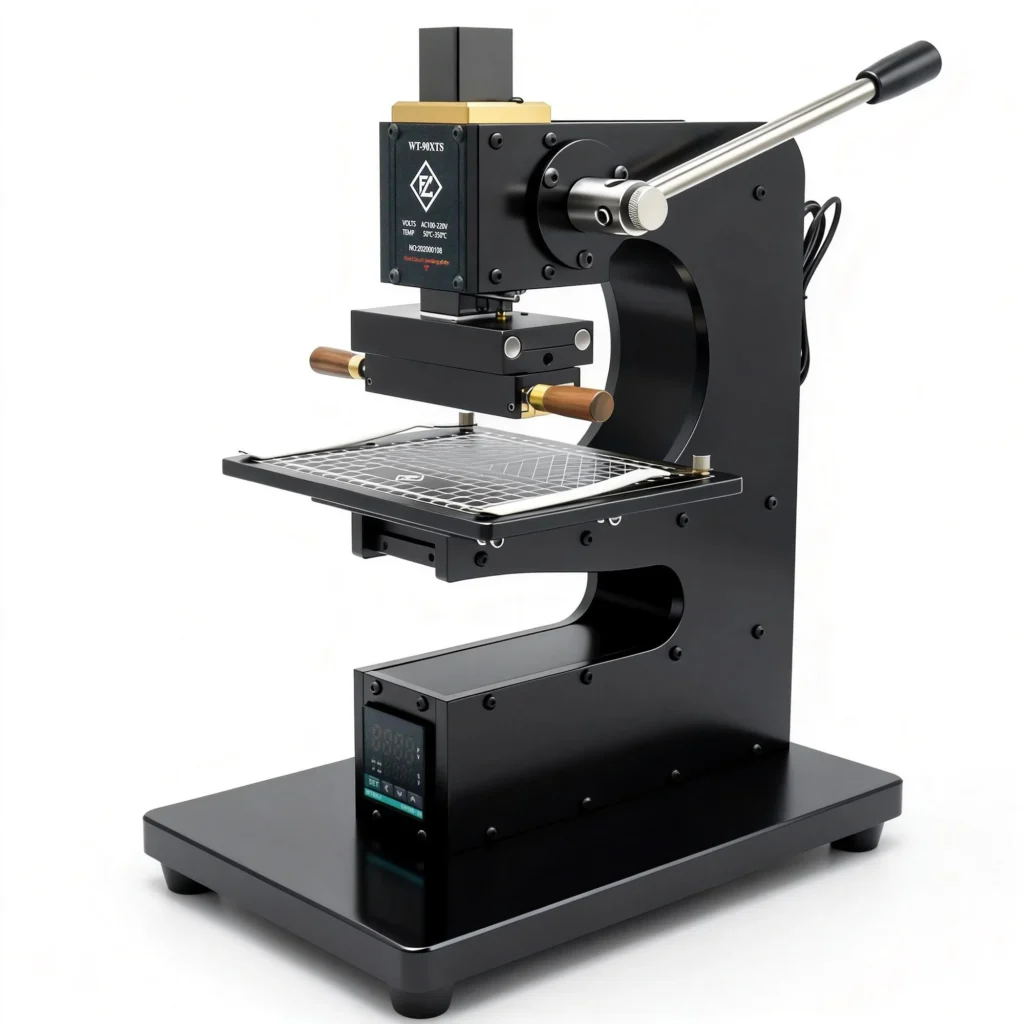
Factory-direct ZHENGFEI 90-XTS delivers 30-50% lower cost with 0.01mm precision for professional leather branding.
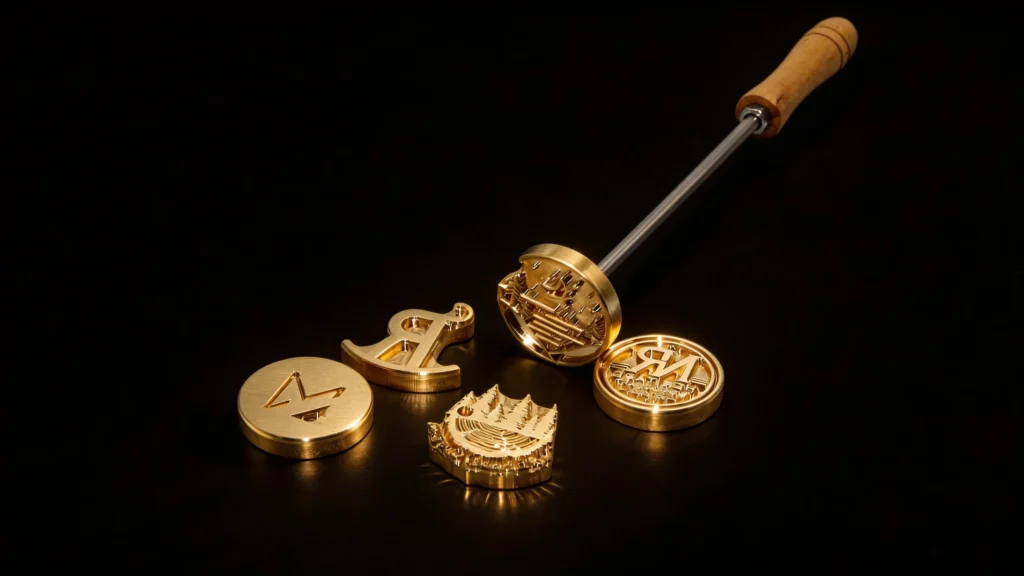
For this reason, wood users should focus on machines such as the WT-90XTSor other models designed for broader material compatibility and higher temperature applications. If you frequently brand wood products, cutting boards, boxes, or craft items, also consider whether a custom brass branding ironis a better solution than a foil stamping machine.
In simple terms:
Choose a hot stamping machineif you want controlled heat, repeatable positioning, and foil or embossing applications.
Choose a branding iron if you want a traditional burned mark on wood or genuine leather.
Choose Based on Precision and Production Volume
If you are a beginner, a studio owner, or a small handmade business, a manual machine is usually the best starting point. It gives you better control, lower cost, and easier setup.
If you need cleaner alignment on logos and repeated placement on leather goods, the EC-27is a better option because of its laser positioning system.
If you handle flexible short-run text stamping, especially on paper or small leather items, the EC17or a movable-type-compatible model can save time and mold cost.
If your order volume grows and you need faster, more consistent production, then it makes sense to move from manual machines to pneumatic or electric models.
Material
Machine
Mold Type
Best Tested Setting
PU leather
EC-27
Brass type
100°C, 1s
PU leather
QS201
Brass mold
100°C, 1s
PU leather
90XTS
Thick movable type
110°C, 1s
White cardstock
EC17
Movable type
110°C, 1s
Key Features to Check Before You Buy
Before buying a hot stamping machine, check these points carefully:
Temperature control accuracy
Stable and repeatable pressure
Mold compatibility
Positioning system for small logos or text
Plate size that matches your products
Voltage compatibility for your market
Whether you need manual, pneumatic, or electric operation
Our Practical Recommendation
If you mainly work with PU leather, choose a machine with precise temperature control and stable positioning. If you mainly work with white cardstock or paper packaging, choose a model that performs well at lower temperatures and short dwell times. If you mainly work with wood, first decide whether you need foil stamping or true heat branding, because that will determine whether a hot stamping machine or a branding iron is the better investment.
The best machine is not the one with the most features. It is the one that matches your material, design detail, and workflow.
Share your love
ZHENGFEI Technical Team
ZHENGFEI Technical Team shares practical hot stamping knowledge from real production tests, including brass die design, foil stamping parameters, machine setup, leather, paper, acrylic, plastic, wood and packaging applications.






 English
 Japanese
 Spanish
 French
 Korean
 German
 Russian