Мы используем cookie, чтобы обеспечить максимальное удобство использования нашего веб-сайта.
Contact Founder
Still have doubts?
Connect directly with our Founder. Whether it’s about pricing or technical details, get a straight answer and an exclusive “Founder’s Bonus” for your first order.
900+ Satisfied Clients
🏆 Over 1000+ Custom Projects Successfully Delivered.
100°C delivers the sharpest, most even gold foil transfer on vegetable-tanned leather in this factory EC-27 test.
Vegetable-Tanned Leather Foil Stamping: EC-27 Temperature Test
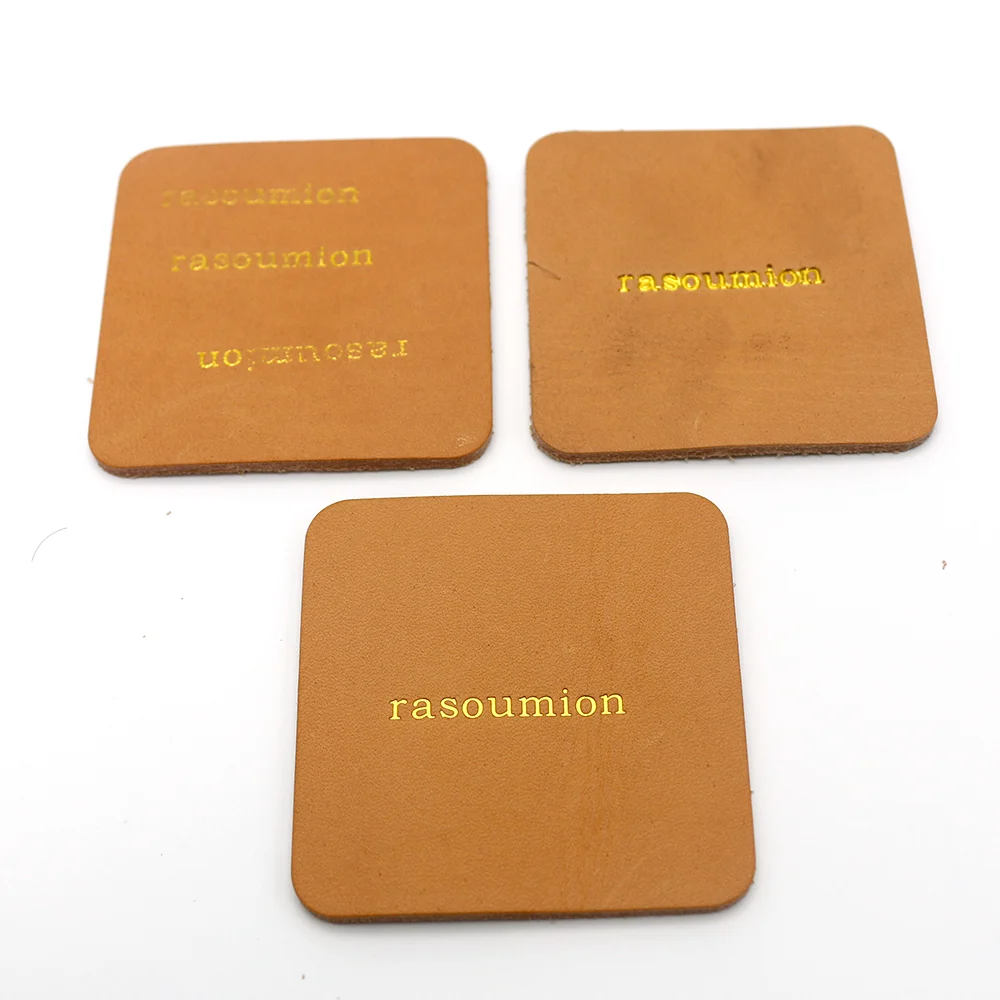
An EC-27 test on vegetable-tanned leather compared foil transfer at 90°C, 100°C, and 120°C. The 100°C sample had the clearest, most even result; 90°C left incomplete letters, while 120°C caused foil to spread beyond the letter edges.
What is a useful vegetable-tanned leather foil stamping temperature to test first? In a ZHENGFEI process test using the EC-27 manual hot stamping machine, 100°C produced the best result among the three tested settings: 90°C, 100°C, and 120°C. The 90°C sample had incomplete foil transfer, while the 120°C sample showed foil spreading beyond the letter edges.
This is a reference result for the leather, foil, die, pressure, and stamping time used in that test, not a universal setting for every leather project. The report does not state the exact leather thickness, foil model, die dimensions, pressure value, or dwell time. For production, begin near 100°C only when your materials and tooling are comparable, then confirm the result on your own leather.
This article is for leather goods makers, small workshops, and customization businesses producing foil-stamped names, logos, or short text on leather products. It explains what the EC-27 samples showed and how to use that result as a controlled starting point.
Key Test Results
Side-by-side temperature comparison proves 100°C is the optimal balance for vegetable-tanned leather foil stamping with EC-27.
Test setting
Observed result
Assessment in the report
90°C
Incomplete lettering and uneven foil transfer
Too low for this test setup
100°C
Clear, complete letters with even foil adhesion and tidy edges
Best result in this test; production reference for the tested setup
120°C
Foil spread beyond letter edges, making strokes look heavier and reducing detail
Too high for this test setup
Test Setup: EC-27 on Vegetable-Tanned Leather
Высокоточное горячее тиснение кожи с EC-27, прямые закупки с завода на 30-50% дешевле.
The test used an EC-27 hot stamping machine to apply gold foil lettering to vegetable-tanned leather. Three temperature settings were compared: 90°C, 100°C, and 120°C. The report says the other test conditions were kept consistent so the samples could be compared by temperature.
The report evaluates letter completeness, edge clarity, foil adhesion, foil spread, and suitability as a production reference. It does not publish numerical pressure or stamping-time values. Those values should not be inferred from the images or copied from another material test.
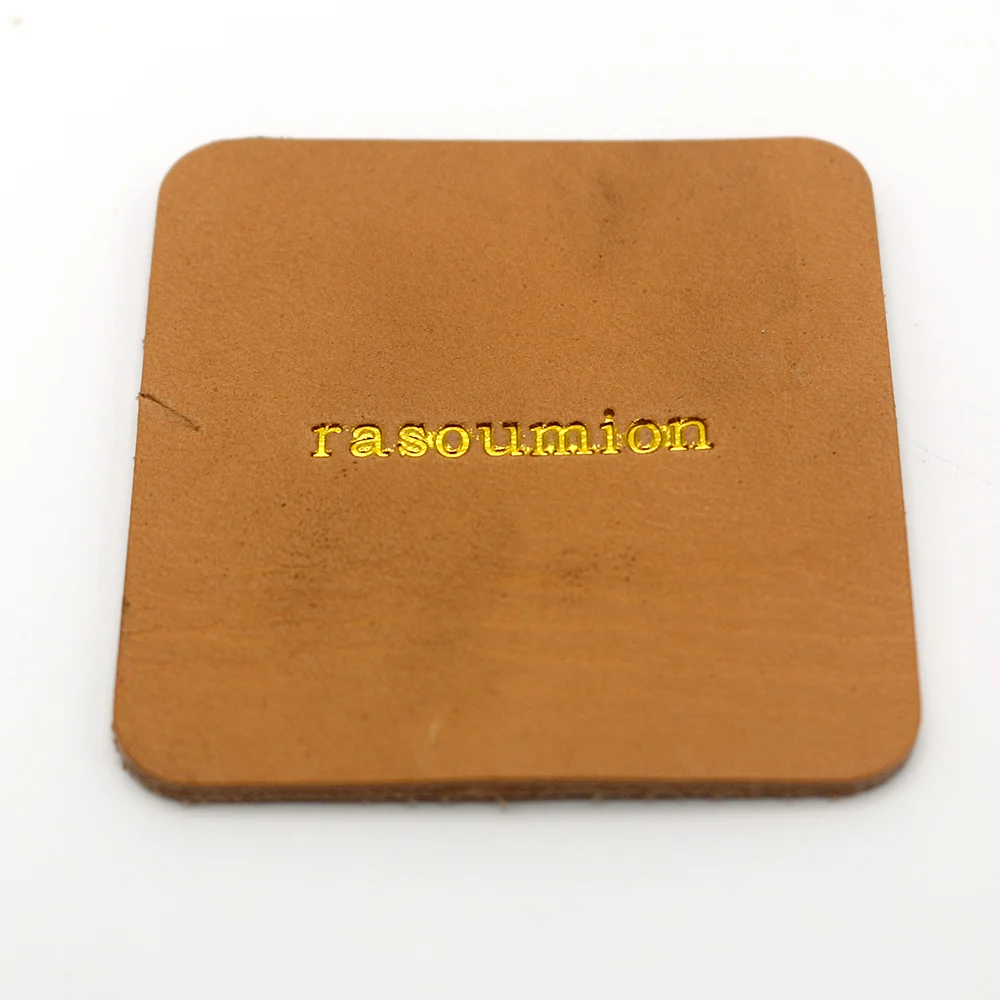
The sample shows a short word stamped onto a leather swatch. The result supports a specific conclusion about this tested setup; it does not establish a general operating range for every leather thickness, surface finish, foil, or lettering design.
90°C: Incomplete Foil Transfer
Too-low temperature causes patchy, broken foil transfer on vegetable-tanned leather; our EC-27 precision machine delivers clean, consistent results.
На 90°C, parts of the lettering did not transfer completely. The report describes missing areas and uneven adhesion, and the sample image shows visibly broken sections in the word.
If a similar defect appears in your first sample, do not immediately increase the temperature by a large amount. First check that the leather lies flat, the die contacts the surface evenly, and the die face is clean. Confirm that the pressure and stamping time are consistent, then make a small, controlled adjustment and compare another sample.
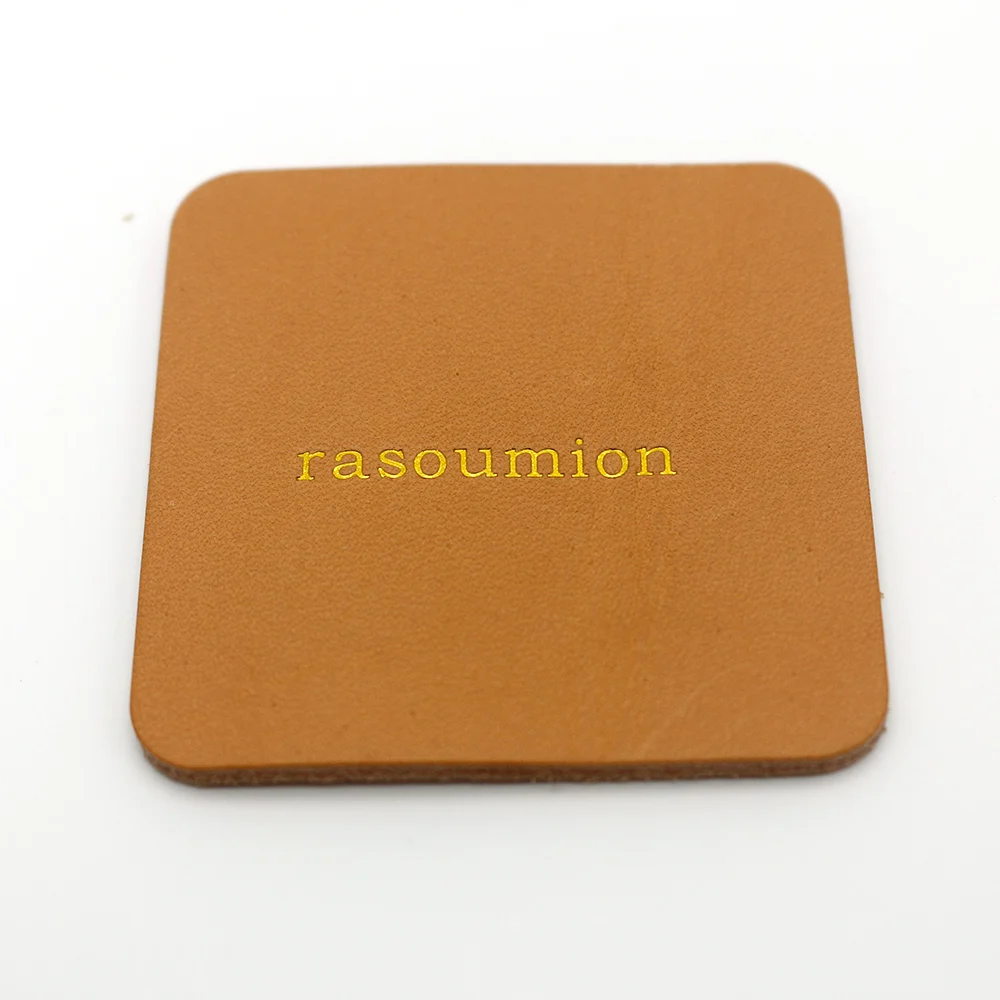
100°C delivers the sharpest, most even gold foil transfer on vegetable-tanned leather in this factory EC-27 test.
На 100°C, the sample showed complete, readable gold lettering with even adhesion and tidy edges. The report found no obvious missing foil or overflow at this setting, making it the best overall result among the three tested temperatures.
For a project that closely matches the test materials and tooling, 100°C is a practical first sampling point on the EC-27. Treat it as a reference temperature, not a guaranteed production recipe. Leather batches can differ in thickness and surface oils, and a different foil or die can change the transfer result.
Before a production run, check the entire design rather than only its most visible letters. Inspect thin strokes, small counters, corners, and the outer edges for complete transfer and clean definition. Record the material batch, foil model, temperature, pressure and dwell-time settings used in your own approved sample.
120°C: Strong Transfer but Visible Foil Spread
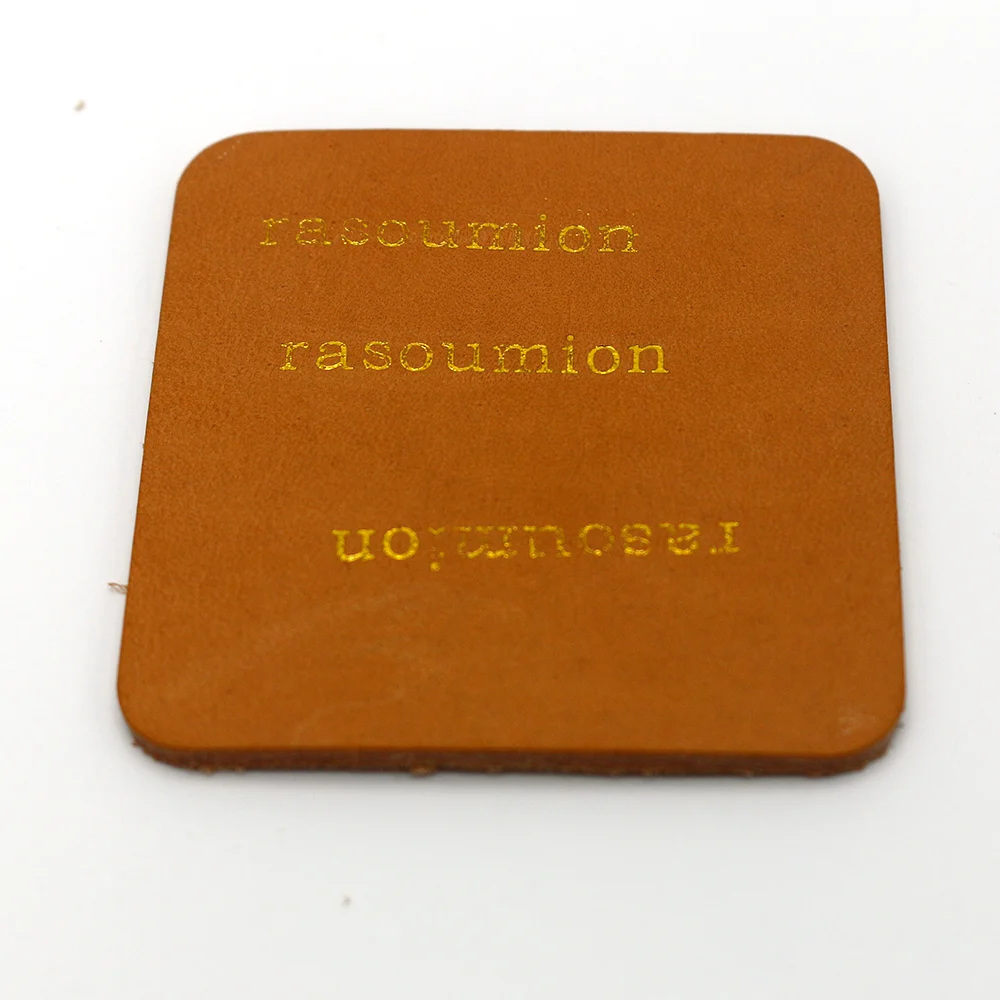
Excessive 120°C heat makes foil spread beyond letter edges, blurring fine detail on vegetable-tanned leather.
На 120°C, the foil transferred, but the sample showed visible spread around the letter edges. The strokes looked heavier and some fine detail was covered by excess foil. The report therefore did not recommend this setting for normal production under the tested conditions.
This comparison is a reminder that a denser-looking foil mark is not automatically a better result. When the edges spread, reduce the heat input in a controlled way and inspect pressure, dwell time, foil compatibility, and die cleanliness. Change one variable at a time so the next sample tells you what improved the result.
How to Apply the 100°C Reference to Your Own Leather
Use this sequence when evaluating a similar leather foil-stamping job:
Prepare a sample from the actual leather batch and use the intended foil and die.
Start near 100°C if the setup is comparable to the documented test.
Keep the leather position, pressure, and stamping time consistent while comparing samples.
Inspect letter completeness, edge sharpness, adhesion, and any foil beyond the design.
Adjust temperature in small steps only after checking die contact, pressure, time, and surface cleanliness.
Re-test when the leather thickness, surface oils, batch, foil model, artwork area, or production pace changes.
During continuous production, watch for die heat build-up and temperature variation, and periodically inspect finished pieces.
Keep the die clean and remove foil residue as needed. Build a production setting from repeatable samples on the actual job, rather than relying on the temperature display alone.
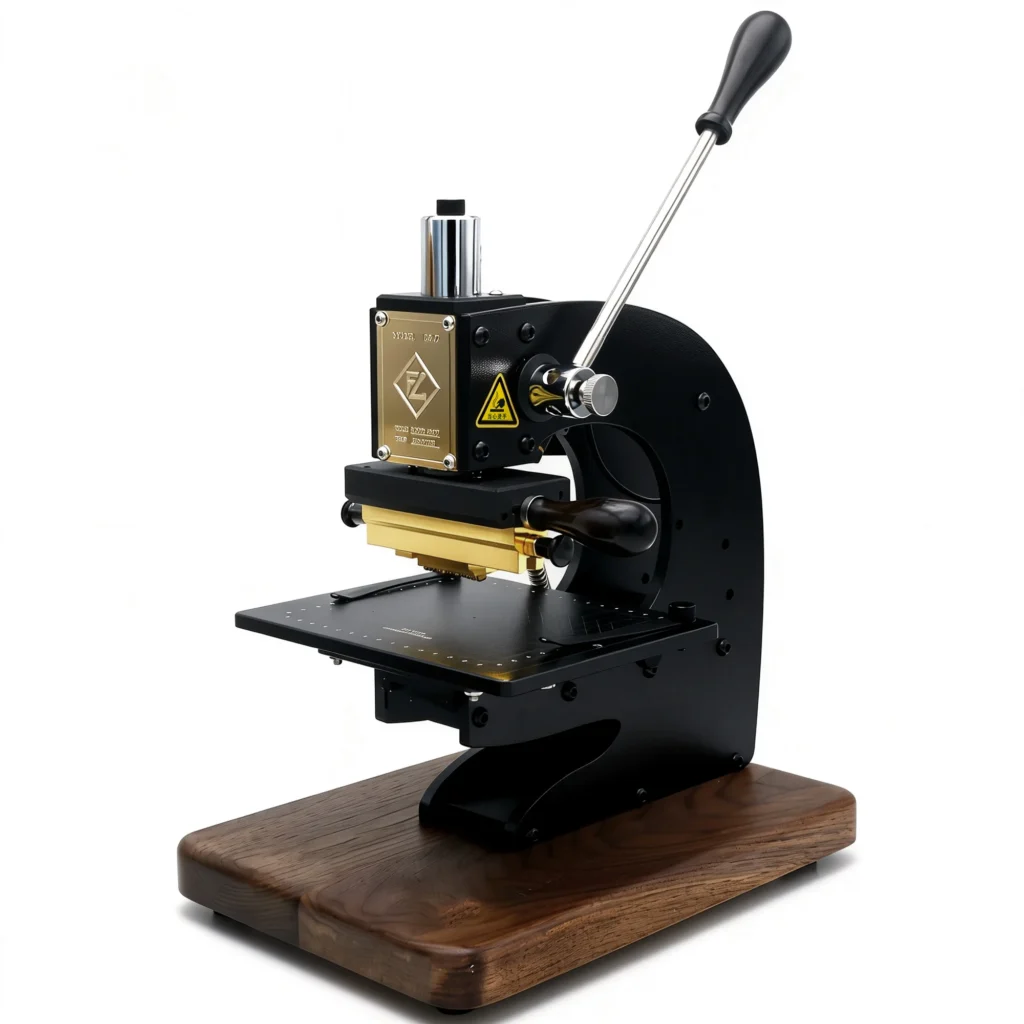
The EC-27 is an existing manual hot stamping machine in the ZHENGFEI catalog. This test adds an evidence-based leather application to its use cases: small leather logos and lettering where a workshop needs to develop and verify its own material-specific settings.
See the EC-27 Manual Hot Stamping Machine With Walnut Base for current product details. Machine suitability depends on the actual stamp size, workpiece, die, and required production volume; request a sample test if you need to check a specific setup.
Часто задаваемые вопросы
What temperature worked best for vegetable-tanned leather in the EC-27 test?
In this test, 100°C produced the clearest and most even result. The comparison used 90°C, 100°C, and 120°C. Use 100°C as a reference for a similar setup, then verify it on your actual leather, foil, and die.
What happened at 90°C?
The 90°C sample had incomplete lettering and uneven foil transfer. If this happens in your own test, inspect die contact, leather positioning, foil compatibility, pressure, and stamping time before making a large temperature increase.
Why was 120°C not recommended in this test?
At 120°C, foil spread beyond the letter edges and made parts of the lettering look heavier. The overall transfer was strong, but edge clarity and fine detail declined.
Is 100°C the correct setting for all vegetable-tanned leather?
No. The report says the result applies only to the leather, die, foil, pressure, and stamping time used in that test. Leather batch, thickness, surface oils, foil model, design area, and production pace can all affect the result.
Did the report specify pressure and stamping time?
No numerical pressure or dwell-time values are provided in the report. It says those conditions should remain consistent during temperature comparisons. Confirm and record the values for your own machine and material.
Conclusion
For the tested EC-27 and vegetable-tanned leather setup, 100°C was the best reference temperature among the three samples. At 90°C, the lettering was incomplete; at 120°C, foil spread around the edges and reduced detail. The report does not provide numerical pressure or stamping-time settings, so those must be confirmed for each production job.
Start near 100°C only as a controlled sample point, then validate the actual leather batch, foil, die, pressure, and dwell time before production. To explore the machine used in this test, visit the EC-27 product page.
Test Source and Editorial Note
This article is based on ZHENGFEI’s EC-27 vegetable-tanned leather foil-stamping report, which compares samples at 90°C, 100°C, and 120°C. The report credits John Zhao, founder of ZHENGFEI. Its temperature result is a process reference for the documented test conditions and should not replace sample testing on the buyer’s actual material and tooling.
Поделитесь своей любовью
ZHENGFEI Technical Team
ZHENGFEI Technical Team shares practical hot stamping knowledge from real production tests, including brass die design, foil stamping parameters, machine setup, leather, paper, acrylic, plastic, wood and packaging applications.







 English
 Japanese
 Spanish
 French
 Korean
 German
 Russian