We use cookies to ensure that we give you the best experience on our website.
Contact Founder
Still have doubts?
Connect directly with our Founder. Whether it’s about pricing or technical details, get a straight answer and an exclusive “Founder’s Bonus” for your first order.
900+ Satisfied Clients
🏆 Over 1000+ Custom Projects Successfully Delivered.
Factory-calibrated 100°C setting produces crisp, premium gold foil lettering for customized stationery and pencil branding.
Pencil Foil Stamping Temperature: EC-27 Test With 3 mm Lettering
ZHENGFEI compared 80°C, 100°C, and 120°C on a pencil surface using the EC-27 and a 3 mm-high letter die. The 100°C sample gave the best balance of clear lettering, even foil, and a stable pencil coating.
What pencil foil stamping temperature gave the clearest result with 3 mm lettering? In a ZHENGFEI test using the EC-27 hot stamping machine, 100°C performed best among the three tested settings: 80°C, 100°C, and 120°C. At 80°C, the foil could transfer incompletely on the small letters. At 120°C, the lettering could spread, look heavier, and expose the pencil coating to greater heat risk.
The test used a 3 mm-high letter die on a pencil surface. The report says pressure, stamping time, die, foil, and other conditions were held consistent during the temperature comparison. It does not publish their numeric settings or identify the pencil coating and foil model, so 100°C should be treated as a reference temperature for this test, not a universal pencil setting.
This article is for pencil makers, stationery brands, promotional-product suppliers, and workshops exploring customized pencils. It covers the reported temperature results and practical controls that matter when small text is applied to a narrow, rounded or faceted object.
Key Test Results
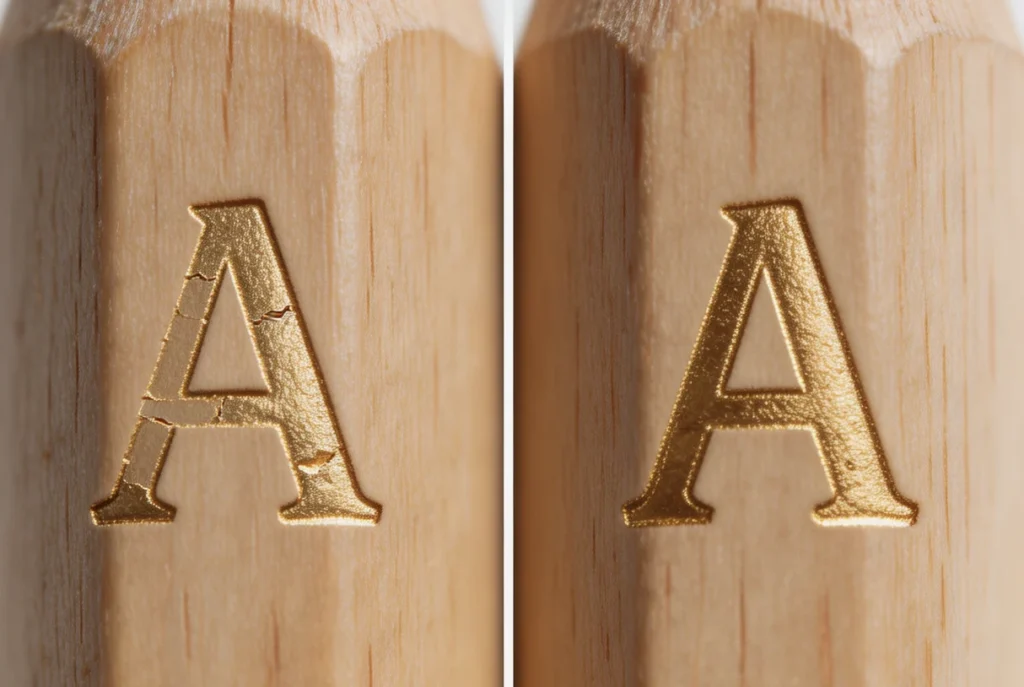
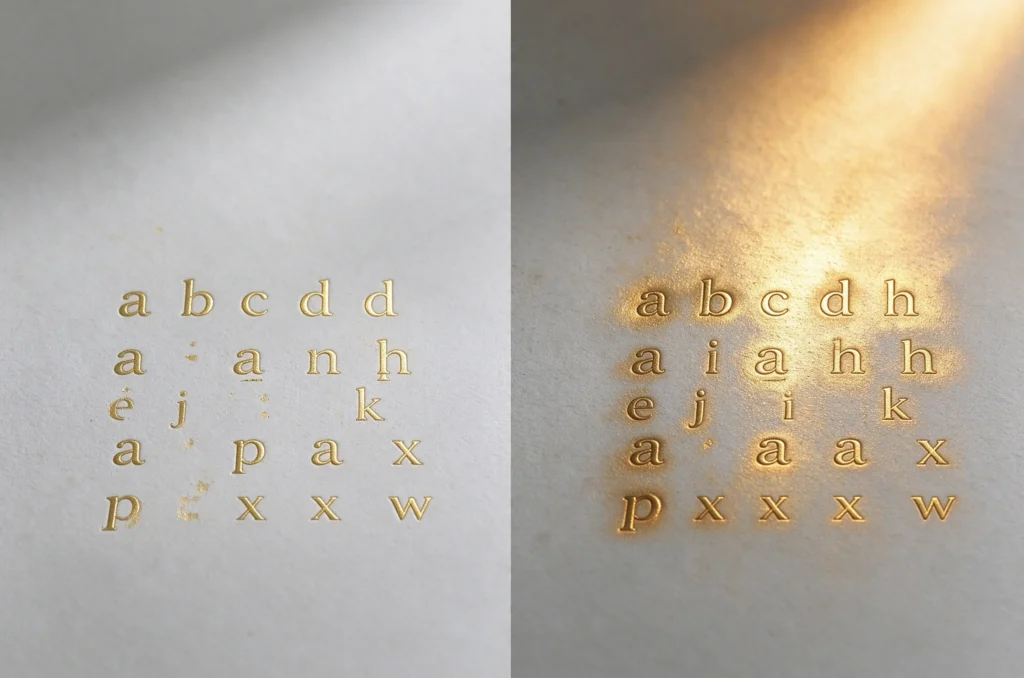
Side-by-side test proves 100°C is the optimal balance for 3mm pencil foil stamping with the EC-27 machine.
Temperatura
Result reported for the test
Assessment
80°C
Foil activation could be insufficient, leaving small strokes incomplete, broken, faint, or weakly adhered
Too low for this test combination
100°C
Complete, readable 3 mm letters with even gloss and stable adhesion; pencil coating remained visually stable
Best balance in this test
120°C
Transfer was strong, but letter edges could spread and strokes become heavier; coating could be affected by heat
Too high as the default for this test combination
The comparison is about this pencil surface, 3 mm die, foil, and machine setup. If you are assessing a different substrate, compare only with a test on that same material. For example, our EC-27 vegetable-tanned leather foil stamping test found 100°C best for its own leather setup, but that does not make the pencil and leather processes interchangeable.
Test Setup: EC-27 and a 3 mm-High Letter Die
The process report identifies the machine as the EC27 hot stamping machine, the application as foil stamping on a pencil surface, and the tooling as a 3 mm letter-height die. The team compared 80°C, 100°C, and 120°C while keeping pressure, stamping time, die, foil, and other conditions consistent.
The evaluation considered letter completeness, edge clarity, stroke definition, metallic appearance, adhesion, and visible changes to the pencil coating. The report does not specify pencil brand, coating chemistry, pencil profile, foil product, pressure value, dwell time, or sample count. Those details should be recorded during your own validation if you need to reproduce the result.
80°C: Fine Strokes May Not Transfer Completely
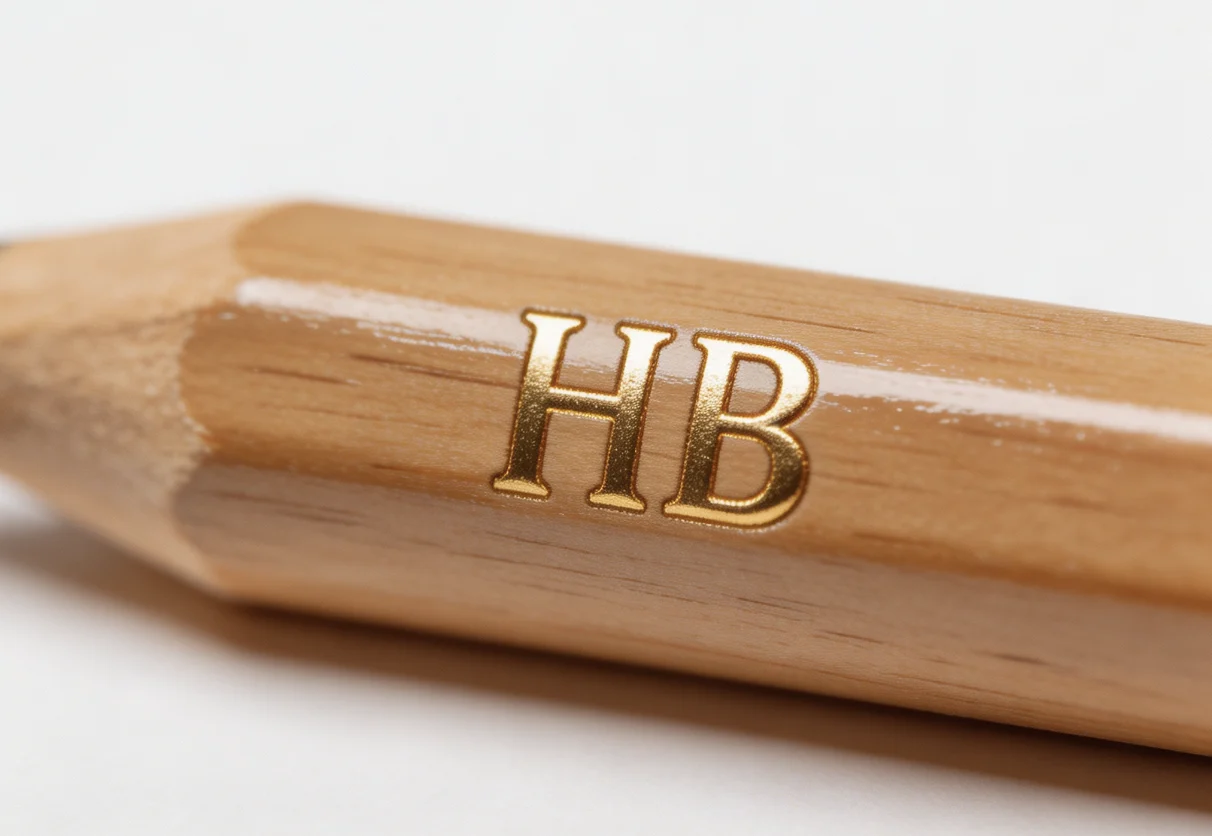
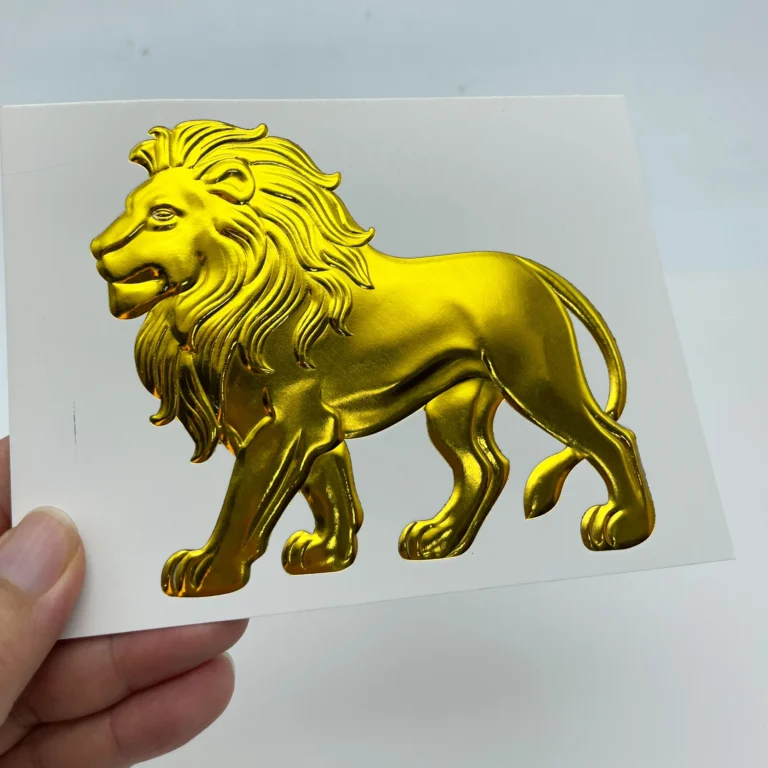
0.01mm precision brass dies deliver sharp, consistent 3mm pencil lettering at the optimal 100°C setting with EC-27.
A 80°C, the report says foil activation may be insufficient for small 3 mm letters. Thin strokes and corners can show missing foil, broken lines, weak color, low gloss, or unstable adhesion. The result can remain recognizable while still falling short of a clean branded finish.
If a first sample looks incomplete, check the setup before making a large temperature change. Confirm that the pencil is positioned consistently, the die face is clean, and the die makes even contact. Also check that the foil is suitable for the pencil’s surface and that the pressure and stamping time have not changed.
100°C: Best Balance in the Reported Test
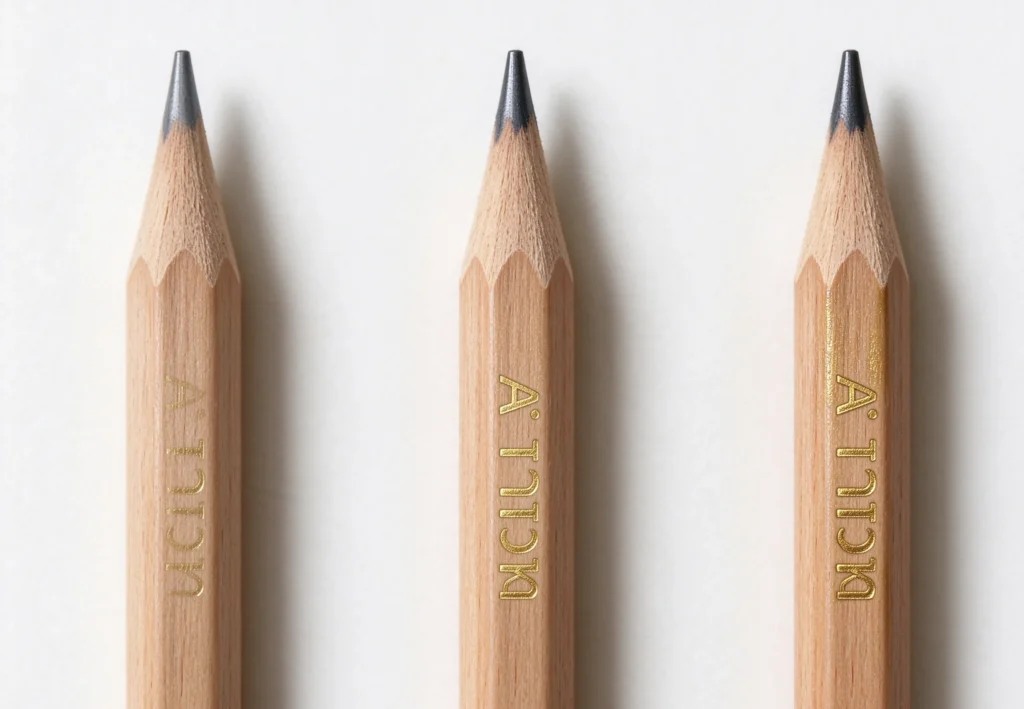
Durable CNC brass dies paired with EC-27 deliver repeatable, clear 3mm foil stamping on pencil production runs.
A 100°C, the report describes complete and clear 3 mm lettering, good detail recognition, even metallic gloss, and stable adhesion. It also reports no obvious pencil-coating gloss change, softening, discoloration, or deeper pressure marks in this test.
For a pencil, foil, die, and EC-27 setup similar to the documented one, 100°C is the best first sampling point supported by this report. Keep it as a reference rather than a guaranteed production value. Confirm the result on the actual pencil style and production batch before approving a run.
Inspect small counters and narrow gaps inside letters as well as the outer edges. A word can look bright from a distance while fine openings have filled or thin strokes have broken. The finish should remain readable, adhere consistently, and leave the surrounding pencil coating in acceptable condition.
120°C: Stronger Transfer Can Reduce Letter Definition
A 120°C, foil transfer may be more complete, but the report warns that small letter edges can spread, strokes can become heavier, and fine gaps can narrow. It also identifies possible coating risks such as gloss change, softening, discoloration, or sticking.
For small lettering, the fullest transfer is not automatically the best result. If strokes thicken or gaps close, lower the heat input in a controlled sample and review pressure and dwell time as well. Change one variable at a time so you can tell which adjustment restored definition.
Why Pencil Positioning Matters for 3 mm Text
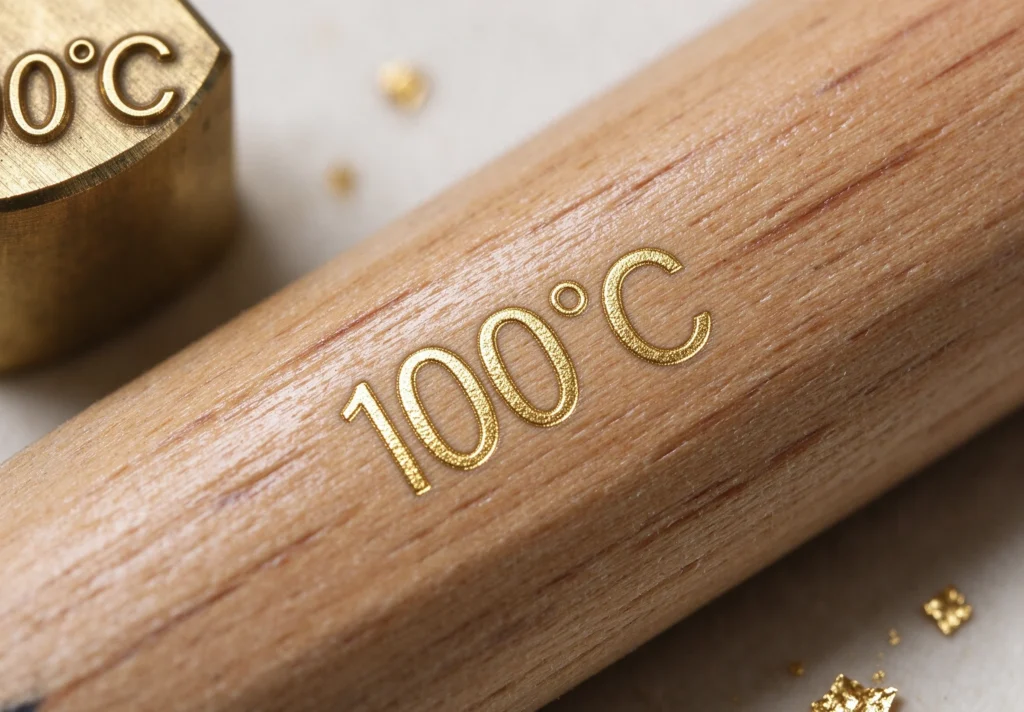
Excessive temperature causes foil bleed on fine 3mm text; 100°C setting preserves sharp detail for small letter stamping.
Unlike a flat card, a pencil can roll or sit at an angle. The report recommends using a locating fixture that matches the pencil profile, aligning the die to the target area, and checking that the heating plate, die, and support are parallel. Without stable positioning, one side of a small word may transfer clearly while another side appears faint or heavy.
Keep pressure only as high as needed for complete transfer. Too little pressure can leave missing foil; too much can deepen impressions or damage the coating. The report does not give a numeric pressure or stamping time, so set and document those on the actual EC-27 and pencil rather than borrowing a value from another material test.
Use this sequence to validate a similar EC-27 pencil job:
Select the actual pencil style and production batch; clean and dry the stamping area.
Secure the pencil in a profile-matched fixture so it cannot roll during the press cycle.
Align the 3 mm letter die and check the parallel relationship between die, heating surface, and support.
Begin near 100°C only if the pencil, foil, and tooling are comparable to the report.
Hold pressure and stamping time constant while evaluating temperature samples.
Inspect stroke completeness, small gaps, edge spread, adhesion, gloss, and coating condition.
If needed, adjust temperature in approximately 5°C steps, changing one variable at a time.
Repeat the sample test when the pencil finish, foil color or brand, material batch, or production conditions change.
During production, periodically check temperature stability and sample quality, and clean foil residue from the die.
FSEA’s Foil Cheat Sheet explains the different techniques used to create metallic foil finishes. Its guide to designing with specialty effects also provides print-design context for foil and other decorative processes. These are general references; the EC-27 temperatures in this article come only from the ZHENGFEI pencil test.
How the Pencil Test Fits the EC-27 Application Range
The EC-27 is already listed as a manual hot stamping machine with walnut base. This pencil test adds a small-format stationery example alongside the machine’s other documented material tests. For comparison, see the EC-27 paper napkin foil stamping test; its material and temperature result are different and should be treated separately.
The two EC-27 application articles answer different process questions: this report covers 3 mm lettering on a pencil surface, while the vegetable-tanned leather test covers lettering on leather. Link both from the EC-27 product page so buyers can navigate from the machine to a test that matches their material.
Frequently Asked Questions
What temperature worked best for 3 mm pencil lettering on the EC-27?
In the reported test, 100°C gave the best overall result among 80°C, 100°C, and 120°C. The test used an EC-27 and a 3 mm-high letter die. Treat 100°C as a reference for a comparable pencil, foil, and tooling setup, then confirm it on your own samples.
What can happen at 80°C?
At 80°C, the report identifies a risk of incomplete foil transfer on small letters, including missing strokes, broken lines, faint color, weak gloss, or unstable adhesion. Check contact, positioning, foil suitability, pressure, and time before making a controlled temperature adjustment.
Why not use 120°C for stronger foil transfer?
The report says 120°C may produce stronger transfer but can also spread letter edges, make strokes heavier, narrow small gaps, and increase the risk of changes to the pencil coating. For this test, 100°C gave a better balance of clarity and surface condition.
Is 100°C suitable for every pencil?
No. Pencil finishes and coatings can differ, and the report does not identify the exact coating or foil product. Re-test when the pencil style, coating, foil, batch, die, or production conditions change.
What pressure and stamping time should I use?
The report does not publish numeric pressure or stamping-time settings. It says these conditions were held consistent during the temperature comparison. Establish and record them on the actual machine and pencil, then validate a sample before production.
Conclusión
For the tested EC-27, pencil surface, and 3 mm-high letter die, 100°C was the best reference temperature among the three settings. At 80°C, small strokes could transfer incompletely; at 120°C, edges could spread and the pencil coating faced greater heat risk. The exact coating, foil, pressure, and dwell time are not specified, so confirm the process on the actual pencil before production.
Use stable pencil fixturing, accurate die alignment, a clean die, and consistent pressure and time. For details about the machine, visit the EC-27 product page, and compare the separate EC-27 vegetable-tanned leather test when evaluating leather rather than pencils.
Test Source and Editorial Note
This article is based on ZHENGFEI’s internal process test report, The report compares 80°C, 100°C, and 120°C while stating that pressure, stamping time, die, foil, and other conditions were kept consistent. It credits John Zhao, founder of ZHENGFEI. Numeric pressure and dwell-time settings, pencil coating identity, foil model, and sample photographs are not present in the supplied DOCX.
Comparte tu amor
ZHENGFEI Technical Team
ZHENGFEI Technical Team shares practical hot stamping knowledge from real production tests, including brass die design, foil stamping parameters, machine setup, leather, paper, acrylic, plastic, wood and packaging applications.






 English
 Japanese
 Spanish
 French
 Korean
 German
 Russian