We use cookies to ensure that we give you the best experience on our website.
Contact Founder
Still have doubts?
Connect directly with our Founder. Whether it’s about pricing or technical details, get a straight answer and an exclusive “Founder’s Bonus” for your first order.
900+ Satisfied Clients
🏆 Over 1000+ Custom Projects Successfully Delivered.
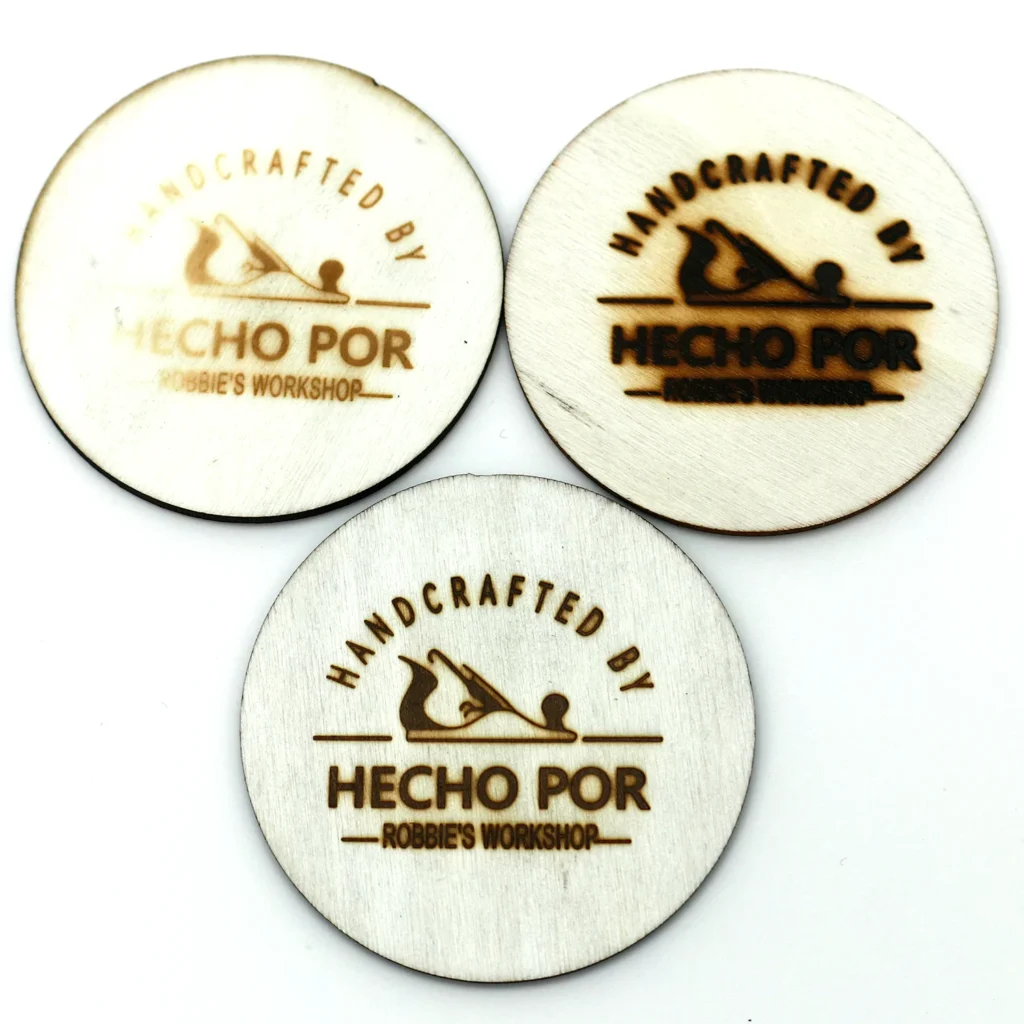
Thin wood can darken quickly under a heated die. In the supplied WT-90DS comparison, 290°C produced the best overall branding result among 200°C, 290°C, and 350°C: the design and fine lines appeared clearly, the color was moderate, and the sample showed no obvious scorching. The 200°C mark was pale and incomplete, while 350°C caused pronounced charring.
The result applies only to the wood, die, pressure, and dwell time used in the documented test. The report does not identify a wood species, thickness, moisture content, or numeric dwell time, so 290°C should be treated as a sample-test reference rather than a universal setting.
Quick Result
Compare sample results to help dial in a branded wood finish with factory-direct WT-90DS equipment.
Temperatura
Observed result
Assessment in this test
200°C
Pale mark, incomplete areas, and missing fine details
Too low
290°C
Clear and complete design, moderate color, no obvious scorching
Best overall result
350°C
Severe charring, dark heat spread, and loss of detail
Too high
The 290°C sample showed clear lettering and fine lines without obvious scorching in this test.
The report says other test conditions were kept consistent during the comparison. It identifies 290°C as the recommended reference for the tested thin wood, but instructs users to confirm again when the wood or process changes.
For a repeatable approval, have the supplier review a proof made with the specified stock and die. The FSEA designer’s guide to foil stamping and embossing explains why the selected material and tooling belong in the proof, rather than relying on a temperature number alone.
Why Thin Wood Is Sensitive to Heat
Thin wood has limited mass to absorb heat from a branding die. The visible mark therefore depends on more than the temperature shown on the controller: species, thickness, moisture, grain direction, surface treatment, die contact, pressure, and dwell time can all affect the result.
At insufficient heat, the design may look faint or incomplete. At excessive heat, the wood fibers can char and the darkened area can spread beyond the intended lines. A useful test must evaluate both mark visibility and the surrounding wood surface.
Test your actual wood stock to tune the branding result before production.
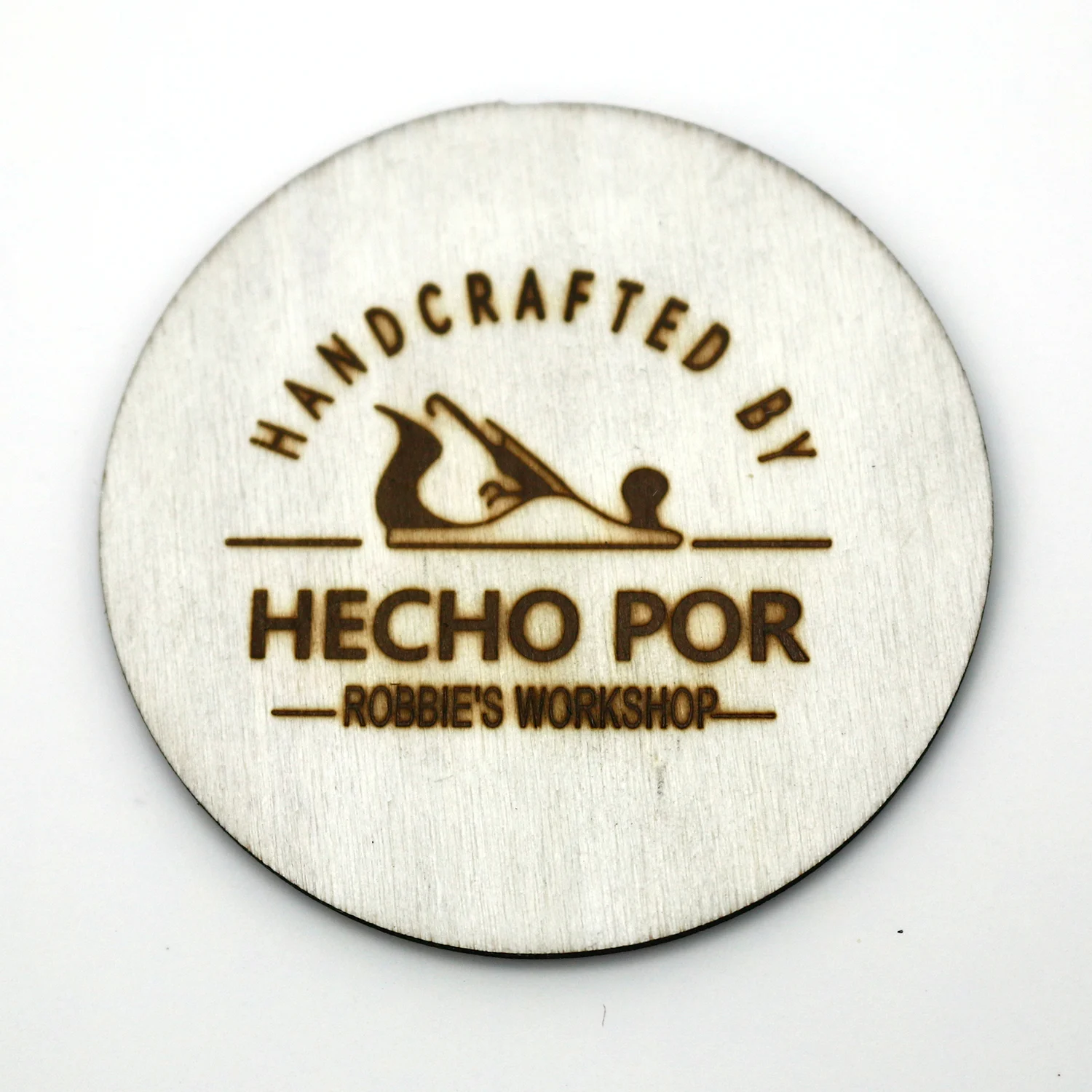
At 200°C, the die did not produce enough visible heat reaction for the tested setup. Parts of the curved lettering, the left side of the design, and lower text were faint or missing. Fine lines and small letters were not stable enough for the report’s production criteria.
290°C: The Best Balance in This Test
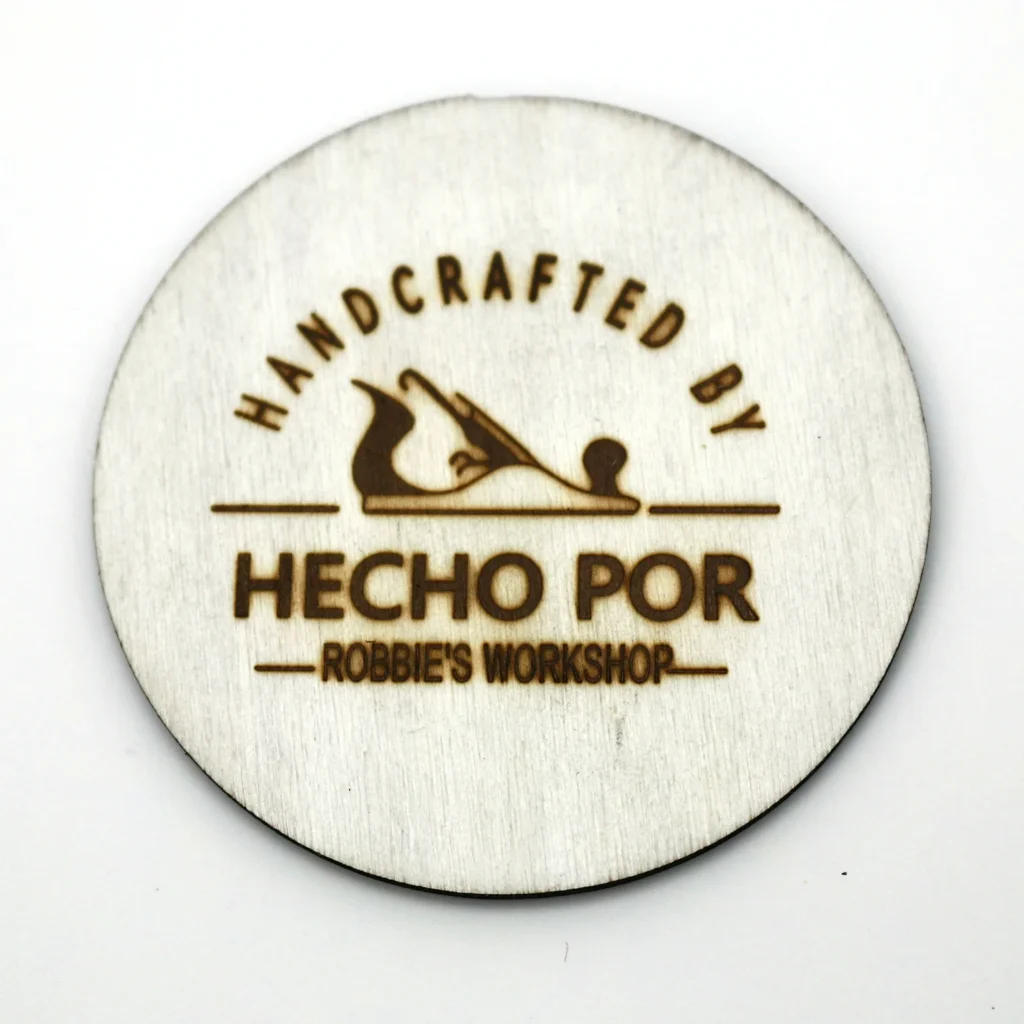
The 290°C sample showed clear lettering and fine lines without obvious scorching in this test.
At 290°C, the main artwork, lettering, and fine lines were clearly visible. The mark had moderate, even color and reasonably clean edges, while the wood showed no obvious blackening or broad heat discoloration. The report therefore identifies 290°C as its production reference for the tested setup.
350°C: Excessive Charring
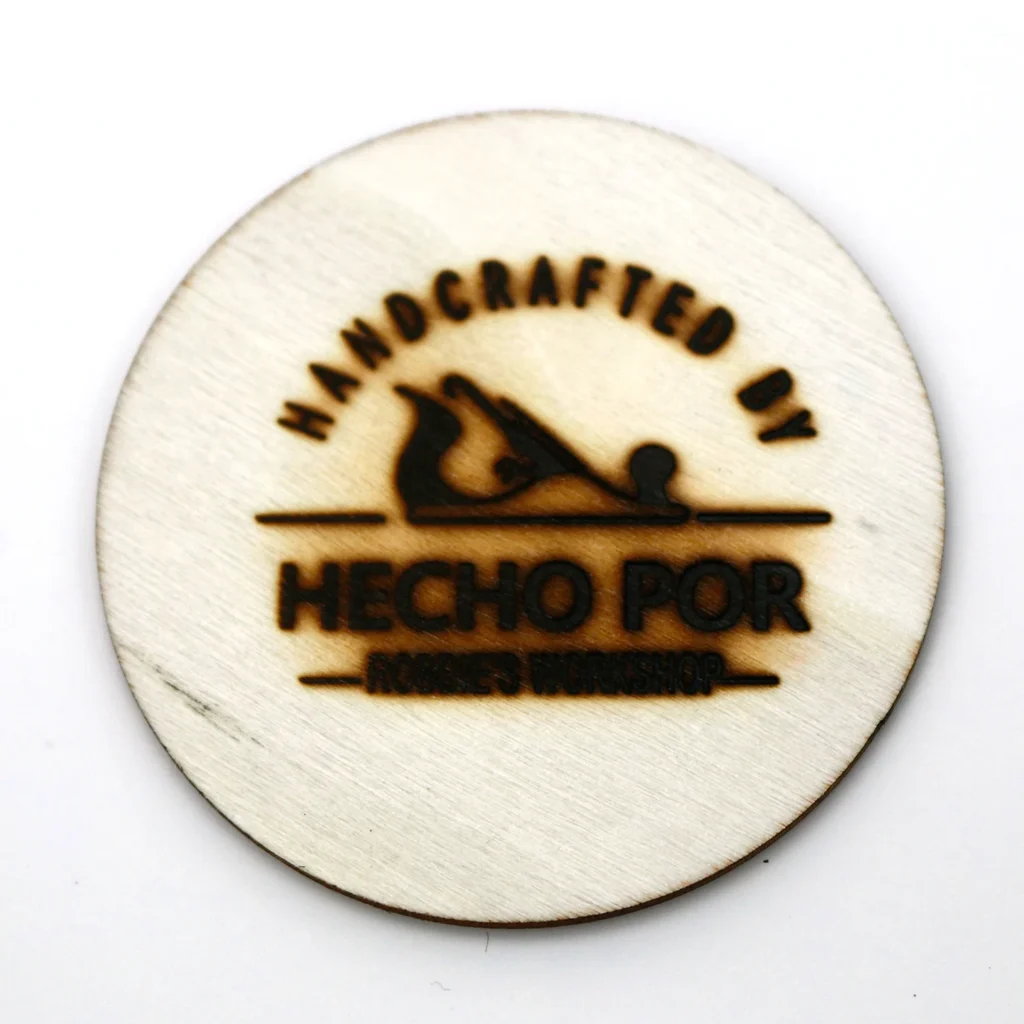
Sample testing helps protect fine logo details by finding a suitable setting for each wood batch.
At 350°C, the design area became heavily carbonized, with dark brown-to-black heat spread around the mark. The edges appeared heavier, and charring obscured some visual layers and fine detail. The report judged this setting unsuitable for the tested production requirement.
How to Validate a Wood Branding Setup
Start near the tested 290°C only if your wood and tooling are reasonably comparable. Hold pressure, dwell time, die, workpiece thickness, and placement steady during initial comparisons so that one change can be evaluated at a time. If a mark is pale, first verify flat contact and alignment before raising temperature substantially.
For a new material, document the species, thickness, moisture condition, surface finish, die artwork, temperature, and press duration. Allow for heat build-up during repeated cycles, inspect samples periodically, and clean residue from the die. Repeat the test when the wood batch, coating, die, or production rhythm changes.
What temperature was best for thin wood branding with the WT-90DS?
The supplied test found 290°C to be the best of its three settings: 200°C, 290°C, and 350°C. This reference applies to the tested sample and process, not all wood species or thicknesses.
Why did the 200°C sample look incomplete?
The report describes insufficient heat reaction: parts of the design and fine details were faint or missing. Check contact, alignment, pressure, and dwell time as well as temperature when validating a new job.
What happened at 350°C?
The wood showed severe charring and dark heat spread. The heavier dark areas also reduced the visibility of fine details, so the report did not recommend 350°C for this setup.
Is 290°C suitable for every wood product?
No. Wood species, thickness, moisture, grain, surface treatment, die geometry, pressure, and dwell time can all change the result. Run a sample on the actual material before production.
Conclusión
In the documented WT-90DS thin-wood branding test, 290°C gave the clearest balanced mark. At 200°C, parts of the design remained pale or incomplete; at 350°C, charring became excessive. Use 290°C as a reference for a comparable setup and validate each new wood batch with a controlled sample.
See the WT-90DS product page for machine details, and contact ZHENGFEI with your wood sample, thickness, artwork, and target mark before production.
Comparte tu amor
ZHENGFEI Technical Team
ZHENGFEI Technical Team shares practical hot stamping knowledge from real production tests, including brass die design, foil stamping parameters, machine setup, leather, paper, acrylic, plastic, wood and packaging applications.









 English
 Japanese
 Spanish
 French
 Korean
 German
 Russian