Wir verwenden Cookies, um sicherzustellen, dass wir Ihnen die beste Erfahrung auf unserer Website bieten.
Contact Founder
Still have doubts?
Connect directly with our Founder. Whether it’s about pricing or technical details, get a straight answer and an exclusive “Founder’s Bonus” for your first order.
900+ Satisfied Clients
🏆 Over 1000+ Custom Projects Successfully Delivered.
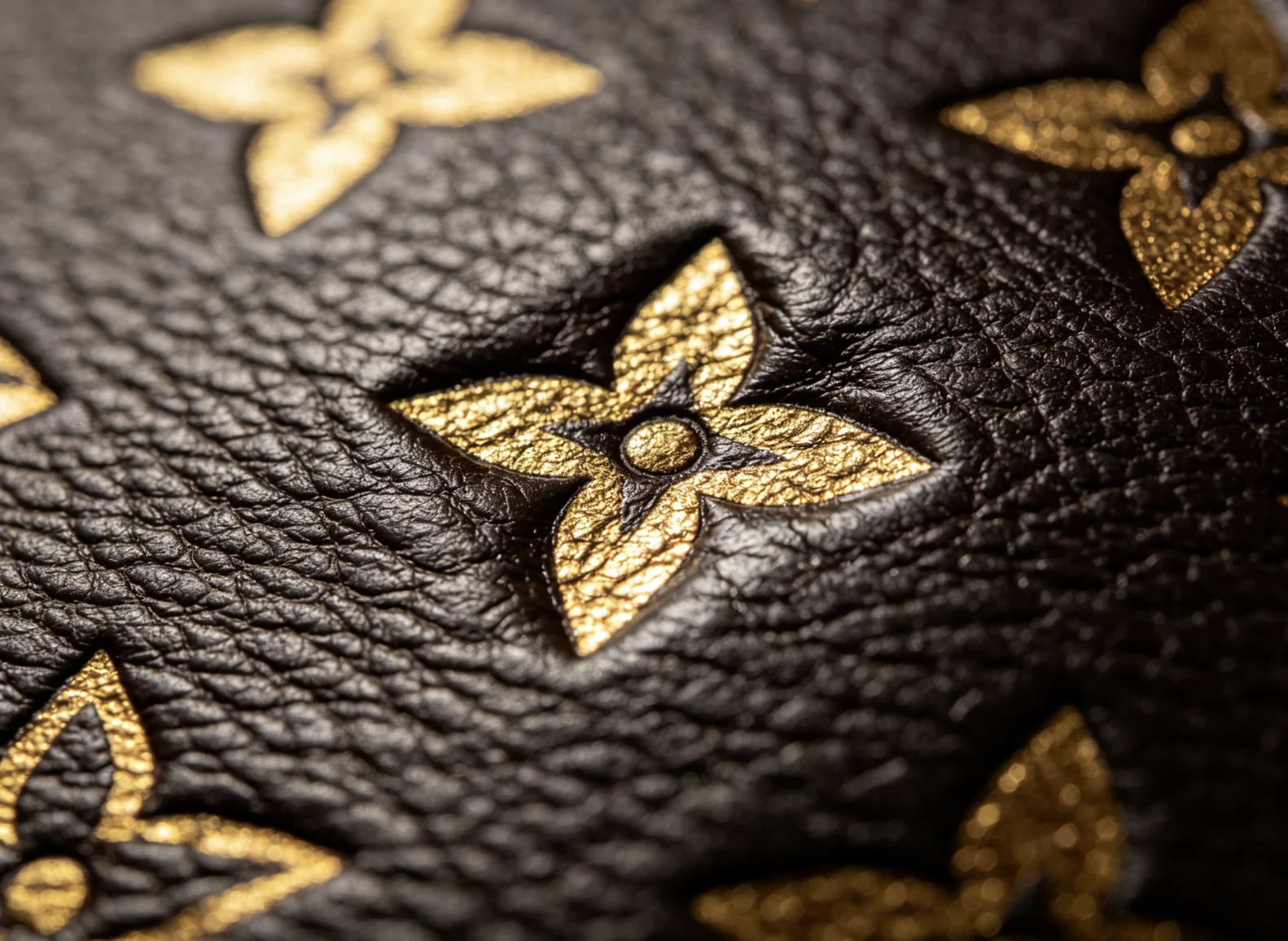
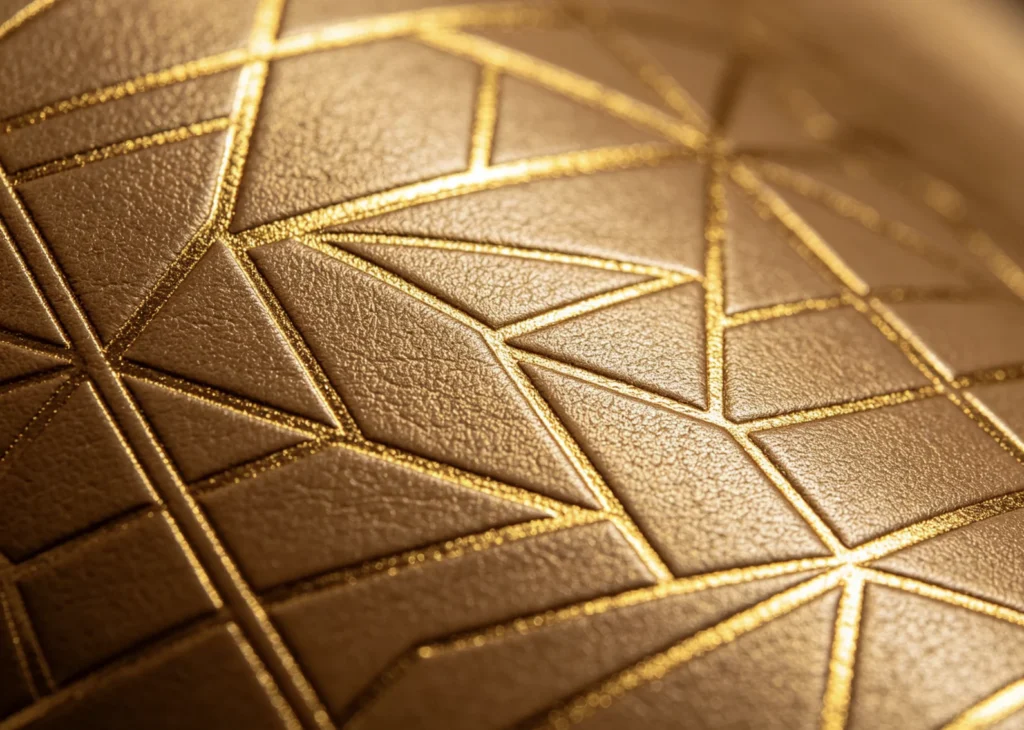
Fixed high machine pressure creates uniform deep indentations across full production batches; adjustable hydraulic presses and flat CNC brass dies deliver consistent shallow clean foil for bulk leather goods.
Why Does Hot Stamping Leave Deep Marks on Leather?
Hot stamping leaves deep marks on leather when the process is too aggressive for the material. The usual causes are too much pressure, too high temperature, too long dwell time, a large solid die area, soft leather, weak material support, or a die that is not level.
For clean leather foil stamping, aim for enough heat and pressure to transfer the foil, but not so much that the die sinks deeply into the leather. A shallow, even impression is usually better than a deep mark when the goal is metallic foil. Test on scrap leather first, reduce one variable at a time, and match the die size and machine to the material.
Deep Mark, Clean Deboss, or Material Damage?
Not every pressed mark is a defect. Some customers want a blind debossed logo or a deeper branded look. The problem starts when the mark is deeper than expected, the surrounding leather becomes shiny, the surface wrinkles, the logo edge spreads, or the material coating is damaged.
Use this quick distinction:
Result
What It Looks Like
Is It a Problem?
Clean foil stamp
metallic foil transfers with a slight impression
usually ideal
Light deboss with foil
foil sits in a shallow pressed mark
acceptable for many leather goods
Deep deboss
logo is clearly sunken without tearing or deformation
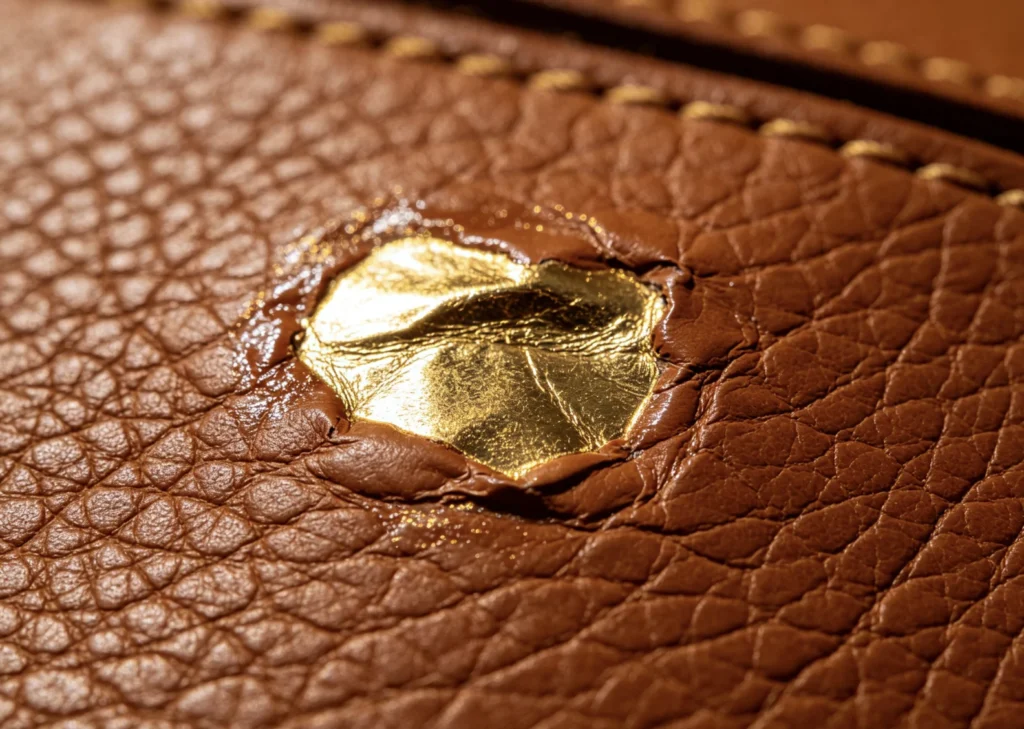
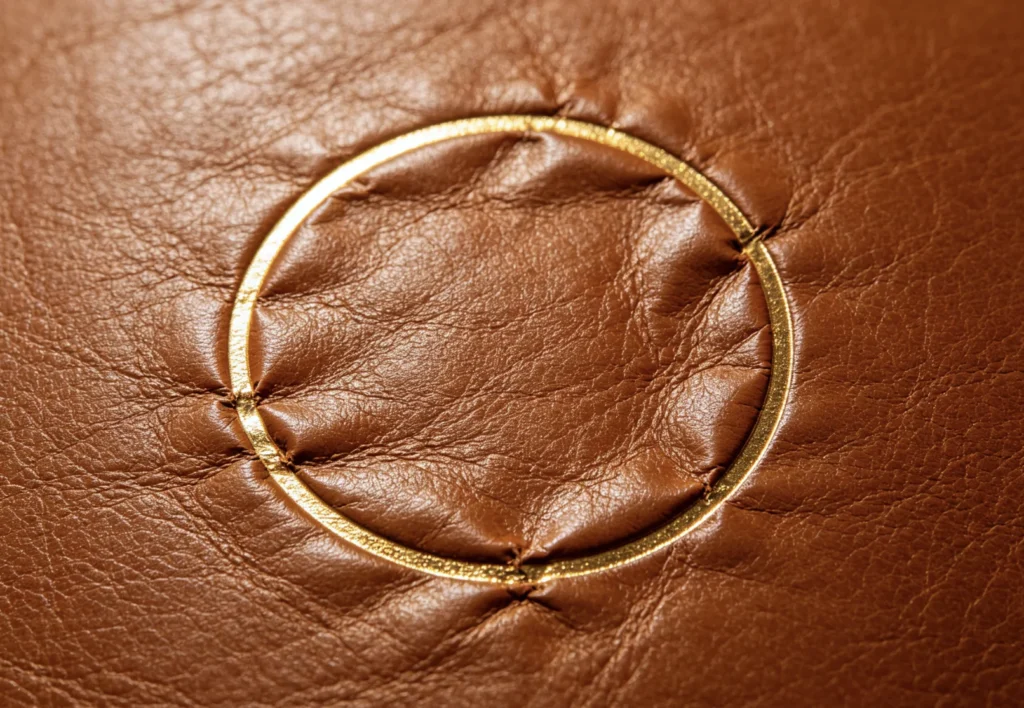
Excessive heat softens leather coating and leaves permanent shiny pressure rings around logos; lower temperature and moderate pressure deliver clean shallow foil without glossy indent marks.
Leather is not a flat plastic sheet. It has thickness, grain, coating, softness and memory. When a heated die presses into it, the leather responds to both mechanical pressure and heat.
Deep marks happen when the die pushes too far into the surface or when heat softens the leather enough for the die to sink. On PU leather, the coating can soften or deform. On genuine leather, the grain can flatten, darken or become shiny. On soft leather goods, the whole product may compress unevenly.
This is why a setting that works on one leather sample may damage another.
Cause 1: Too Much Pressure
Over-high temperature melts foil and scorches leather grain; start with conservative low heat and short dwell time to avoid permanent discoloration and wrinkled foil on coated leather.
Pressure is necessary for foil transfer, but more pressure does not always create a better stamp.
If pressure is too strong, you may see:
deep indentation around the logo
square or shoulder marks from letter type
shiny compressed leather
edge spread around small letters
extra foil around the design
uneven depth from one side to the other
This is common when users try to solve weak foil transfer by pressing harder. If the real problem is low temperature, wrong foil or poor die contact, extra pressure may only damage the leather.
For foil stamping, the die should usually press just enough to create contact and transfer. For a deliberate blind deboss, a deeper mark can be acceptable, but it should be planned as the final effect, not created accidentally.
Cause 2: Temperature Is Too High
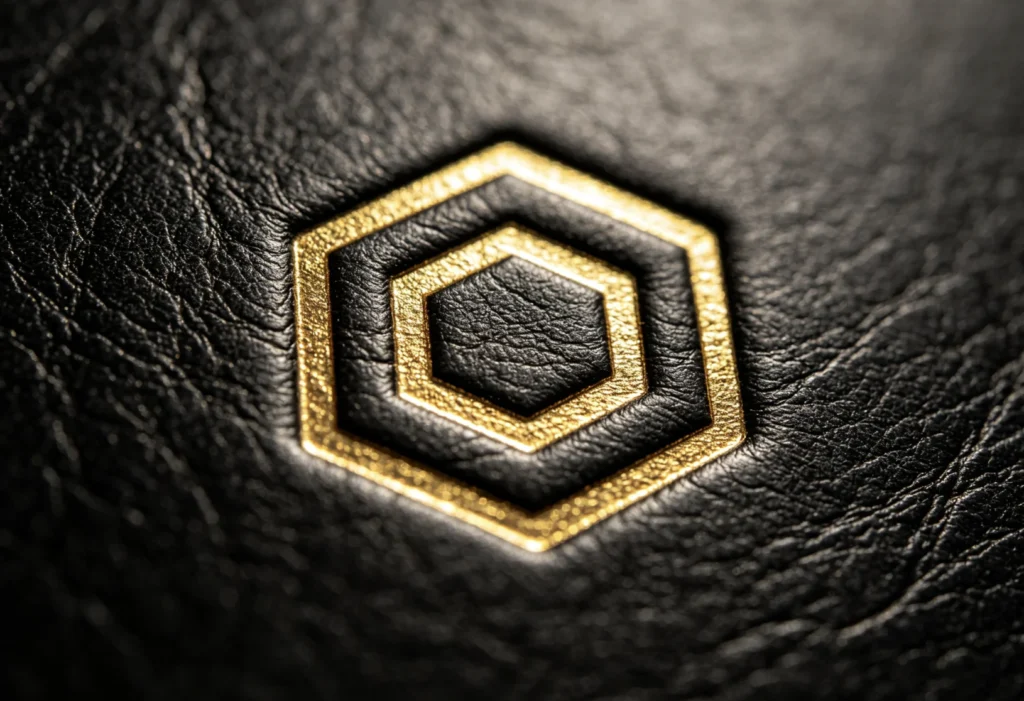
Too much heat and pressure melt foil adhesive and blur thin logo lines; precision flat brass molds paired with controlled machine parameters retain crisp tight foil edges on leather.
High temperature can soften leather coatings and make pressure marks worse. On PU leather especially, heat can make the surface easier to dent, blur or deform.
Based on Zhengfei workshop tests, EC-27 letter type and QS201 brass die work on tested PU leather gave clean results around 100°C with short dwell time. At higher temperatures, the metallic effect could look stronger, but small text was more likely to show edge spread. Around 120°C in the test notes, PU leather could soften, show press marks or produce fuzzy edges.
For 90XTS thick letter type on tested PU leather, around 110°C with 1 second was a strong reference. At higher temperatures, edge spread and material stress became more likely.
These are reference settings, not universal rules. The exact value depends on PU coating, genuine leather type, foil model, die size, pressure, dwell time and artwork detail.
Cause 3: Dwell Time Is Too Long
Dwell time is how long the heated die stays in contact with the material. A longer dwell gives more time for foil adhesive activation, but it also gives more time for heat to move into the leather.
Too much dwell time can cause:
deeper leather compression
dull or spread foil edges
softened PU coating
darkened genuine leather
stuck foil residue
surface hardening after cooling
If the foil transfers but the leather is damaged, shorten dwell time before increasing pressure. For small letters and fine logos, short dwell time often gives cleaner edges.
Cause 4: The Die Area Is Too Large or Too Solid
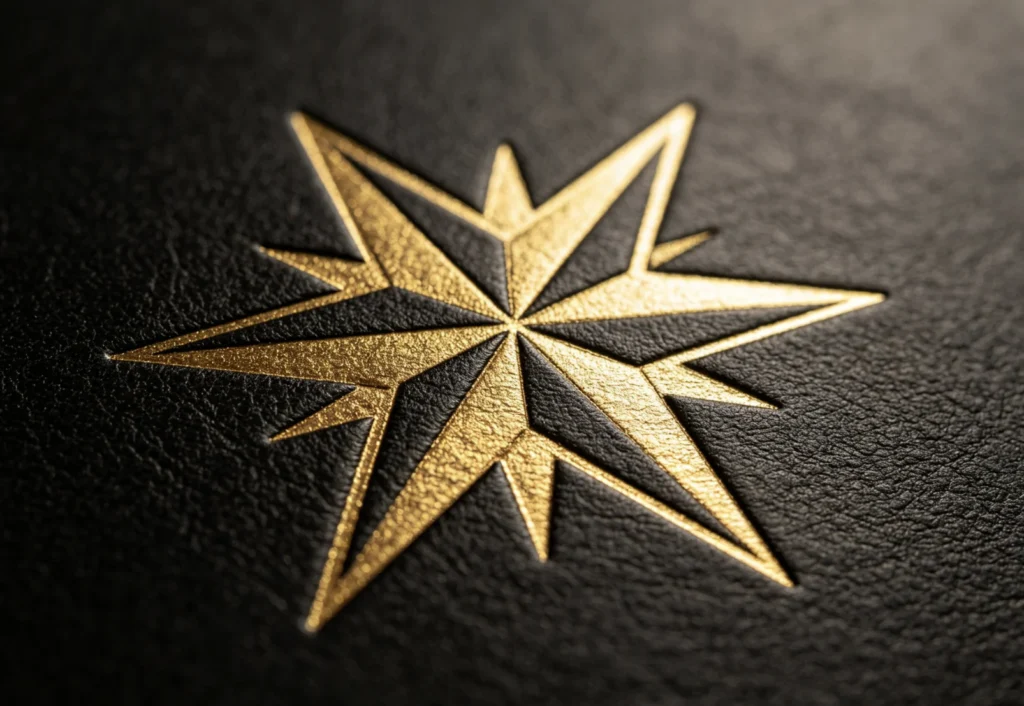
Large full-surface solid brass dies demand balanced low even pressure; uncalibrated oversized molds sink deeply into soft leather and create unsightly all-over indentation.
A small logo and a large solid block do not behave the same.
Large dies need more even pressure across the full surface. If the machine, material support or die mounting is not stable, one area may stamp cleanly while another area presses too deeply.
Large solid designs are more likely to create:
heavy indentation
uneven shine
missing foil in the center
edge spread
material deformation
visible press outline
Before engraving a large logo, review the artwork. Sometimes changing a solid logo into an outline, reducing filled areas or increasing line spacing can make the stamping result cleaner.
Over-high pressure and extended dwell time sink brass dies deep into soft leather and create wrinkled grain; our flat CNC brass molds with calibrated machine settings avoid over-deep indentations.
Soft leather compresses easily. If the leather piece sits on a soft or uneven surface, the die may push the material downward instead of creating a controlled surface impression.
This is especially common with:
soft genuine leather
padded leather goods
finished wallets
notebook covers with foam or board underneath
bag panels near seams
curved product surfaces
leather with uneven thickness
Use a firm, flat support under the stamping area whenever possible. For finished products, avoid stamping over seams, folds, zippers, padded areas or raised edges.
If the product cannot lie flat, the risk of deep marks and uneven foil transfer increases.
Cause 6: The Die Is Not Level
When the die is not level, one side contacts first. The operator may increase pressure to make the weak side transfer, but then the strong side becomes too deep.
Signs of uneven die contact:
one side of the logo is darker or deeper
one side transfers foil, the other side does not
a corner leaves a strong pressure mark
extra foil appears on only part of the design
the leather surface looks tilted or uneven after stamping
Before changing temperature, check die flatness and machine alignment. A small leveling issue can create a big difference in leather results.
Cause 7: The Wrong Marking Method Was Chosen
Foil stamping, blind debossing and heat branding are different effects.
If the customer wants a deep permanent mark, blind debossing or heat branding may be more suitable than foil stamping. If the customer wants clean gold, silver or colored foil, a shallow controlled impression is usually safer.
Forcing a foil stamp to become very deep often creates messy foil and leather damage. A Reddit leathercraft discussion on gold stamp embossing made the same practical point: clean foil and deep impression often require different priorities.
pressure/heat too high or foil releases too easily
lower temperature and test another foil
Center of large logo is weak
die area too large or pressure uneven
use a more stable press or redesign the die
Change only one variable at a time. If you reduce pressure, temperature and dwell time together, you may not know which change solved the problem.
Recommended Test Workflow
Use this process before stamping final leather goods:
Cut scrap leather from the same batch.
Clean the material surface if needed.
Mount the die and check that it is level.
Start with a conservative temperature.
Use short dwell time first.
Press lightly enough to create contact.
Check foil transfer and leather depth.
Increase only one variable if needed.
Record the best setting for that material.
Test on the same product structure before production.
Flat leather scrap is useful, but it is not always enough. If the final product is a finished wallet, bag or notebook cover, test a similar product structure because padding, backing and seams change the pressure result.
PU leather can produce clean foil results, but the coating is sensitive to heat and pressure. If it gets too hot, it can soften, wrinkle, harden or show permanent pressure marks.
Start conservatively and avoid chasing a stronger metallic shine by adding too much heat. If the foil already transfers, reduce pressure or dwell time when press marks appear.
Echtes Leder
Genuine leather varies more than PU leather. Full-grain, corrected grain, split leather, oily leather and soft leather can all respond differently.
Some genuine leather accepts a shallow foil stamp well. Other leather may darken, polish, flatten or resist foil. Oily leather can be difficult because surface oils may interfere with adhesion.
Finished Leather Goods
Finished wallets, bags, journals and covers are harder than flat leather pieces. They may have seams, padding, board, glue layers or curved areas under the stamping location.
Before production, check whether the stamping area can lie flat and receive even backing support.
When a Deep Mark Is Actually the Goal
Sometimes the customer wants a deep blind deboss instead of foil. In that case, the process should be planned differently.
For blind debossing:
choose suitable leather
use a die with appropriate relief depth
use stable backing support
test depth before production
avoid pushing delicate coatings too far
accept that the result may wear differently from foil
When a customer says hot stamping leaves deep marks on leather, ask for:
material type
Produktfoto
leather thickness
whether it is PU leather or genuine leather
machine model
Stempelgröße
logo file
foil color and foil type
temperature setting
Verweildauer
whether pressure is adjustable
photo of the failed stamp
These details help separate material problems from machine setup, die contact and process settings.
Häufig gestellte Fragen
Why does hot stamping leave a deep mark on leather?
Hot stamping leaves a deep mark when pressure, temperature or dwell time is too high for the leather, or when the die area is too large and the material is too soft. Reduce pressure first if the foil is already transferring, then adjust heat and dwell time.
Should foil stamping on leather be deep?
Not necessarily. For clean metallic foil, a shallow and even impression is often better than a deep one. Deep debossing is a different effect and should be planned intentionally.
How do I reduce shiny pressure marks on leather?
Reduce pressure, lower temperature if the leather coating is softening, shorten dwell time, and use firm flat backing under the material. Also avoid stamping over seams, padding or uneven product areas.
Why does PU leather deform during hot stamping?
PU leather can deform when the coating softens under heat and pressure. High temperature, long dwell time, strong pressure or a large solid die can create wrinkles, dents, fuzzy edges or permanent marks.
Can I fix deep hot stamping marks after they happen?
Usually not completely. Some minor shine may reduce with time or gentle leather care, but deep deformation, melted coating or scorch marks are often permanent. It is better to prevent the problem through testing.
Is a deep mark caused by the die or the machine?
It can be caused by either, but the full system matters: die size, relief height, machine pressure, backing support, leather softness, temperature and dwell time. Test the same die on scrap material before judging the machine.
What setting should I use for PU leather?
Based on Zhengfei tests, 100-110°C with short dwell time is a practical starting range for several PU leather foil stamping jobs, depending on machine and die type. Always test your actual PU leather, foil and logo size before production.
CTA
Need to reduce deep marks, shiny pressure areas or leather deformation during hot foil stamping?
Send ZHENGFEI your material photo, failed stamping photo, logo size, machine model, foil type, temperature and dwell time. Our team can help review whether the issue comes from pressure, heat, die design, leather type or machine selection.
Teilen Sie Ihre Liebe
ZHENGFEI Technical Team
ZHENGFEI Technical Team shares practical hot stamping knowledge from real production tests, including brass die design, foil stamping parameters, machine setup, leather, paper, acrylic, plastic, wood and packaging applications.






 English
 Japanese
 Spanish
 French
 Korean
 German
 Russian