Wir verwenden Cookies, um sicherzustellen, dass wir Ihnen die beste Erfahrung auf unserer Website bieten.
Contact Founder
Still have doubts?
Connect directly with our Founder. Whether it’s about pricing or technical details, get a straight answer and an exclusive “Founder’s Bonus” for your first order.
900+ Satisfied Clients
🏆 Over 1000+ Custom Projects Successfully Delivered.
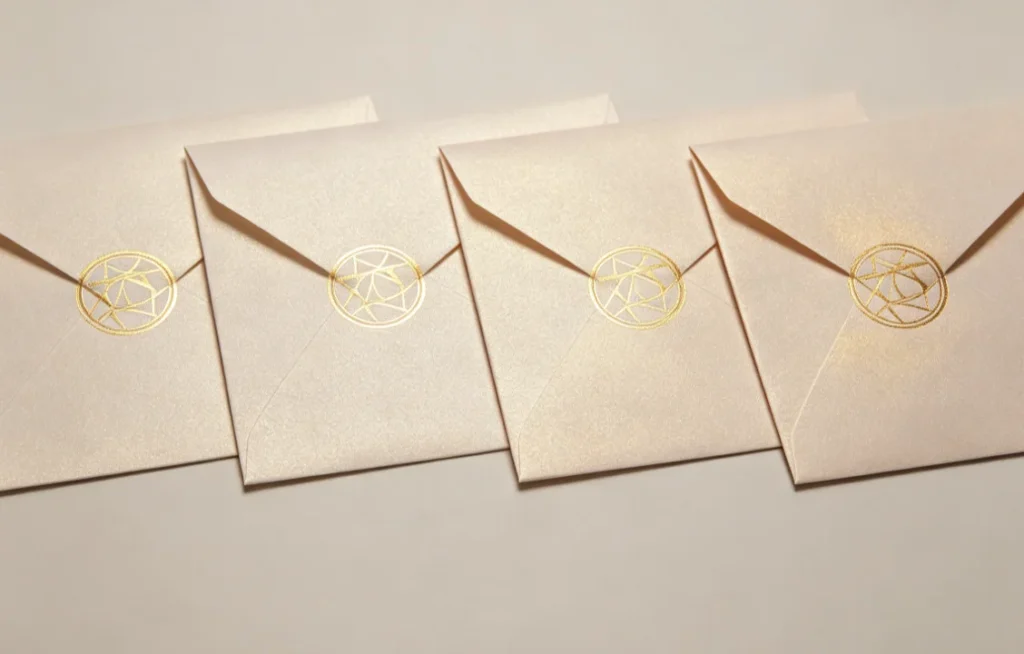
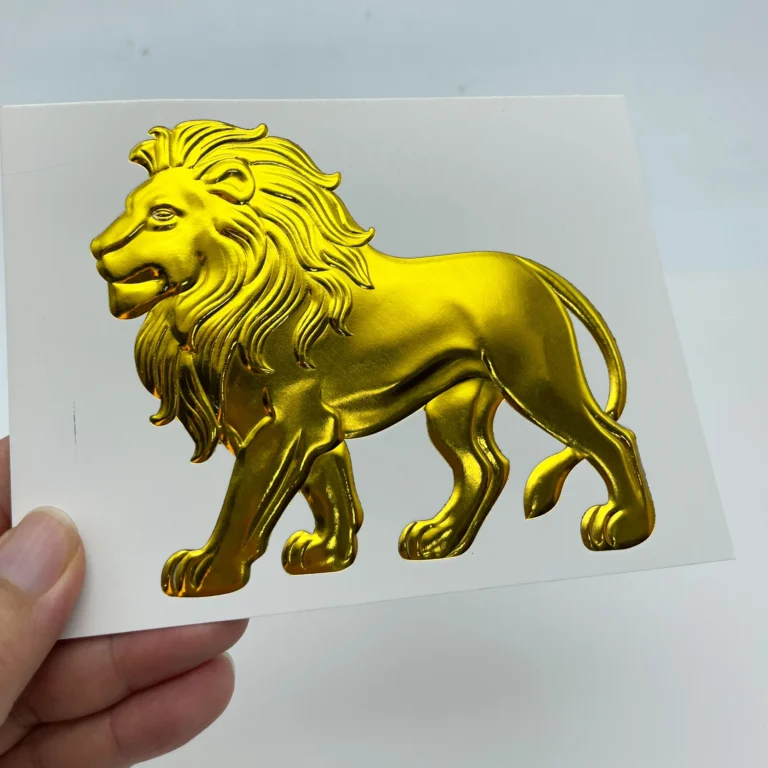
0.01mm CNC‑engraved brass dies deliver crisp gold foil details for premium pearl‑paper wedding and gift envelopes, factory‑direct pricing.
Best Temperature for Pearl Paper Foil Stamping on Envelopes
In this TJ8020PS hot stamping test, pearl paper envelopes were tested at 90°C, 100°C, 110°C, and 120°C. The best result came at 110°C, with clean foil transfer, sharp edges, stable adhesion, and minimal paper deformation.
For pearl paper foil stamping on envelopes, our TJ8020PS hot stamping test showed the best result at 110°C. In this test, we compared 90°C, 100°C, 110°C, and 120°C on pearl paper envelopes while keeping the machine, foil, pressure, and other conditions consistent. At 110°C, the foil transferred cleanly, the metallic gloss looked full, the edges stayed sharp, and the envelope surface remained flat.
This article is for packaging printers, stationery brands, wedding invitation suppliers, gift envelope manufacturers, and hot stamping buyers who need stable foil results on pearl paper. Pearl paper looks premium, but its coated surface can be sensitive to both low and high temperatures. Too little heat causes missing foil and weak adhesion; too much heat can create edge spread, thicker details, pressure marks, or slight envelope deformation.
Main risk at low temperature: missing foil, broken lines, weak adhesion
Main risk at high temperature: edge spread, thicker details, deeper pressure marks, envelope deformation
Recommended workflow: start at 110°C, then adjust slightly based on paper coating, paper weight, foil type, pattern area, and pressure
Why Pearl Paper Envelopes Need Careful Temperature Control
Hot stamping, also called foil stamping, uses heat, pressure, a die, and foil to transfer a metallic or pigment layer onto a product surface. On standard paper, the process can already be sensitive to temperature and pressure. On pearl paper, the surface coating adds another variable.
Pearl paper has a smooth, decorative surface with a pearlescent visual effect. It is often used for wedding envelopes, invitation cards, greeting cards, luxury packaging, gift envelopes, and boutique stationery. Because the surface is smoother than many uncoated papers, foil adhesion depends heavily on matching the right foil, heat, pressure, and dwell time.
The base material is still paper, but the coating changes how the surface reacts during stamping. If the temperature is too low, the foil adhesive layer may not activate enough. If the temperature is too high, the coating may show gloss change, pressure marks, blurred edges, or slight distortion.
Envelope structure also matters. An envelope can include overlapping layers, seams, flaps, and uneven thickness. If the stamping area sits near a folded or double-layer part, pressure may become uneven. This is why envelope foil stamping should be tested on the real product, not only on a flat sample sheet.
If you are still choosing the foil process itself, compare hot stamping foil vs toner foil vs Cricut foil before preparing production samples. Pearl paper envelopes usually need heat-activated foil matched to the coating, not craft foil selected only by color.
TJ8020PS Pearl Paper Foil Stamping Test Setup
This test used the TJ8020PS hot stamping machine on pearl paper envelopes. The goal was to compare how different temperatures affect foil transfer, edge clarity, metallic gloss, adhesion, and envelope surface stability.
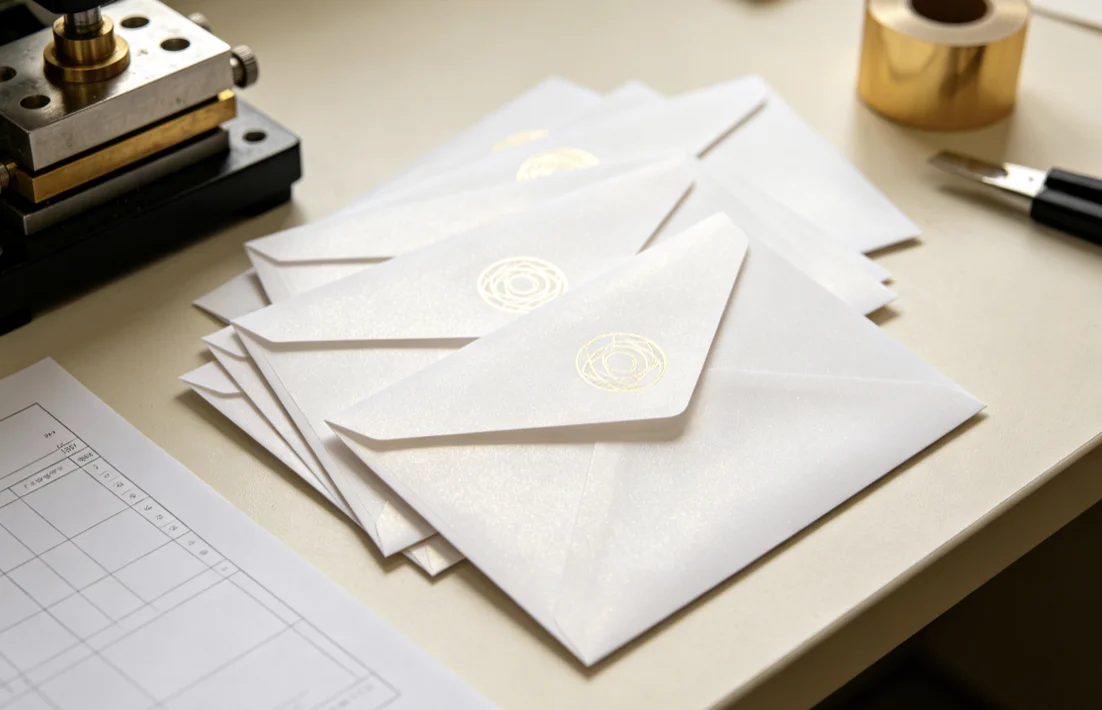
Factory‑direct custom brass stamping dies with 0.01mm CNC precision, deliver sharp clean foil transfer for premium pearl‑paper gift envelopes.
During the test, the stamping pressure, stamping time, foil type, die, and other conditions were kept consistent. This made the temperature comparison easier to judge. In real production, any change in foil brand, die area, paper coating, paper color, envelope thickness, or pressure can shift the final setting.
The purpose of this article is not to claim that 110°C is the only correct temperature for every pearl paper envelope. Instead, 110°C is the best result in this test and a strong starting reference for similar envelope projects.
Temperature Comparison: 90°C, 100°C, 110°C, and 120°C
The table below summarizes the test results from low to high temperature.
Temperatur
Main Result
Production Judgment
90 °C
Foil adhesive layer was under-activated. Missing foil, broken lines, weak color, and unstable adhesion were more likely.
Not recommended for production
100°C
Transfer improved clearly compared with 90°C. Most areas could transfer, but fine text or larger patterns could still show slight unevenness.
Basically usable, but not optimal
110°C
Foil transferred completely, edges stayed clean, gloss looked full, and the envelope surface remained flat.
Best result in this test
120°C
Transfer was strong, but high heat increased the risk of edge spread, thicker details, deeper pressure marks, coating gloss change, or slight deformation.
Not recommended for long-term production
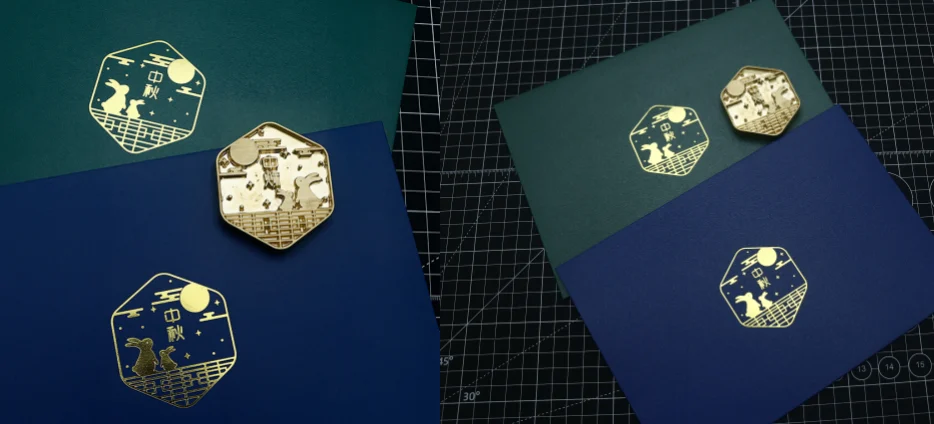
Achieve flawless consistent foil results on temperature‑sensitive pearl paper with our precision factory‑made brass stamping molds.
90°C: Too Low for Stable Foil Transfer
At 90°C, the foil layer did not transfer fully to the pearl paper surface. The result was more likely to show missing foil, broken lines, pale color, and weak adhesion. Small text, thin lines, and the edges of detailed artwork were especially vulnerable.
The advantage of low temperature is that it reduces heat impact on the paper surface. However, if the foil does not bond properly, the final product still fails quality control. For pearl paper envelope production, 90°C should not be used as the main production setting unless another foil type or material test proves otherwise.
100°C: Better, but Still Not the Most Stable
At 100°C, the foil transfer improved noticeably. Most of the pattern could appear, the metallic gloss became stronger, and adhesion was better than at 90°C. This temperature may be usable for simple artwork, small batches, or less demanding samples.
The problem is consistency. Fine text, thin lines, and larger design areas may still show slight unevenness or weak transfer. If a brand needs clean invitation envelopes or luxury packaging with crisp detail, 100°C may still leave too much risk.
110°C: Best Balance of Transfer and Surface Protection
At 110°C, the pearl paper foil stamping result was the most balanced. The foil adhesive layer activated well, the metallic layer transferred evenly, and the stamped artwork looked clean and complete. Fine text and lines stayed clear, with neat edges and no obvious missing foil.
Just as important, the pearl paper envelope surface stayed flat. The test did not show obvious heat damage, severe pressure marks, or visible deformation at this setting. For this TJ8020PS test, 110°C gave the best balance between foil transfer, edge quality, gloss, adhesion, and material safety.
120°C: Strong Transfer, but Higher Surface Risk
At 120°C, foil transfer was still strong, and the metallic gloss could remain full. But higher temperature also increased the risk of problems on pearl paper. The design edges may spread slightly, fine details may become thicker, and the envelope may show deeper pressure marks or slight deformation.
This is especially important for pearl paper envelopes because the surface coating is part of the product’s premium look. Even if the foil transfers fully, a damaged gloss layer or distorted envelope can reduce the final value. For long production runs, 120°C is not recommended as the default setting in this test.
Why 110°C Gave the Best Foil Stamping Result
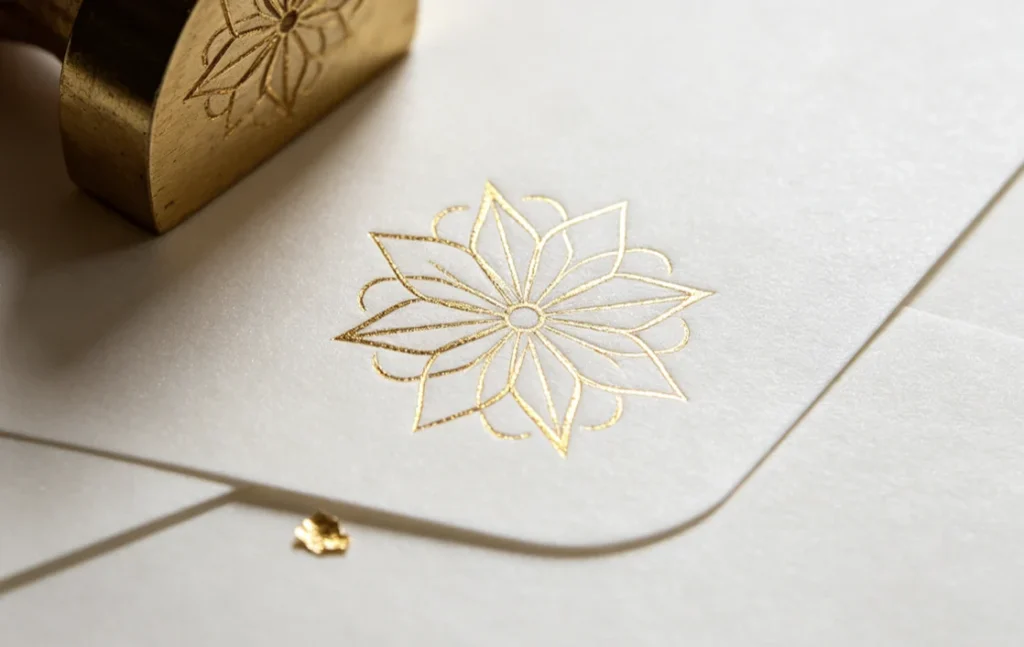
Ultra‑fine 0.01 mm CNC engraving reproduces intricate floral artwork with sharp, clean gold‑foil edges on delicate pearl paper stock.
Pearl paper foil stamping needs a balance between activation and protection. The foil adhesive layer must receive enough heat to release and bond to the paper surface, but the paper coating must not receive so much heat that it changes appearance.
At 110°C, the heat was enough to create a clean transfer. The foil attached evenly, the gold effect looked full, and the edges did not become obviously wider or blurry. This matters for envelope artwork because invitation text, logos, monograms, and fine decorative lines often need crisp detail.
The setting also protected the envelope structure. Pearl paper envelopes may include folded areas, seams, and multi-layer sections. If the temperature is too high, those areas can show pressure marks more easily. A stable 110°C starting point helps reduce that risk while still producing a premium foil finish.
Use 110°C as a starting point, not a locked rule. In real production, the best pearl paper foil stamping setting depends on the full production system.
Adjust based on these factors:
Pearl paper coating type
Paper color and surface finish
Paper weight and envelope thickness
Foil brand and foil release temperature
Artwork size and solid area
Fine text, thin lines, or detailed patterns
Die material and die surface condition
Stamping pressure and dwell time
Whether the stamping area crosses a seam, flap, or double-layer area
If foil is missing at 110°C, do not immediately jump to a much higher temperature. First check whether the die is clean, the pressure is even, the foil is suitable for coated paper, and the envelope is flat under the stamping area. A small temperature increase may help, but large changes can create new defects.
If the edge spreads or small text becomes thick at 110°C, reduce temperature slightly or reduce pressure. Also check whether the artwork has too much solid area or whether the foil is releasing too aggressively. For related troubleshooting, read our guide on why extra gold foil appears around a stamp.
Common Pearl Paper Foil Stamping Problems and Fixes
Pearl paper can produce excellent foil results, but it is less forgiving than some ordinary paper stocks. The table below gives practical starting points for troubleshooting.
Problem
Likely Cause
What to Check First
Fehlende Folie
Temperature too low, pressure too light, foil not suitable for coated paper
Raise temperature slightly, check pressure, test another foil
Broken thin lines
Under-activation, uneven pressure, dirty die
Clean die, improve pressure balance, test 105-110°C range
Edge spread
Temperature too high, pressure too heavy, foil releases too easily
Reduce heat or pressure, test a different foil
Details look thick
Overheating or excessive pressure
Lower temperature, reduce dwell time, review artwork stroke width
Envelope has pressure marks
Pressure too high or uneven envelope thickness
Add support pad, avoid seams, reduce pressure
Envelope deforms
Too much heat or long dwell time
Reduce temperature, shorten dwell time, test on real envelope structure
Adhesion is weak
Foil and coating mismatch, temperature too low
Test coated-paper foil, raise temperature carefully
For production orders, always test on the actual envelope. A flat pearl paper sheet may not behave the same as a finished envelope with folds, seams, and multiple layers.
If your main issue is incomplete transfer rather than paper deformation, the same troubleshooting logic is similar to other materials. Our guide on why foil does not transfer on leather and how to fix it covers foil compatibility, pressure, temperature, dwell time, and die contact in more detail.
Recommended Machines, Molds, and Next Steps
For pearl paper envelopes, the machine must control temperature and pressure consistently. A stable hot stamping machine helps reduce batch-to-batch variation, especially when producing invitation envelopes, gift envelopes, branded packaging, and stationery products.
If you are choosing equipment, browse ZHENGFEI Heißprägemaschinen to compare manual, pneumatic, and hydraulic options. For envelope, card, paper, and packaging projects, machine selection should consider heat plate size, pressure control, working area, speed, and fixture support.
The mold also matters. A clean, flat, accurately engraved die improves edge clarity and foil contact. If your project needs a logo, monogram, text, decorative border, or custom envelope mark, review our benutzerdefinierten Messingformen for branding and foil stamping applications.
Need help matching the machine, mold, foil, and envelope material? Contact ZHENGFEI with your envelope photo, paper type, stamping size, target foil color, artwork file, and current production problem. Our team can help review the setup before you move into mass production.
Related Reading and Product Links
Use these pages to move from testing to the next purchase or production decision:
Production Checklist for Pearl Paper Envelope Foil Stamping
Before bulk production, check the full process:
Test on the actual pearl paper envelope, not only a sample sheet.
Start around 110°C based on this TJ8020PS test.
Keep pressure, dwell time, foil, and die consistent during temperature comparison.
Check fine text, thin lines, large solid areas, and edges separately.
Avoid stamping directly over seams or thick folded areas when possible.
Keep the die face clean and remove paper dust or foil residue regularly.
Choose foil that matches coated or pearlescent paper surfaces.
Record the final temperature, pressure, dwell time, foil model, and paper batch.
Inspect samples during production to catch temperature drift or pressure changes early.
Re-test when changing paper supplier, paper color, foil brand, artwork size, or machine setup.
Frequently Asked Questions
What is the best temperature for pearl paper foil stamping?
In our TJ8020PS test on pearl paper envelopes, 110°C gave the best result. It produced complete foil transfer, clean edges, full metallic gloss, stable adhesion, and a flat envelope surface. Use 110°C as a starting reference, then adjust based on paper coating, foil type, pressure, and artwork size.
Why does foil not transfer fully on pearl paper?
Foil may not transfer fully because the temperature is too low, pressure is uneven, the foil is not suitable for coated paper, or the die surface is dirty. Pearl paper has a smooth coating, so foil selection and pressure balance are especially important.
Why do the foil edges spread on pearl paper envelopes?
Foil edges can spread when temperature is too high, pressure is too heavy, dwell time is too long, or the foil releases too easily. In this test, 120°C increased the risk of thicker details and edge spread, so it was not recommended for long-term production.
Can I use the same temperature for all pearl paper envelopes?
No. Different pearl paper colors, coatings, weights, and envelope structures may need different settings. A 110°C reference is useful, but production should always be confirmed with small sample tests on the actual envelope.
Should I adjust temperature or pressure first?
If foil is missing, check pressure, die cleanliness, and foil compatibility before making a large temperature change. If the edge is spreading or the envelope surface is marked, reduce temperature or pressure carefully. The best result usually comes from balancing heat, pressure, dwell time, and foil selection.
What machine is suitable for pearl paper envelope foil stamping?
A suitable machine should provide stable temperature control, even pressure, and enough working area for the envelope size. The machine should also support fixtures or positioning aids if you need repeated placement on invitation envelopes or packaging envelopes.
Conclusion
For pearl paper foil stamping on envelopes, the best setting in this TJ8020PS test was 110°C. At this temperature, the foil transferred cleanly, the edges stayed sharp, the metallic gloss looked full, and the envelope surface remained stable. Lower temperatures such as 90°C and 100°C increased the risk of missing foil, while 120°C increased the risk of edge spread, thicker details, pressure marks, and slight deformation.
Use 110°C as a practical starting point, then fine-tune according to your pearl paper coating, foil model, artwork area, pressure, and envelope structure. For production work, always test on the real envelope and record the final stable parameter set.
If you need a machine, custom die, or process check for pearl paper envelopes, send your envelope material, artwork, foil color, and target stamping size to ZHENGFEI. We can help review your hot stamping setup and recommend a suitable machine and mold solution.
Teilen Sie Ihre Liebe
ZHENGFEI Technical Team
ZHENGFEI Technical Team shares practical hot stamping knowledge from real production tests, including brass die design, foil stamping parameters, machine setup, leather, paper, acrylic, plastic, wood and packaging applications.






 English
 Japanese
 Spanish
 French
 Korean
 German
 Russian