Wir verwenden Cookies, um sicherzustellen, dass wir Ihnen die beste Erfahrung auf unserer Website bieten.
Contact Founder
Still have doubts?
Connect directly with our Founder. Whether it’s about pricing or technical details, get a straight answer and an exclusive “Founder’s Bonus” for your first order.
900+ Satisfied Clients
🏆 Over 1000+ Custom Projects Successfully Delivered.
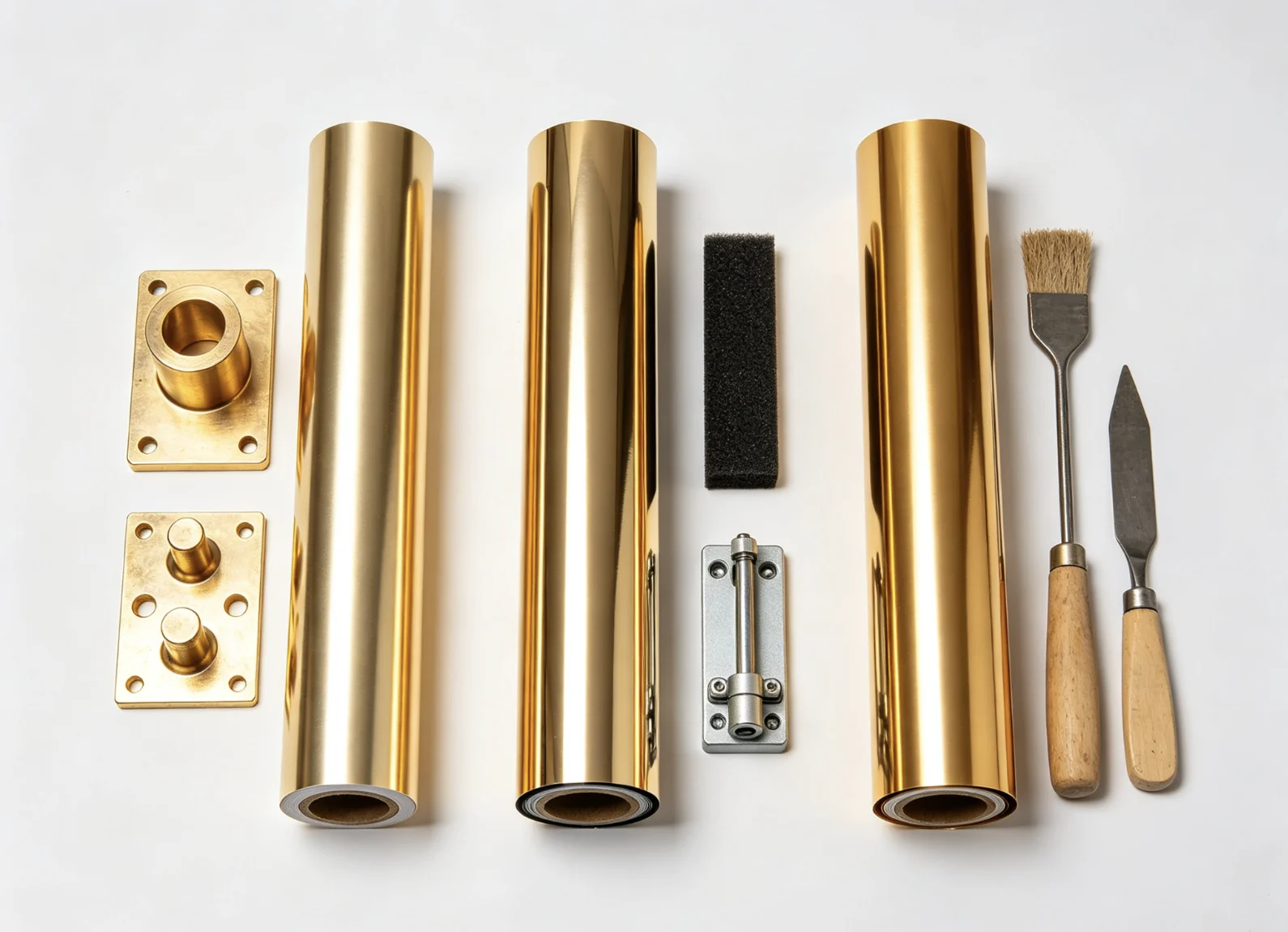
Our factory gold hot stamping foil is specially formulated for brass heated dies, fully compatible with all ZHENGFEI hot stamping machines, unlike toner or Cricut pressure foil.
Hot Stamping Foil vs Toner Foil vs Cricut Foil: Which One Should You Use?
Hot stamping foil, toner foil and Cricut foil are not the same material. For a heated brass die, hot stamping machine or hot foil pen, use hot stamping foil or heat-activated foil made for heat and pressure transfer.
Toner reactive foil is designed to bond to laser toner through a laminator or foil applicator. Cricut foil transfer sheets are pressure-activated and made for the Cricut Foil Transfer Tool, not for a heated brass die.
If the wrong foil is used, the result may look patchy, fail to transfer, stick everywhere, peel off, or leave extra metallic residue. Before changing machine temperature or blaming the die, confirm that the foil type matches the tool, material and transfer method.
Why Foil Type Matters
Many hot foil stamping problems start before the machine is even turned on.
A customer may buy a gold foil roll online, place it under a heated brass die, and expect it to transfer onto leather or paper. But if that roll is toner reactive foil, pressure foil, craft transfer foil, or metallic heat transfer vinyl, it may not behave like true hot stamping foil.
That is why two products can look similar in photos but work completely differently in real use.
Specialized heat-activated foil works for both industrial brass dies and handheld hot foil pens, while Cricut/toner foil cannot withstand direct brass tip heat.
Hot stamping foil is made for heat and pressure transfer. It is used with a heated brass die, copper die, movable type, hot stamping machine or some heated foil pens.
Typical tools:
manuelle Heißpräge-Maschine
pneumatic hot stamping machine
hydraulic hot foil press
heated brass letter type
maßgefertigter Messingstempel
hot foil pen or foil quill style tool
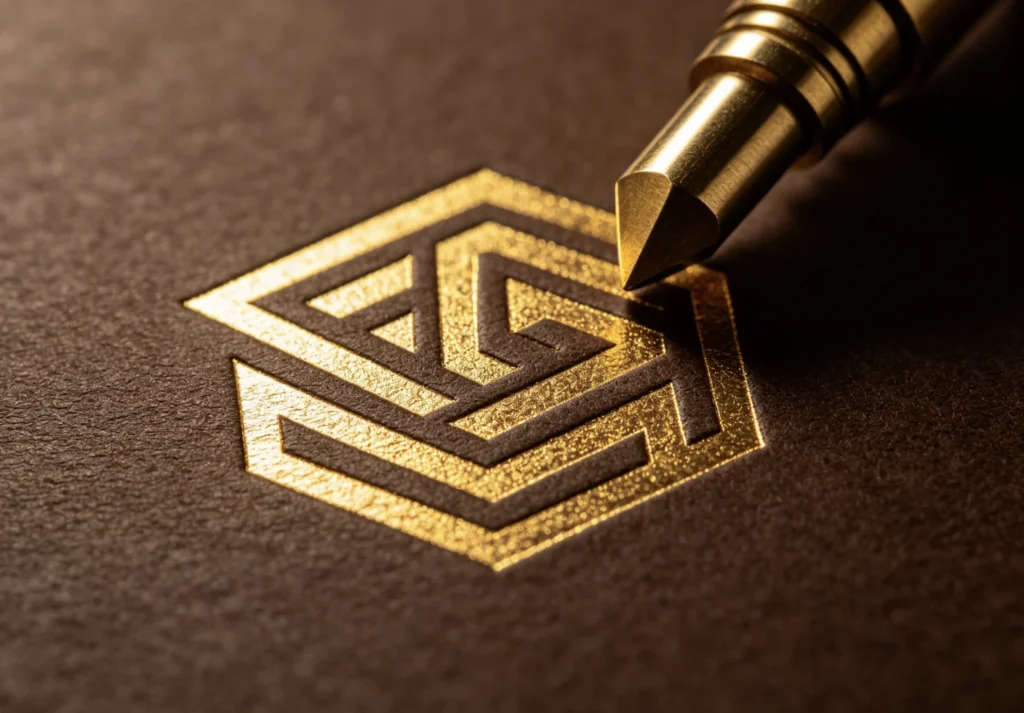
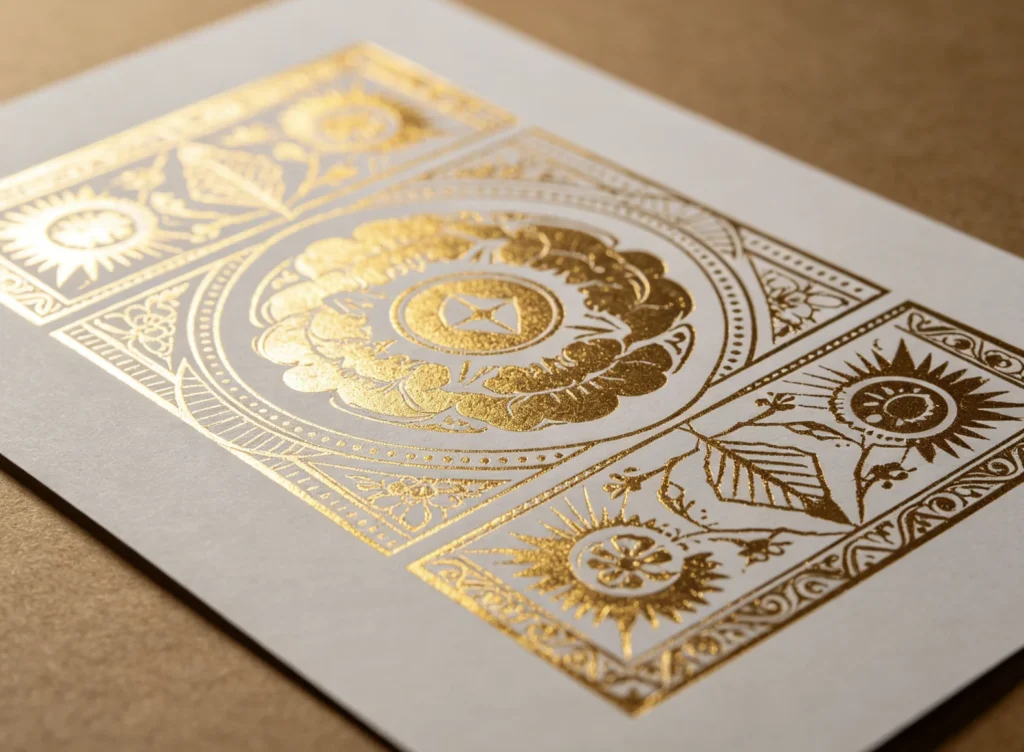
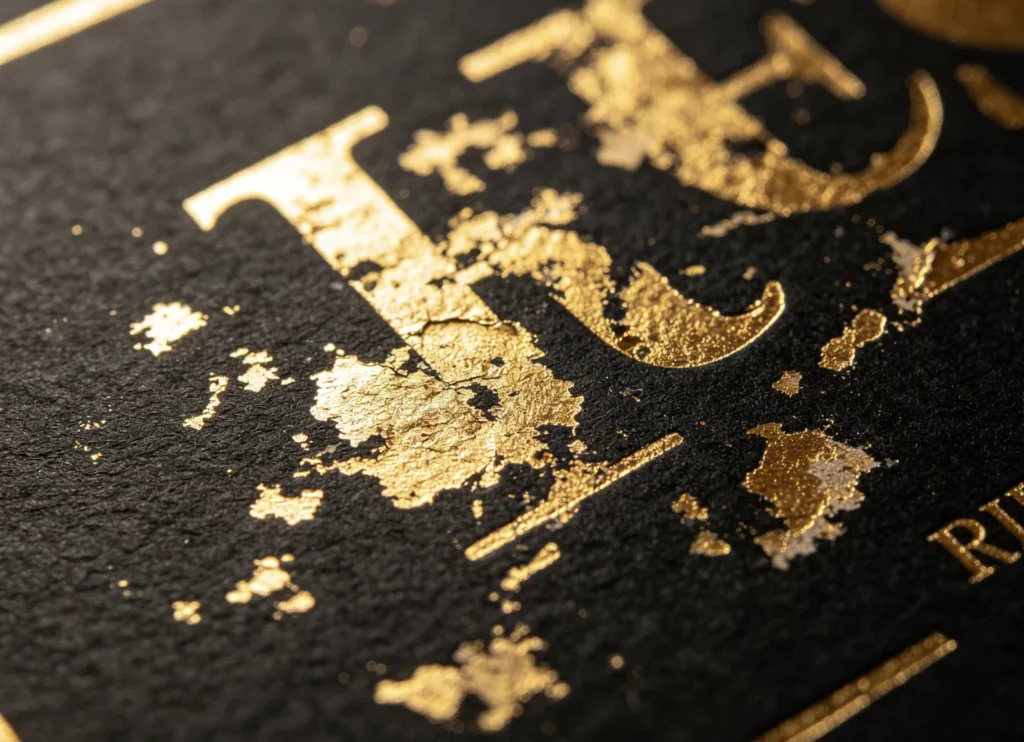
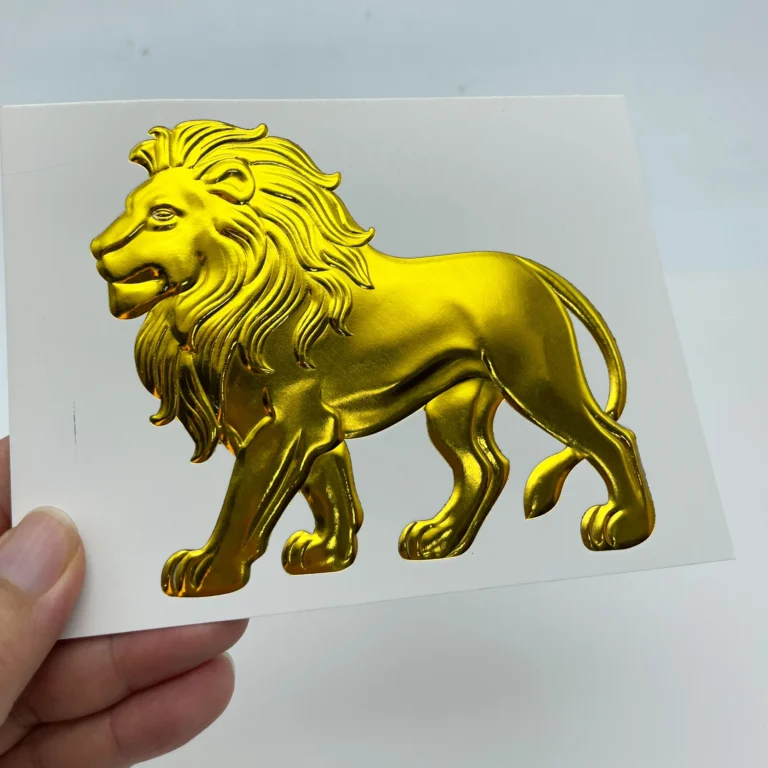
Hot stamping foil is the correct starting point for most leather logos, PU leather names, book cover titles, paper packaging, greeting cards, notebooks and custom brand marks.
The final result still depends on temperature, dwell time, pressure, die size, foil formulation and material coating. A foil that works well on smooth paper may not work well on coated leather. A foil that releases easily on PU leather may create messy edges on soft paper.
2. Toner Reactive Foil
Heat-activated hot stamping foil supports large solid & intricate mixed artwork, eliminating patchy transfer common with toner/Cricut pressure foil on wide designs.
Toner reactive foil is designed to bond to laser toner. It usually needs a laser-printed design plus heat from a laminator or toner foil applicator.
Typical tools:
laser printer
laminator
Minc-style foil applicator
toner pen or toner-reactive medium
This process can work well for flat paper prints, invitations, cards and art prints. It is not the same as pressing a heated brass die onto leather.
If you try toner reactive foil with a hot stamping machine, the foil may not release correctly because the process is missing the toner layer it was designed to bond with.
3. Cricut Pressure Foil
Heat-specific hot stamping foil pairs perfectly with brass heating dies, delivering razor-thin consistent lines with zero peeling or patchy coverage on rigid paper stock.
Cricut foil transfer sheets are made for the Cricut Foil Transfer Tool. This system uses pressure, not a heated brass die.
Typical use:
cards
invitations
paper crafts
smooth cardstock
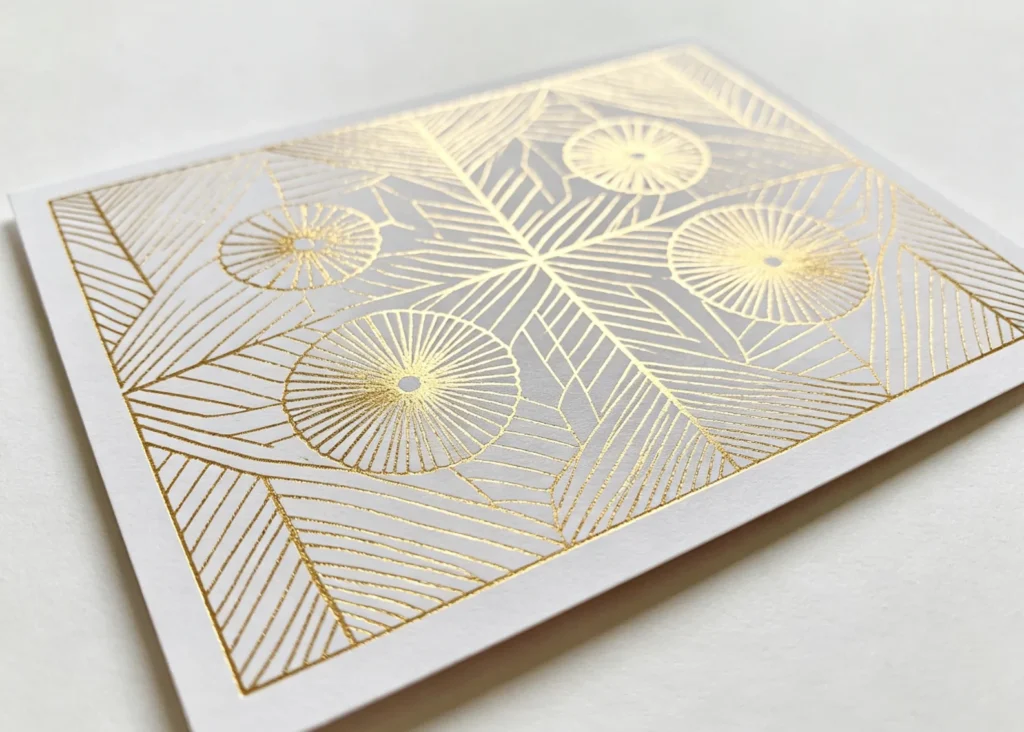
pressure-drawn foil line artwork
Pressure foil can be useful for craft projects, but it is not the same as factory hot stamping foil. It is usually not the best choice for leather hot stamping, book cover stamping or custom brass die work.
If you want professional gold logos on leather, paper packaging or book covers, a hot stamping machine with a suitable foil and die is more appropriate.
4. Metallic Heat Transfer Vinyl
Metallic heat transfer vinyl, often called HTV, is a cut vinyl film. It is applied with heat to fabric or compatible surfaces after cutting and weeding.
Typical tools:
vinyl cutter
heat press
iron
craft cutting machine
HTV can create metallic-looking designs, but it is thicker than foil and behaves more like a film. It is not the same as hot foil stamping, where the foil layer is very thin and pressed into the surface by a heated die.
HTV may be suitable for some craft covers, fabric items or decorative work, but it does not give the same sharp pressed edge as a brass die and hot stamping foil.
Foil Compatibility Table
Methode
Correct Foil Type
Main Tool
Best Materials
Not Ideal For
Hot foil stamping with brass die
Hot stamping foil
Heißprägemaschine
leather, PU leather, paper, book covers, packaging
laser toner-only transfer
Hot foil pen writing
Heat-activated foil / compatible hot stamping foil
USB hot foil pen
paper, cards, leather craft, gift tags
large repeated logo production
Toner foiling
Toner reactive foil
laser printer + laminator / Minc-style applicator
flat paper prints, cards, invitations
leather stamping with brass die
Cricut foil transfer
Pressure-activated foil
Cricut Foil Transfer Tool
smooth paper crafts
heated brass dies and leather logos
Metallic HTV
Metallic heat transfer vinyl
vinyl cutter + heat press
fabric, some craft covers
fine brass die impressions
For freehand foil writing and small craft decoration, the USB Electric Hot Stamping Pen can be useful. For repeated logos, names or brand marks, a hot stamping machine with a brass die is usually more consistent.
Using toner/Cricut pressure foil on heated brass dies causes patchy peeling transfer; our factory-matched hot stamping foil delivers full uniform adhesion on paper & leather.
Which Foil Should You Use for Leather?
For leather and PU leather, start with hot stamping foil made for leather or synthetic leather. Do not assume that paper foil, toner foil or pressure foil will work.
Leather surfaces vary widely:
genuine leather grain
smooth coated leather
oily leather
PU leather coating
bonded leather
suede or nubuck
finished products with seams or curves
Smooth leather and PU leather usually give more predictable foil transfer than rough, oily or heavily textured leather. If the surface coating rejects foil, even the correct foil type may need testing.
For PU leather, Zhengfei workshop tests found that EC-27 letter type and QS201 brass die work could achieve clean results around 100°C with 1 second dwell time on the tested material. This is a reference only. The final setting depends on foil model, leather coating, pressure, die size and artwork detail.
If you are using a hot stamping machine with a brass die, choose hot stamping foil for paper or cardstock. If you are printing with a laser printer and using a laminator, choose toner reactive foil. If you are using a Cricut Foil Transfer Tool, use pressure foil designed for that tool.
Paper is easier to position than leather, but it is still sensitive to:
paper thickness
coating
moisture
texture
pressure marks
die detail
foil release temperature
For napkin paper and some paper foil stamping tests, Zhengfei used around 110°C with 2 seconds as a strong reference point. For EC17 movable type on white cardstock, around 110°C with 1 second produced clean text in the tested material. Treat these as starting references, not universal settings.
If you are stamping packaging, labels, invitations or cards, test both foil and paper before batch production.
Which Foil Should You Use for Book Covers?
Book covers can be tricky because the cover material may be leather, PU leather, cloth, coated paper, bookcloth, buckram, linen, paperboard or a wrapped cover structure.
For a professional book title with a brass die or movable type, start with hot stamping foil. For hobby work, some people use foil quill pens, toner foiling, Cricut tools or HTV, but each method has limits.
Use hot stamping foil when:
you want a pressed metallic title
the cover surface can accept heat and pressure
the title will be repeated
you are using brass type or a custom die
edge sharpness matters
Use toner reactive foil when:
the design is laser printed
the material can go through a laminator or foil applicator
the surface is flat enough
the design is more like a print than a pressed impression
Do not run production with a new foil roll until you test it on the real material.
Use this simple test workflow:
Label the foil roll with supplier, color and material recommendation.
Cut a small sample strip.
Test on scrap material from the same batch.
Confirm foil orientation with a small trial.
Start with conservative temperature and dwell time.
Make one clean blind impression if needed.
Add foil and stamp once.
Check transfer, edge clarity and adhesion.
Rub lightly after cooling.
Record the best setting for that material and die.
Change only one variable at a time. If you change foil type, temperature, pressure and dwell time together, you will not know which factor fixed or caused the problem.
Common Problems Caused by the Wrong Foil
Problem
Possible Foil Issue
What to Check
Foil does not transfer
toner foil used without toner, pressure foil used with heat, wrong release layer
confirm foil category and tool compatibility
Folie klebt überall
foil releases too easily for the material or heat is too high
lower temperature or test another foil
Foil looks patchy
foil not matched to surface coating or pressure is uneven
test leather/paper-specific foil and check die contact
Foil peels after rubbing
weak bond or wrong foil type
test adhesion after cooling and change foil if needed
Small letters fill in
foil releases too heavily or heat/pressure is excessive
Foil type matters first, but foil width also affects cost and workflow.
If the foil roll is too wide for the logo, you waste material on every press. If the roll is too narrow, it may not cover the full design or may shift during stamping. For repeated production, using the right foil width makes the job cleaner and more economical.
For factories that use large rolls and need narrower strips, a foil slitting machine can help prepare roll widths for different jobs. The WT-FQ8025 Automatische Heißprägefolie Schneidemaschine is relevant when customers need to cut foil rolls for regular production.
For small craft jobs, cutting strips by hand can work. For batch work, roll width control becomes more important.
Can You Use Cricut Foil with a Hot Stamping Machine?
In most cases, Cricut foil transfer sheets are not the right choice for a heated brass die or hot stamping machine. Cricut’s foil system is pressure-activated and designed around its own transfer tool and sheets.
Hot stamping machines use a different process: a heated die presses foil onto the material. The foil needs a release and adhesive structure that responds properly to heat, pressure and the target surface.
If you already have Cricut foil, test only on scrap. Do not use it for customer production unless the test proves clean transfer, good adhesion and no residue.
Can You Use Toner Reactive Foil with a Hot Foil Pen?
Sometimes users try toner reactive foil with a hot foil pen because both involve heat. But toner reactive foil is normally designed to bond to toner, not directly to the material surface.
For a hot foil pen, heat-activated foil or foil made for compatible foil quill-style tools is usually a better starting point.
If the foil does not transfer with the pen, check:
When the Foil Is Correct but the Result Still Fails
Correct foil does not guarantee a perfect result. It only removes one major variable.
If the foil type is correct, check:
Temperatur
Verweildauer
nach Bedarf
die flatness
material coating
surface oil or dust
foil orientation
design line width
material support under the stamping area
For example, a large solid logo needs more even pressure than thin text. Small letters need lower heat control and enough spacing. Soft leather may need a backing surface. Book covers near the spine may need better positioning.
This is why Zhengfei usually asks customers for material photos, logo size, foil color, machine model and target effect before recommending a process.
Häufig gestellte Fragen
Is hot stamping foil the same as toner foil?
No. Hot stamping foil is used with heat and pressure from a heated die, machine or compatible hot foil tool. Toner foil is designed to bond to laser toner through a laminator or foil applicator. They may look similar, but they are made for different transfer methods.
Can I use toner reactive foil on leather?
Toner reactive foil normally needs laser toner to bond. It may work for some flat printed surfaces, but it is not the standard choice for leather hot stamping with a brass die. For leather, start with hot stamping foil made for leather or synthetic leather.
Can I use Cricut foil with a hot foil pen?
Cricut foil transfer sheets are made for a pressure-based Cricut tool. Some users may test different foils with heated pens, but for reliable hot foil pen work, use heat-activated foil recommended for the pen or compatible hot stamping foil.
Why does my foil stick everywhere?
Foil can stick everywhere when the foil releases too easily, the temperature is too high, the pressure is too strong, dwell time is too long, or the material coating grabs foil outside the design. Test another foil type and reduce heat or dwell time.
Why does my foil not transfer even when the machine is hot?
The foil may be the wrong type, the temperature may still be too low for that foil, the pressure may be weak, the die may not contact evenly, or the material coating may reject the foil. Confirm foil compatibility before changing machine settings.
Which foil should I use for book cover titles?
For brass type or a custom die on leather, PU leather, bookcloth or coated paper covers, start with hot stamping foil matched to the cover material. For laser-printed paper covers, toner reactive foil may work if the cover can pass through a laminator.
Do I need different foil for paper and leather?
Often, yes. Paper, PU leather, genuine leather and packaging coatings respond differently. Some foils are more suitable for paper, while others are made for leather or plastic-coated surfaces. Always test the actual material before production.
CTA
Not sure which foil works with your machine, leather, paper or book cover material?
Send ZHENGFEI your material photo, foil sample, logo size, machine model and target effect. Our team can help you check whether you need a hot stamping foil, a different die setup, a hot foil pen, a foil slitting solution or a more suitable stamping machine.
Teilen Sie Ihre Liebe
ZHENGFEI Technical Team
ZHENGFEI Technical Team shares practical hot stamping knowledge from real production tests, including brass die design, foil stamping parameters, machine setup, leather, paper, acrylic, plastic, wood and packaging applications.






 English
 Japanese
 Spanish
 French
 Korean
 German
 Russian