Wir verwenden Cookies, um sicherzustellen, dass wir Ihnen die beste Erfahrung auf unserer Website bieten.
Contact Founder
Still have doubts?
Connect directly with our Founder. Whether it’s about pricing or technical details, get a straight answer and an exclusive “Founder’s Bonus” for your first order.
900+ Satisfied Clients
🏆 Over 1000+ Custom Projects Successfully Delivered.
If you are trying to emboss a large leather panel, the first thing you need to get right is not the logo or the mold pattern. It is the heat balance.
In our YTJ-5T hydraulic hot stamping press test, the cleanest large-area leather 3D embossing result came at 110°C with about 2 seconds of dwell time. At 90°C, the relief was too soft. At 130°C and 150°C, the surface started to show gloss, shrinkage, edge spread, and loss of fine detail.
This article is for leather goods manufacturers, sample developers, and production managers who need a practical setting for 3D relief work on wallets, bags, notebook covers, belts, and other large leather surfaces.
Leather is a natural material, embossing is a pressure-and-heat forming process, and hot stamping combines both heat and pressure to create a permanent surface effect. That means a small temperature change can make a big visual difference. For background reading, see Leder, Embossing, und Hot stamping.
Quick Answer
For large-area leather 3D embossing, the best starting point is 110°C / 2 seconds on the YTJ-5T hydraulic hot stamping press. It gives the strongest balance between depth, edge definition, and surface stability.
If you go lower, the relief may not fully form. If you go higher, the leather surface can become shiny or slightly deformed, especially on broad areas where the heat has more time to spread.
Why Large-Area Leather Needs a Different Temperature Mindset
Small logos and large relief patterns do not behave the same way.
With a small stamp, heat and pressure stay concentrated in one tight area. With a large embossing pattern, the leather must hold the form across a wider surface, so the grain, moisture, coating, and thickness all matter more. If the temperature is too low, the center may form but the edges stay weak. If the temperature is too high, the outer area can overreact before the full pattern is fully set.
That is why large-area leather embossing is less forgiving than simple one-line branding. You are not just making a mark. You are shaping a surface.
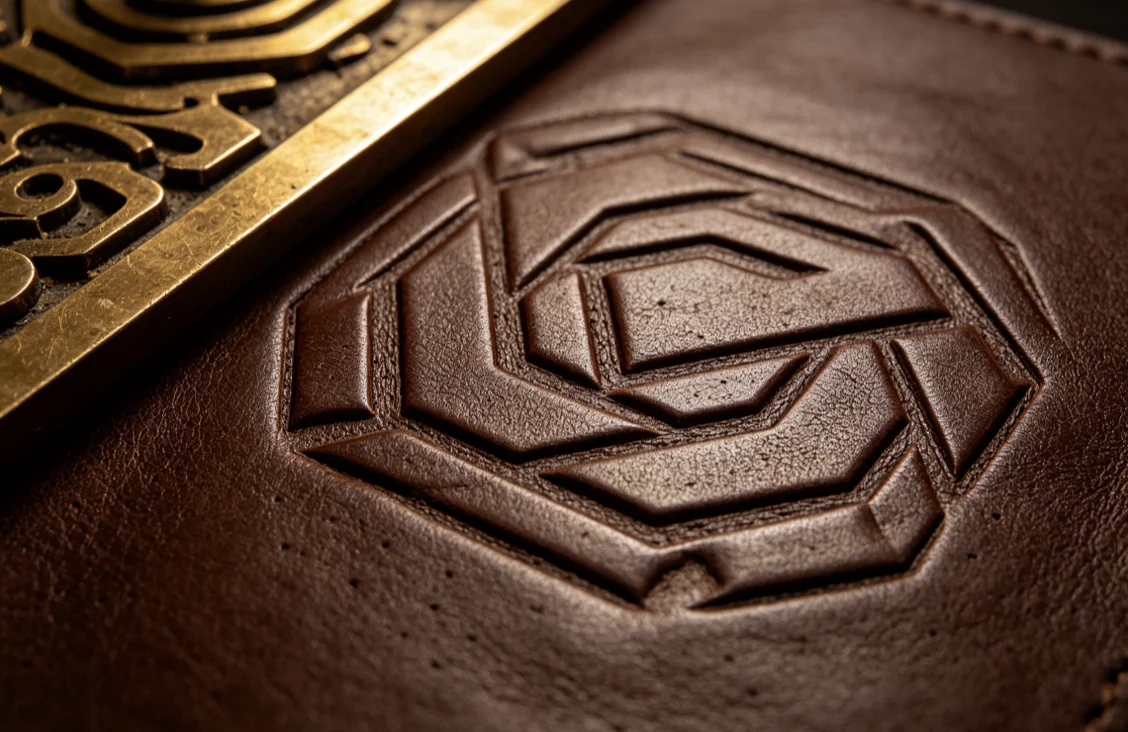
Test Setup: YTJ-5T + 3D Relief Brass Die
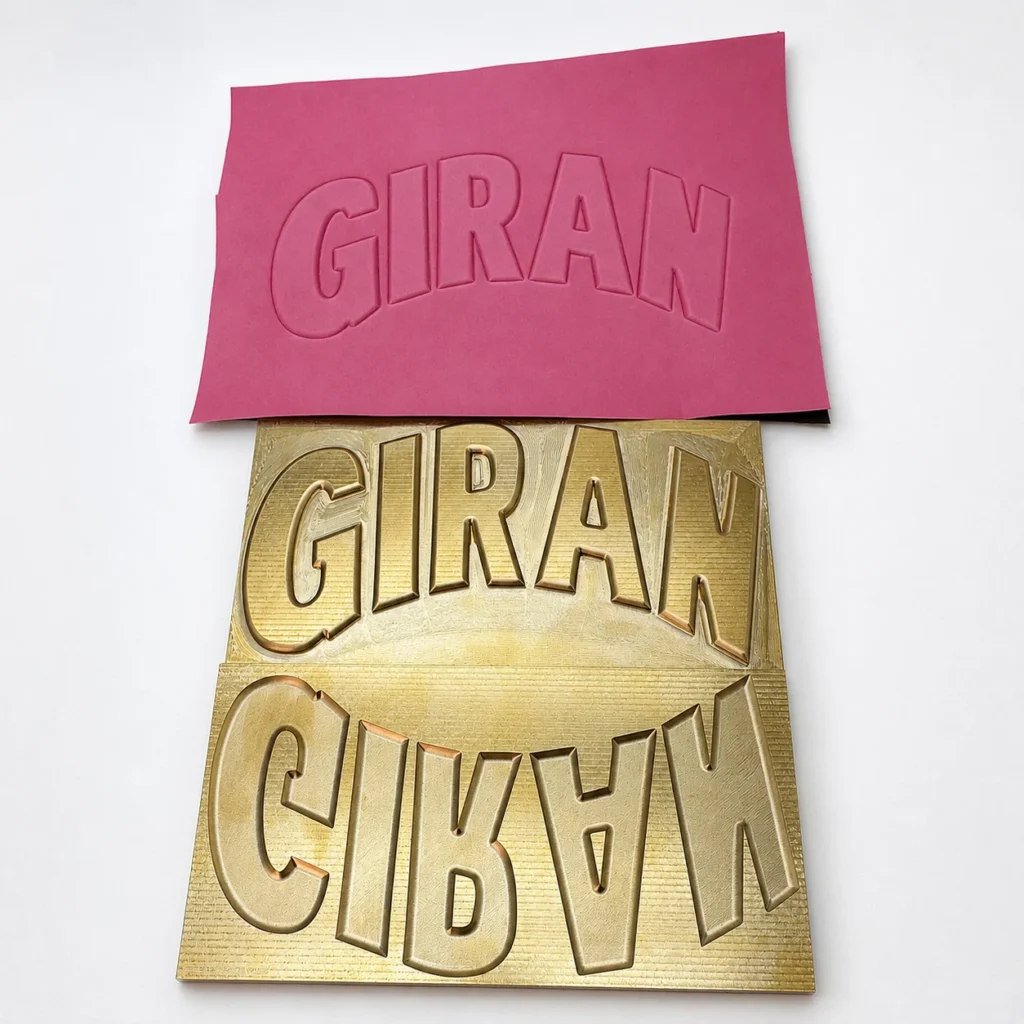
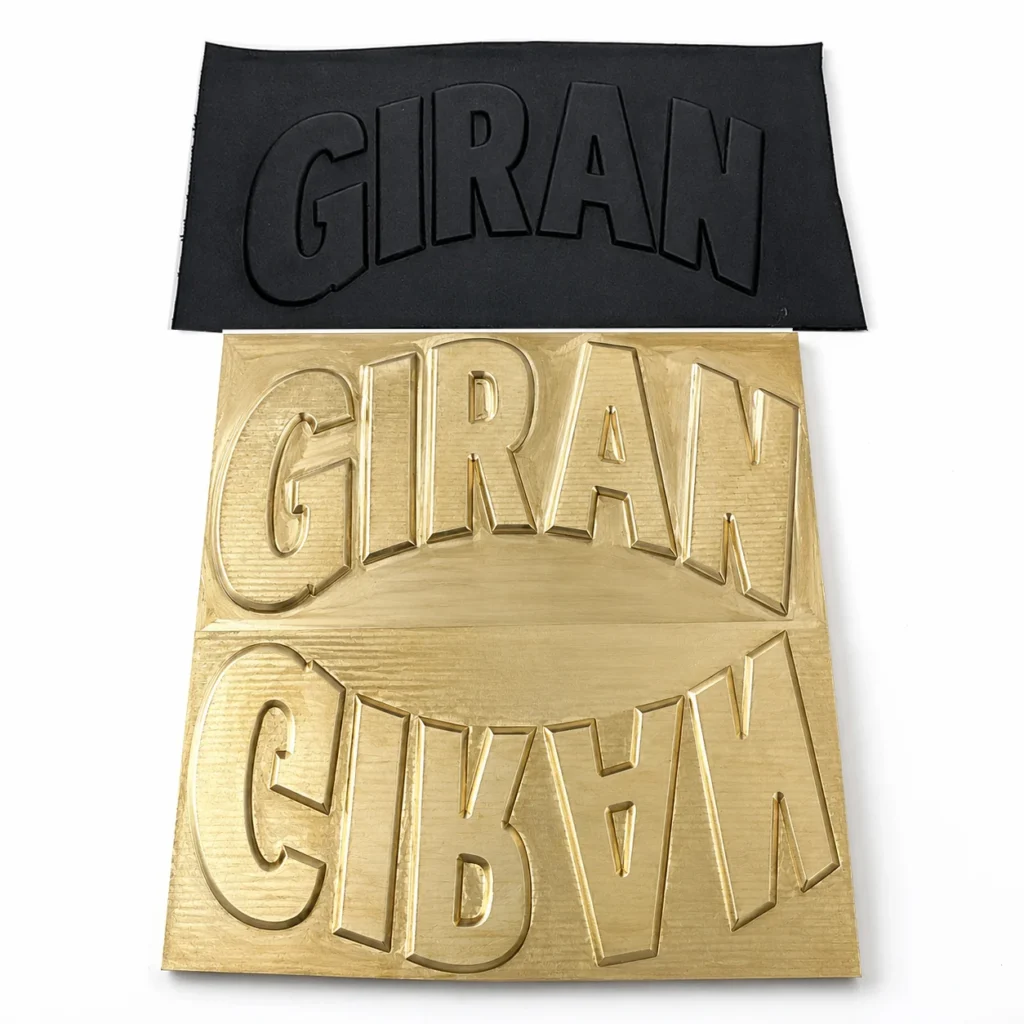
For this test, we used the YTJ-5T Hydraulic Hot Stamping Press together with a 3D relief brass die. If you are building a similar production setup, the die quality matters as much as the machine setting. A well-cut die transfers the depth cleanly and helps the leather release without dragging the texture.
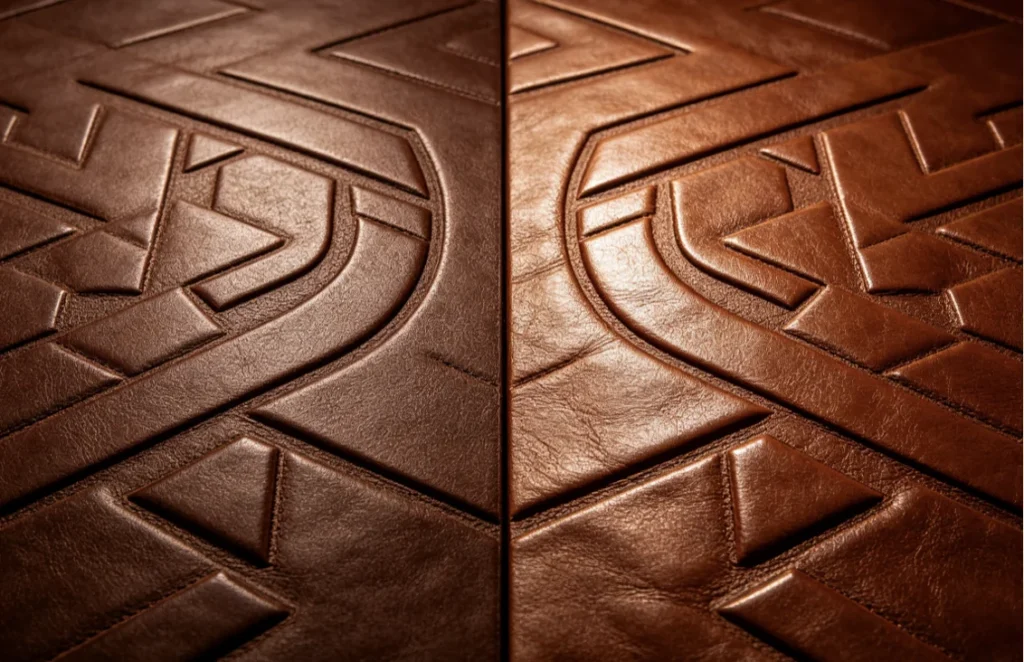
Temperature Comparison: 90°C vs 110°C vs 130°C vs 150°C
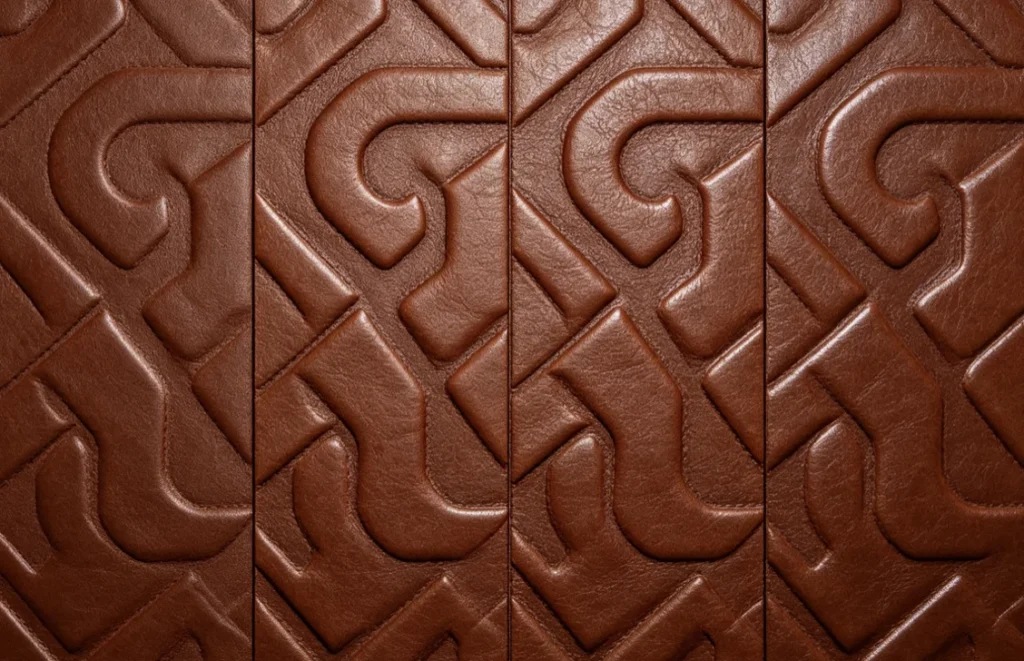
High‑uniformity large‑panel leather embossing, ideal for leather bags, notebook covers and luxury leather upholstery projects.
Temperatur
Embossing Result
Main Risk
90 °C
Relief is visible but shallow; fine details are incomplete
Under-forming
110°C
Clean relief, crisp edges, stable surface, best overall balance
Low
130°C
Deeper impression, but surface begins to gloss and spread
Mittel
150°C
Strong heat effect, but shrinkage, deformation, and detail loss appear
High
At 90°C, the leather did not fully open up to the die texture. The result looked acceptable from a distance, but the depth was not strong enough for a premium large-area relief effect.
At 110°C, the pattern became much more readable. Edges stayed cleaner, the grain held better, and the embossing looked more controlled.
At 130°C, the relief got deeper, but the leather surface started to show stress. The edges looked softer, and the finish became less natural.
At 150°C, the result moved from embossing into over-processing. The surface lost clarity, and the risk of deformation became too obvious for stable mass production.
Why 110°C Worked Best
110°C hit the middle ground.
It was hot enough to push the leather into the deeper parts of the mold, but not so hot that the grain structure started to collapse. For large-area embossing, that balance is more important than simply chasing the deepest possible impression.
The best result had three qualities:
The surface stayed even.
The high points of the relief remained sharp.
The outer edge did not spread excessively.
In other words, 110°C gave us the strongest visual depth without making the leather look overheated.
Custom text brass relief dies with 0.01 mm CNC accuracy, free design service & 24‑hour dispatch for urgent production orders.
How to Run a Stable Large-Area Leather Embossing Test
If you want to reproduce this result, start with a simple test sequence:
Preheat the machine and the die fully.
Keep the leather flat, dry, and clean.
Start at 110°C with a short dwell time.
Check whether the central area and the edge area both form cleanly.
Only increase heat if the relief is too weak.
The biggest mistake is jumping directly to a high temperature because the first impression looks shallow. Large leather panels can react slowly at first, then suddenly overreact once the heat penetrates.
Practical rule: For large-area leather 3D embossing, improve the result with small adjustments, not big jumps.
Common Defects and What They Usually Mean
Our precision‑machined brass dies maintain crisp edge definition even across extra‑wide large leather embossing surfaces.
1) Shallow relief
Usually means the temperature is too low, the dwell time is too short, or the die pressure is not fully reaching the surface.
2) Glossy surface
Usually means the temperature is too high or the leather coating is reacting too aggressively.
3) Shrinkage or edge spread
Usually means the leather is overheating at the boundary area, especially on wide patterns.
4) Lost detail
Usually means the heat is too strong for the leather grain, or the dwell time is too long.
5) Uneven depth across the panel
Usually means the leather thickness or moisture level is uneven, or the machine pressure is not evenly distributed.
Best Practice for Production
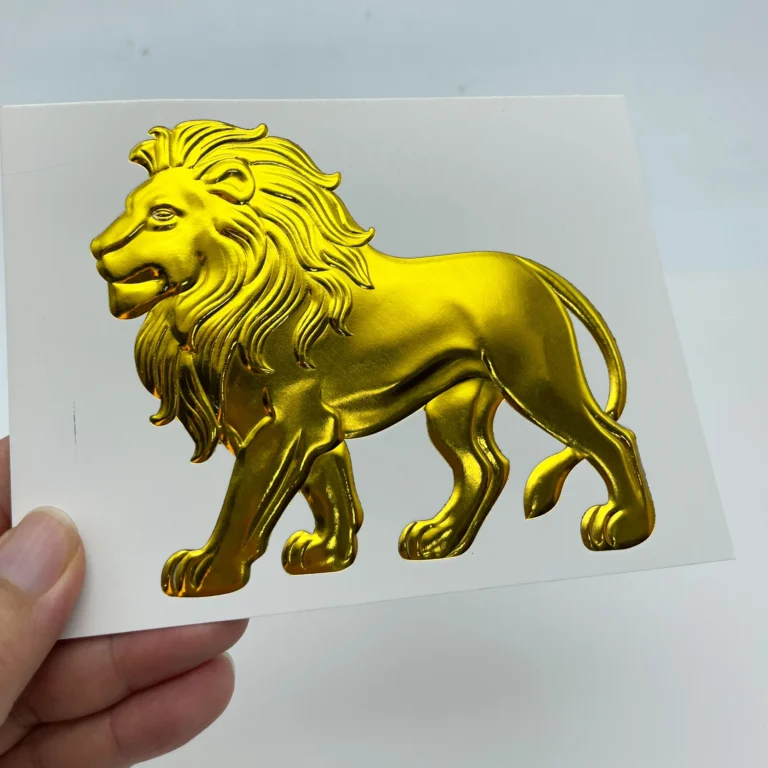
Durable solid brass custom embossing molds, trusted by over 3000 global clients for leather goods mass production.
If you are moving from sample testing into production, use the 110°C result as your baseline and then adjust only when the leather type changes.
Zum Beispiel:
thicker leather may need slightly more heat,
coated leather may need more caution,
larger patterns may need tighter control on dwell time,
and softer leather may require lower pressure even when the temperature stays the same.
Do not assume one setting fits every leather. But do use one stable starting point so your operators are not guessing every time.
What is the best temperature for large-area leather 3D embossing?
In this test, 110°C gave the best overall result on the YTJ-5T hydraulic hot stamping press. It produced the cleanest balance of depth, edge sharpness, and surface stability.
Why does leather get shiny at higher temperature?
When the heat is too high, the leather surface layer starts to react more strongly than the inner texture. That can create gloss, flatten the grain, and make the panel look over-processed.
Can I use the same setting for small logos and large relief patterns?
Not safely. Small logos and large relief patterns respond differently because the heat distribution is not the same. Large-area leather usually needs more careful control.
Is 150°C always too high?
Not always, but for this test it was too aggressive for stable large-area relief. It increased the risk of deformation and detail loss, so it is not a good baseline for production.
What should I check before starting a production run?
Check leather thickness, surface dryness, machine preheat, die alignment, and pressure uniformity. Then run a sample at the lowest practical temperature before scaling up.
Conclusion
For large-area leather 3D embossing, the safest and most useful starting point is 110°C / 2 seconds on the YTJ-5T hydraulic hot stamping press. It gave the cleanest relief in our test and avoided the most common heat-related defects.
If you are producing leather bags, notebook covers, belts, or other premium leather goods, this setting is a strong baseline for sample development. Use it first, then fine-tune only when the leather type or pattern changes.
ZHENGFEI Technical Team shares practical hot stamping knowledge from real production tests, including brass die design, foil stamping parameters, machine setup, leather, paper, acrylic, plastic, wood and packaging applications.






 English
 Japanese
 Spanish
 French
 Korean
 German
 Russian