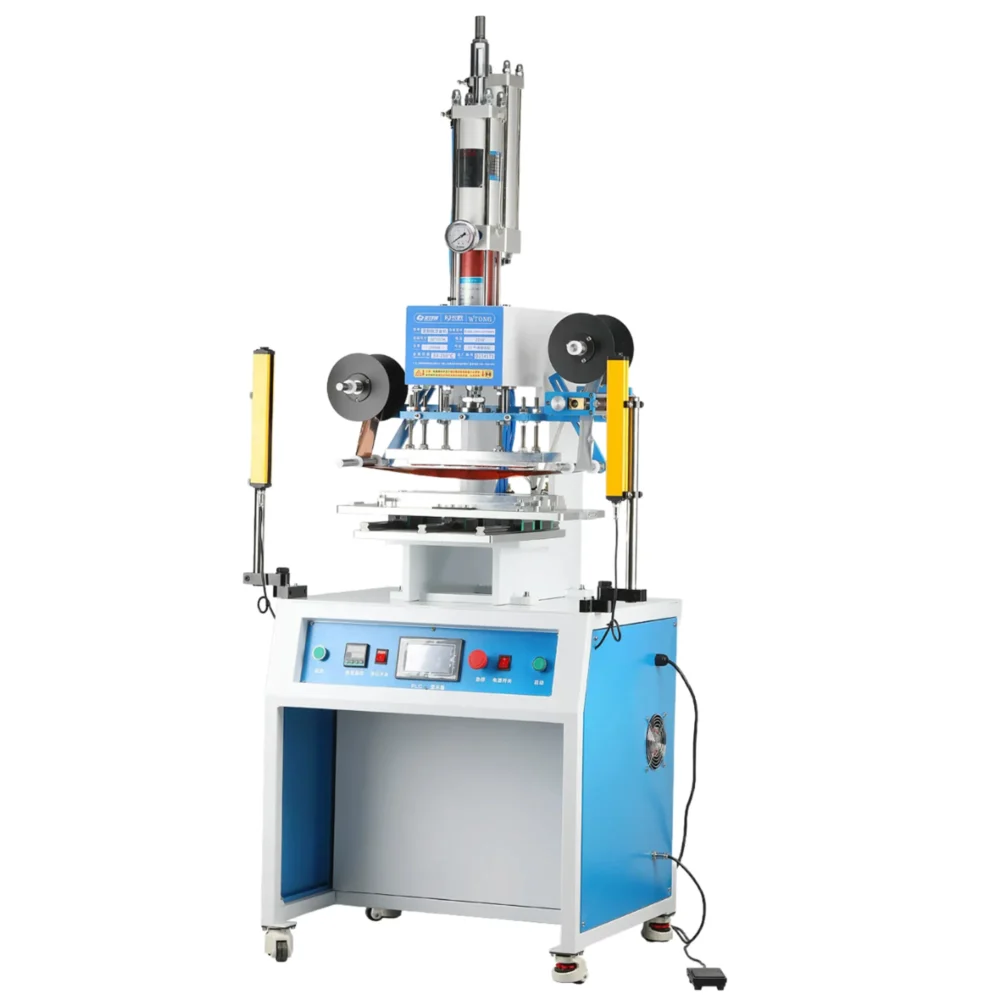
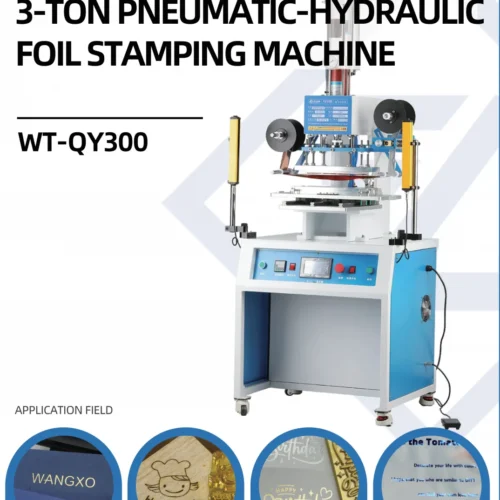
Large or three-dimensional foil artwork needs even contact across the die as well as a suitable balance of heat, pressure, dwell time, stock, and foil. The WT-QY300 combines
3,000 kg rated pressure from pneumatic-hydraulic boosting with a
200 × 300 mm heating plate. It was evaluated with a relief die on glossy cardstock, giving buyers a concrete result to discuss when assessing raised foil logos and decorative paper applications.The supplied cardstock test compared
100°C, 120°C, 140°C, and 150°C, holding pressure, stamping time, foil, relief die, and other test conditions consistent.
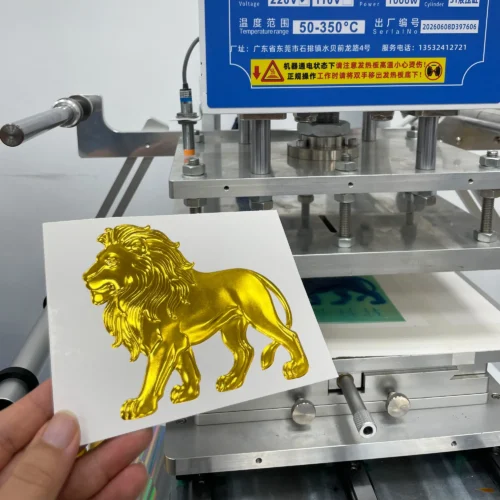
140°C produced the best overall result in that test: foil coverage was complete and even, the relief looked full, edges remained clear, and the cardstock showed no obvious yellowing or damage. At 150°C, the image transferred but the report records edge spread and foil bleed. Use 140°C only as a reference for the tested combination and confirm the process on the buyer’s own stock and die.
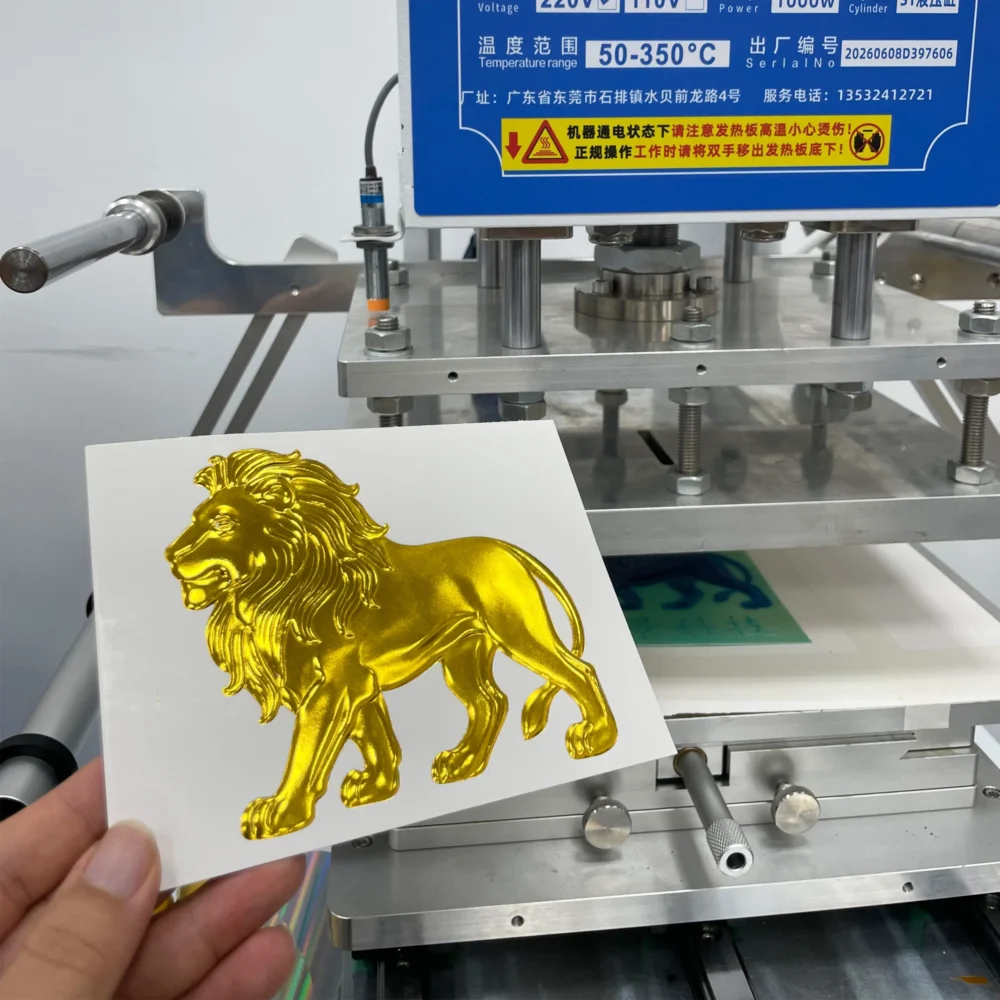
Documented Relief Foil Test
| Test temperature | Observed result | Test assessment |
|---|
| 100°C | Large areas of missing foil and incomplete transfer | Too low for the tested setup |
| 120°C | Major improvement, with some missing details remaining | Not yet stable in the test |
| 140°C | Complete foil coverage, clear relief, even edges, stable appearance | Best result in this test |
| 150°C | Edge spread and localized foil bleed | Too high for the tested setup |
The test used a lion relief design on glossy cardstock. The documented result supports that specific combination; it does not establish performance on all papers, leather, PVC, or other substrates. For a new job, test the exact stock, foil, artwork, die, and backing before confirming production settings.
Intended Applications
The tested application is relief-die hot foil stamping on glossy cardstock. This can be relevant to premium packaging, presentation cards, certificates, and other paper products that use raised foil details, provided the die, sheet, and working area are suitable. These are potential application categories, not all individually validated by the supplied report.The best next step for a buyer is a material and tooling review. Share the substrate type and thickness, artwork dimensions, relief depth, foil specification, target quantity, and sample expectations so the machine configuration can be checked before quotation.
Process Considerations
- Level and align the relief die, platen, backing, and workpiece before adjusting temperature.
- Use a consistent foil, pressure, and dwell time while comparing sample temperatures.
- Begin near 140°C only when the stock and tooling are comparable to the documented test.
- If fine edges spread, review temperature, pressure, and dwell time rather than raising pressure automatically.
- If foil is incomplete, check die contact and surface cleanliness as well as temperature.
- Re-test when the stock coating, paper thickness, foil, relief die, or material batch changes.
- The report does not state a validated output rate or production capacity; request a sample trial for the intended run.
Specifications
| Parameter | Confirmed information |
|---|
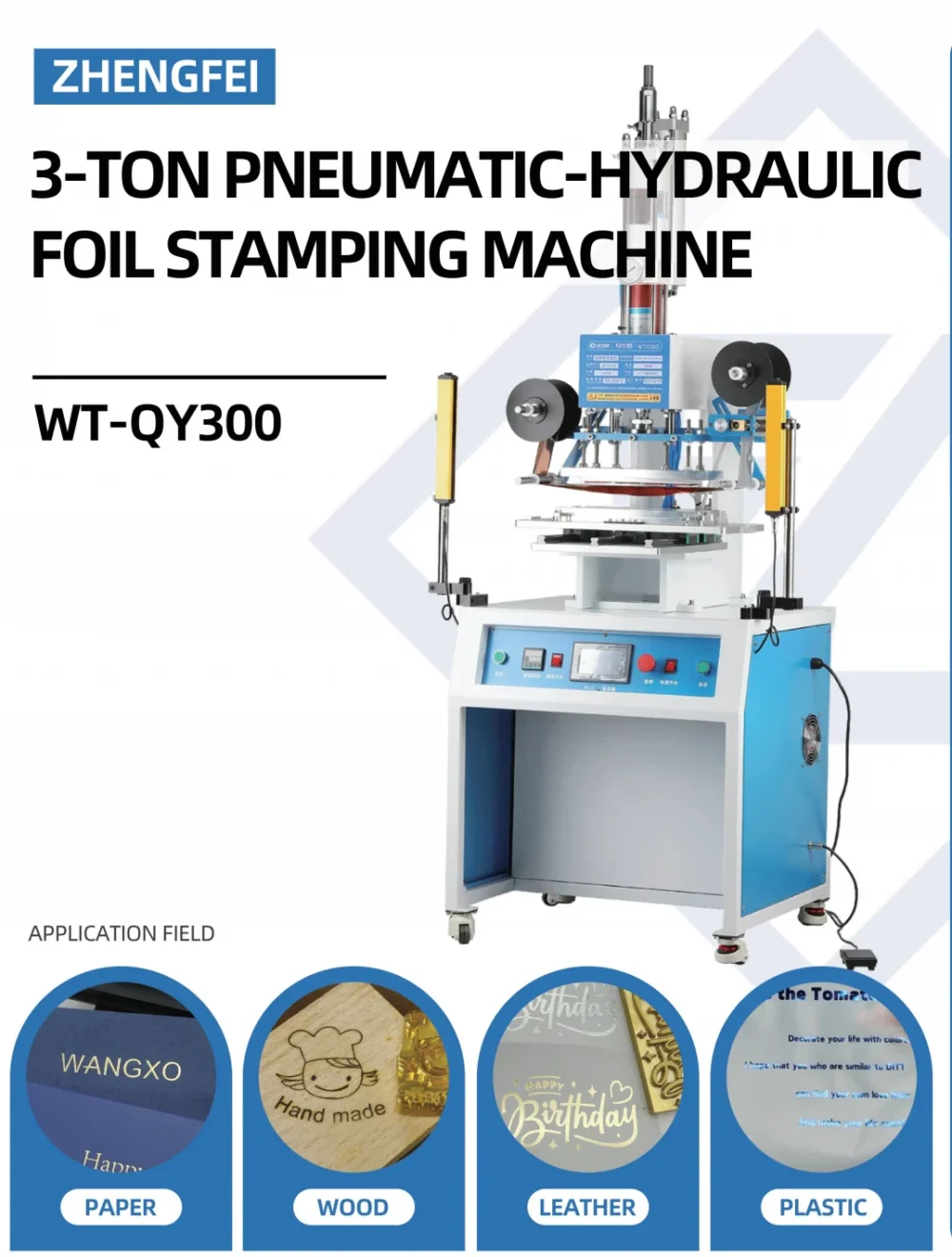
| Model | WT-QY300 |
| Machine type | 3-ton pneumatic-hydraulic foil stamping machine |
| Rated pressure | 3,000 kg, pneumatic-hydraulic boost |
| Heating plate size | 200 × 300 mm |
| Temperature range | 50–350°C |
| Voltage | 220 V |
| Rated power | 1,000 W |
| Machine weight | 280 kg |
| Machine dimensions (L × W × H) | 95 × 80 × 210 cm |
| Documented application | Relief-die foil stamping on glossy cardstock |
| Tested temperatures | 100°C, 120°C, 140°C, 150°C |
| Best result in supplied test | 140°C reference temperature |
Frequently Asked Questions
What temperature was best for the WT-QY300 cardstock test?
140°C gave the best result in the supplied relief-die glossy-cardstock comparison. This is a reference for that combination, not a universal setting for every foil, die, or material.
What pressure does the WT-QY300 provide?
The supplied specifications list a rated pressure of 3,000 kg using pneumatic-hydraulic boosting. Confirm the nameplate and clarify whether this figure represents rated force (kgf) or another pressure rating before publishing technical or regulatory claims.
Is the WT-QY300 the same as the site’s YTJ-5T?
The live site lists a YTJ-5T hydraulic press, while the supplied report identifies the WT-QY300 as a 3-ton model. The model names and stated tonnage differ, so they should not be merged without factory confirmation of their structure, drive system, and specifications.
Does the WT-QY300 also stamp soft PVC?
There is a separate supplied 3T soft-PVC test report for a 5 × 19 cm die, with 90°C as its best reference result. That report does not name WT-QY300. Confirm that it used the same model and configuration before adding the PVC test to this product page.









 English
 Japanese
 Spanish
 French
 Korean
 German
 Russian