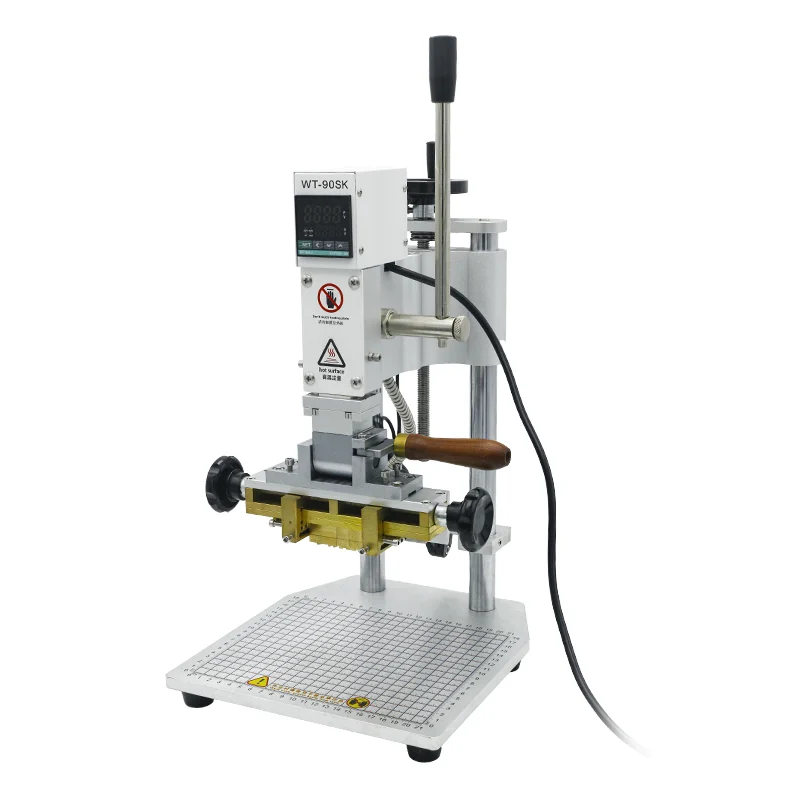
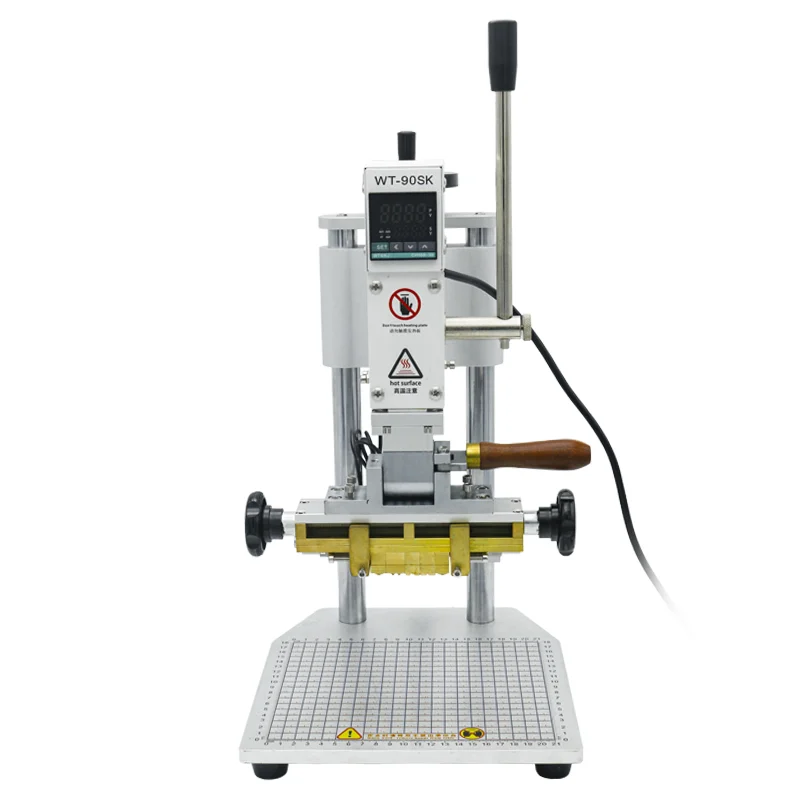
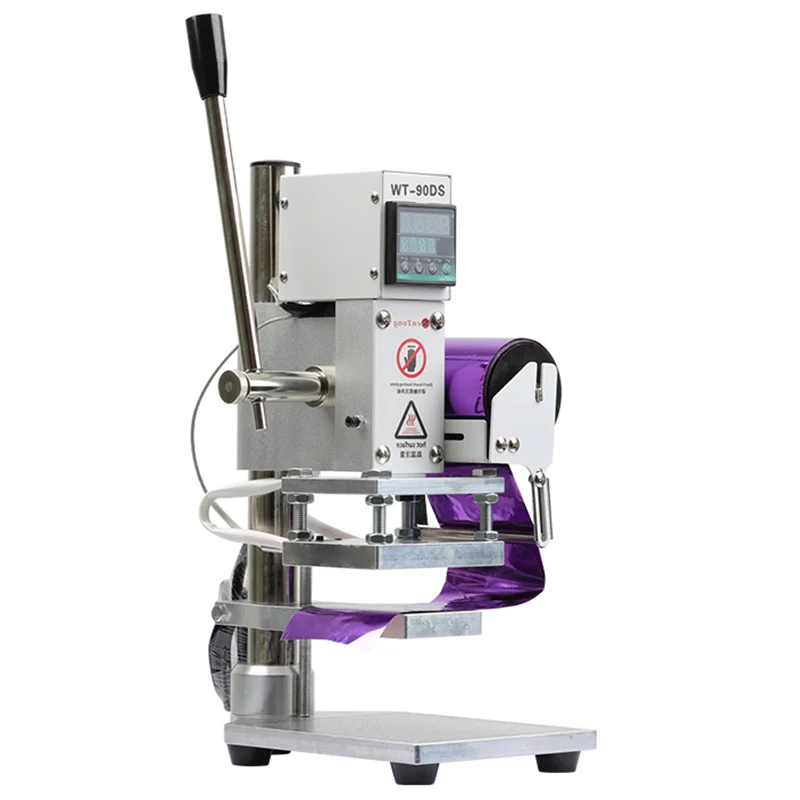
Gloss-coated cardstock can show crisp foil detail, but the surface coating makes a stable transfer dependent on the combination of heat, pressure, dwell time, foil, and die. The WT-90SK is a manual hot stamping press tested on glossy cardstock, with a documented temperature comparison that gives paper converters, packaging studios, and stationery workshops a practical starting point.
In the supplied test, the WT-90SK was evaluated at 90°C, 100°C, 110°C, and 130°C while pressure, stamping time, foil, die, and other test conditions were held constant. 110°C gave the best overall result in that test: the lettering transferred completely, edges remained clear, and adhesion was even. This is a reference result for the tested combination, not a universal setting for every coated stock or foil.
Tested on Glossy Cardstock
The temperature comparison showed how the transfer changed across the four settings:
| Test temperature | Observed result | Test assessment |
|---|
| 90°C | Extensive incomplete transfer and unstable adhesion | Not recommended for the tested setup |
| 100°C | Improved, but visible missing foil and broken strokes remained | Not recommended for the tested setup |
| 110°C | Complete lettering, continuous strokes, clear edges, even adhesion | Best result in this test |
| 130°C | Thickened strokes, edge spread, and localized foil bleed or sticking | Too high for the tested setup |
The report also notes that the cardstock showed no obvious yellowing, deformation, or excessive impression at 110°C under the test conditions. Before a production run, make a sample using the exact stock, coating, foil, artwork, die, and backing that will be used in the job.
Applications
The documented application is hot foil stamping on glossy cardstock. This makes the WT-90SK relevant to work such as premium cards, invitations, paper labels, and packaging panels when the stock and tooling are compatible. These are prospective use cases, not separate material tests; validate each one with a sample before quoting a production setting.
Setup and Process Notes
- Keep temperature, pressure, dwell time, foil, and die controlled while evaluating a sample.
- Start near the tested 110°C reference only when your stock and consumables are comparable.
- If transfer is incomplete, check die contact, pressure, dwell time, cleanliness, and foil compatibility before making a large temperature change.
- If strokes widen or foil spreads beyond the design, reduce heat or review pressure and dwell time.
- Re-test when the cardstock coating, thickness, foil type, die, or material batch changes.
- Keep the die and work surface clean and the sheet flat so contact remains even.
Specifications
| Parameter | Confirmed information |
|---|
| Model | WT-90SK |
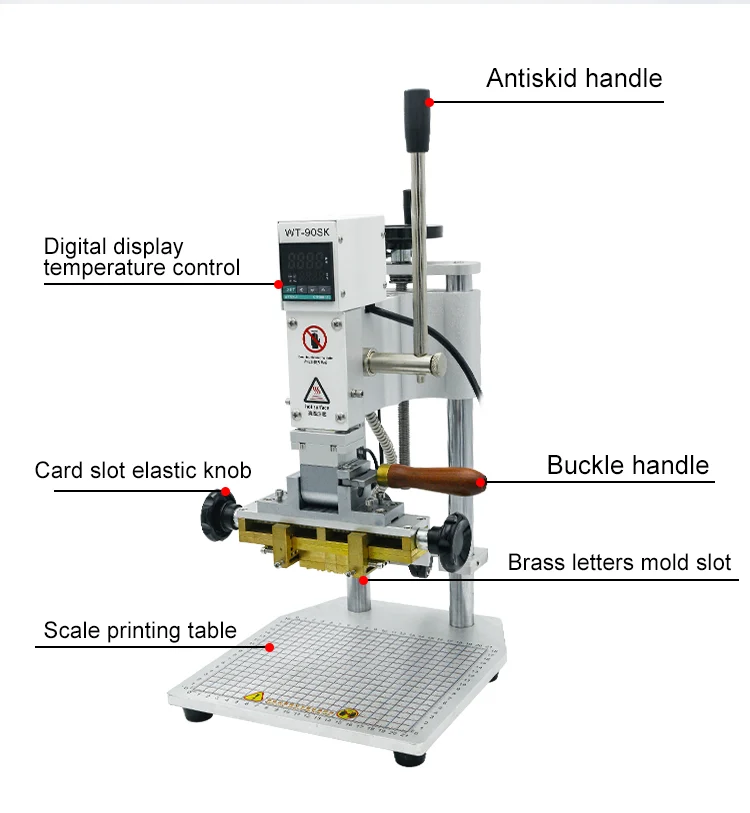
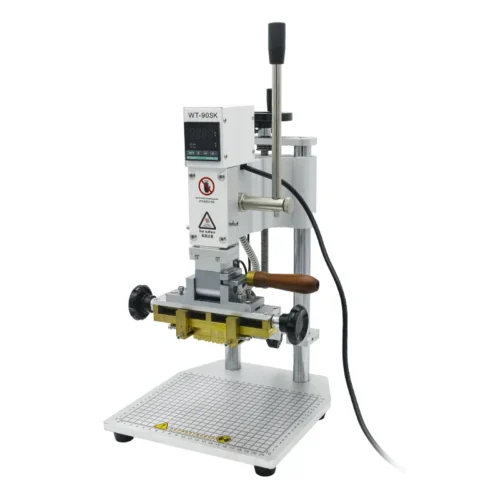
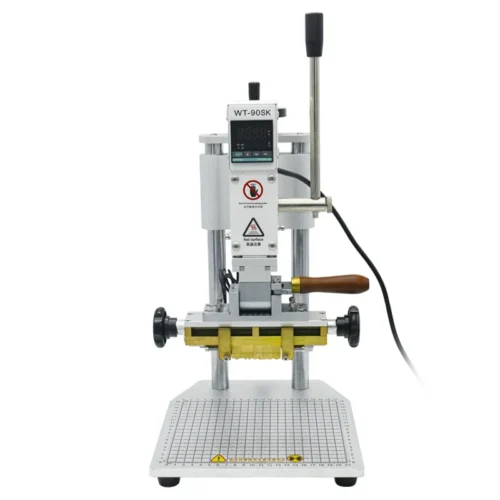
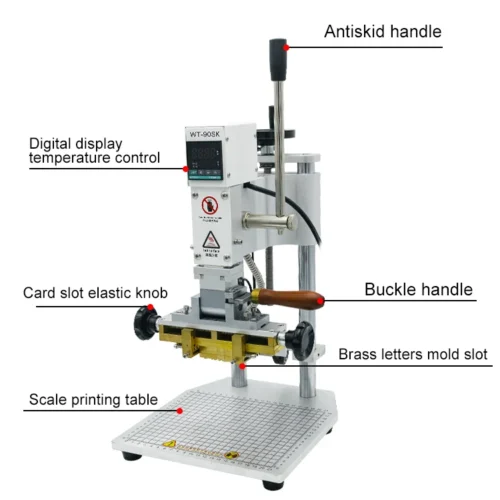
| Operation | Manual lever operation |
| Support frame | 25 mm solid stainless steel tube |
| Fixture compatibility | 12 × 4 cm; thickness over 20 mm (confirm what the thickness refers to before publishing) |
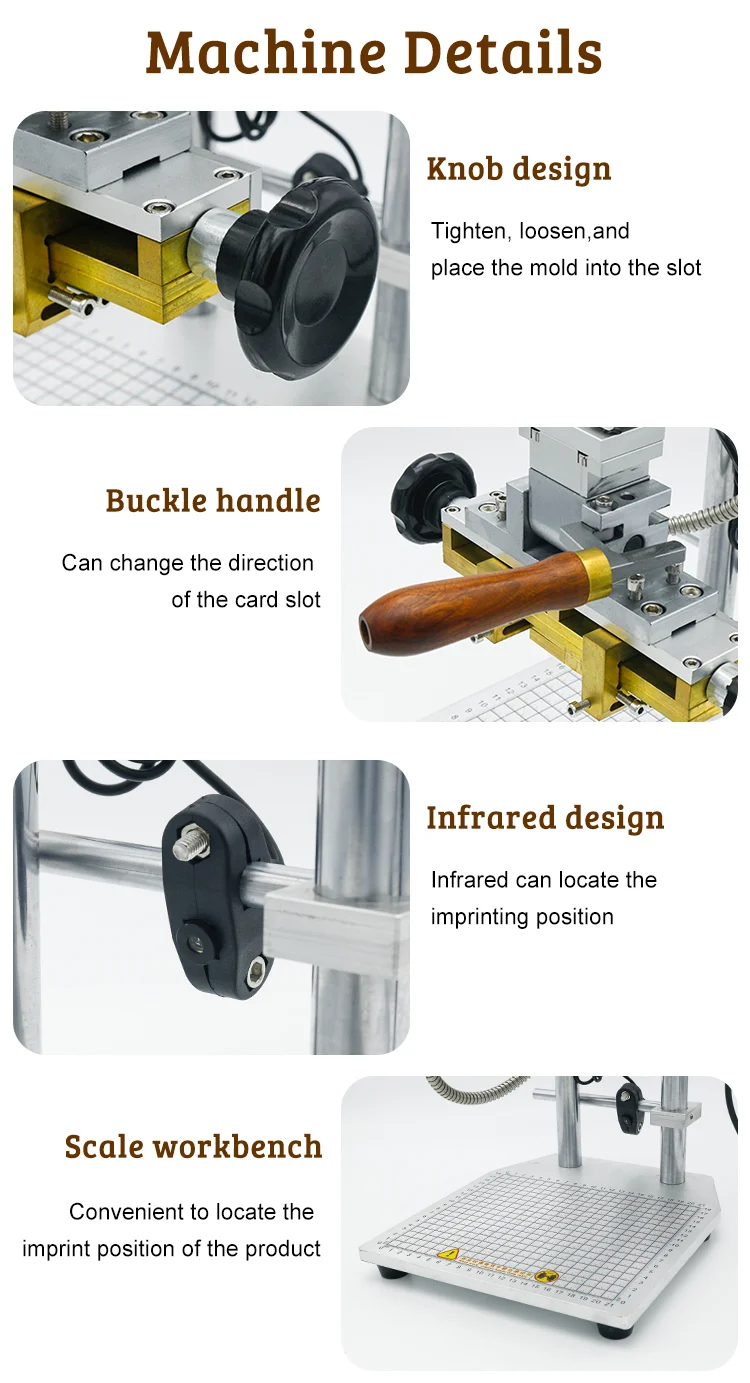
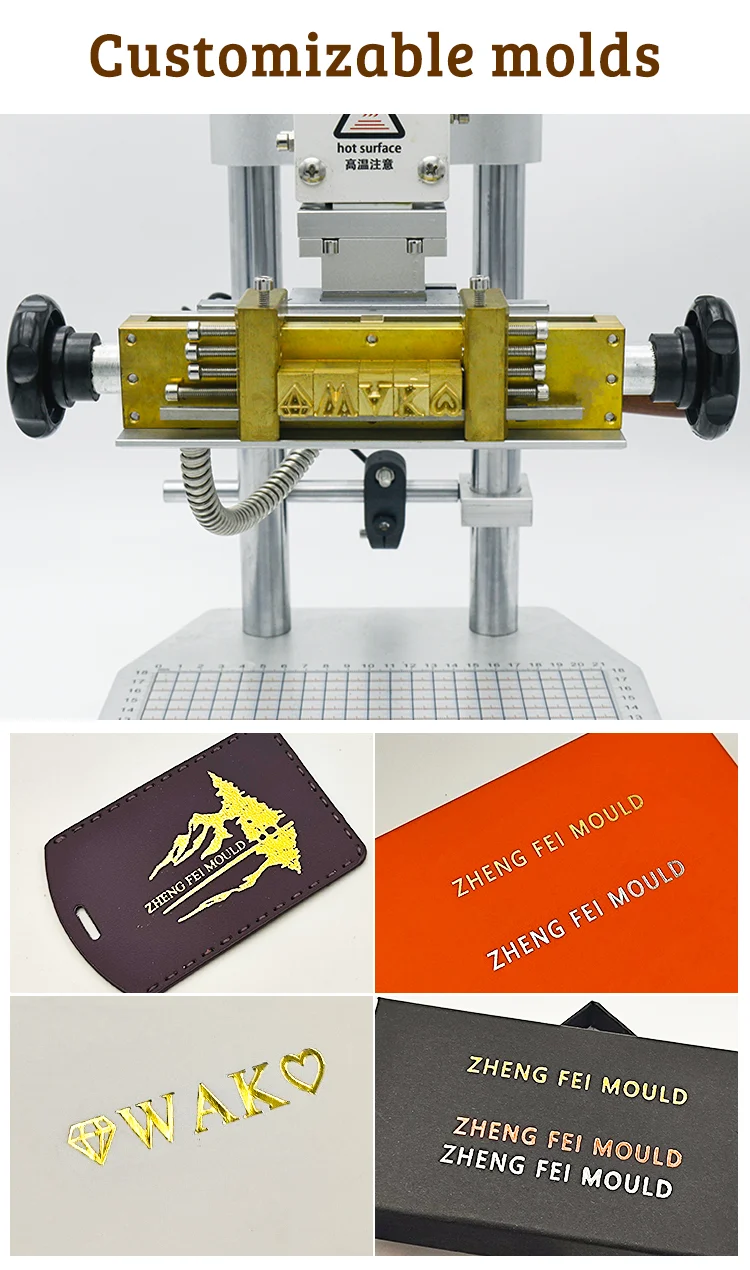
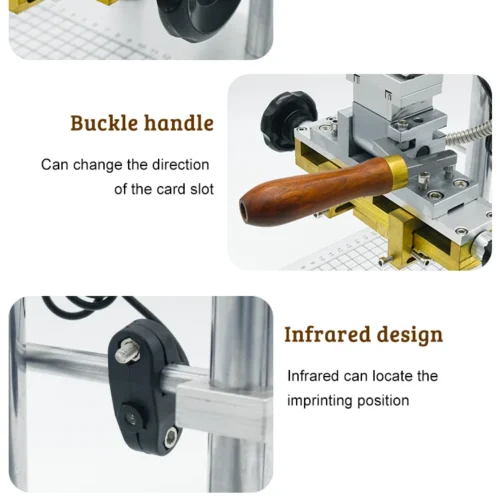
| Mold installation | Quick-flip snap-in type |
| Documented application | Hot foil stamping on glossy cardstock |
| Operating voltage | 110 V or 220 V version; specify the required version when ordering |
| Power | 500 W |
| Temperature control | Digital display, 50–350°C |
| Downward stroke | 45 mm |
| Worktable | Fixed, 250 × 240 mm |
| Net weight | 11 kg |
| Gross weight | 13 kg |
| Machine dimensions | 250 × 280 × 480 mm |
| Package dimensions | 392 × 357 × 540 mm |
| Tested temperatures | 90°C, 100°C, 110°C, 130°C |
| Best result in supplied test | 110°C reference temperature |
Frequently Asked Questions
What temperature was best for the WT-90SK glossy cardstock test?
The best overall result in the supplied comparison was at 110°C. It is a reference for that test’s cardstock, foil, die, pressure, and dwell time, not a guaranteed setting for other materials.
Why did the test not recommend 130°C?
At 130°C, the report describes thicker strokes, edge spread, and localized foil bleed or sticking. This setting was too high for the tested cardstock, foil, and die combination.
Can the WT-90SK stamp other paper stocks?
Other coated or uncoated papers may respond differently. Confirm foil compatibility and run a sample with the intended stock, die, pressure, and dwell time before production.
Can I use this machine for production orders?
The machine was evaluated in a controlled test, but the supplied report does not provide a production rate or a validated run-length specification. Send the stock, artwork size, expected quantity, and sample requirements for a machine and process recommendation.








 English
 Japanese
 Spanish
 French
 Korean
 German
 Russian