Мы используем cookie, чтобы обеспечить максимальное удобство использования нашего веб-сайта.
Contact Founder
Still have doubts?
Connect directly with our Founder. Whether it’s about pricing or technical details, get a straight answer and an exclusive “Founder’s Bonus” for your first order.
900+ Satisfied Clients
🏆 Over 1000+ Custom Projects Successfully Delivered.
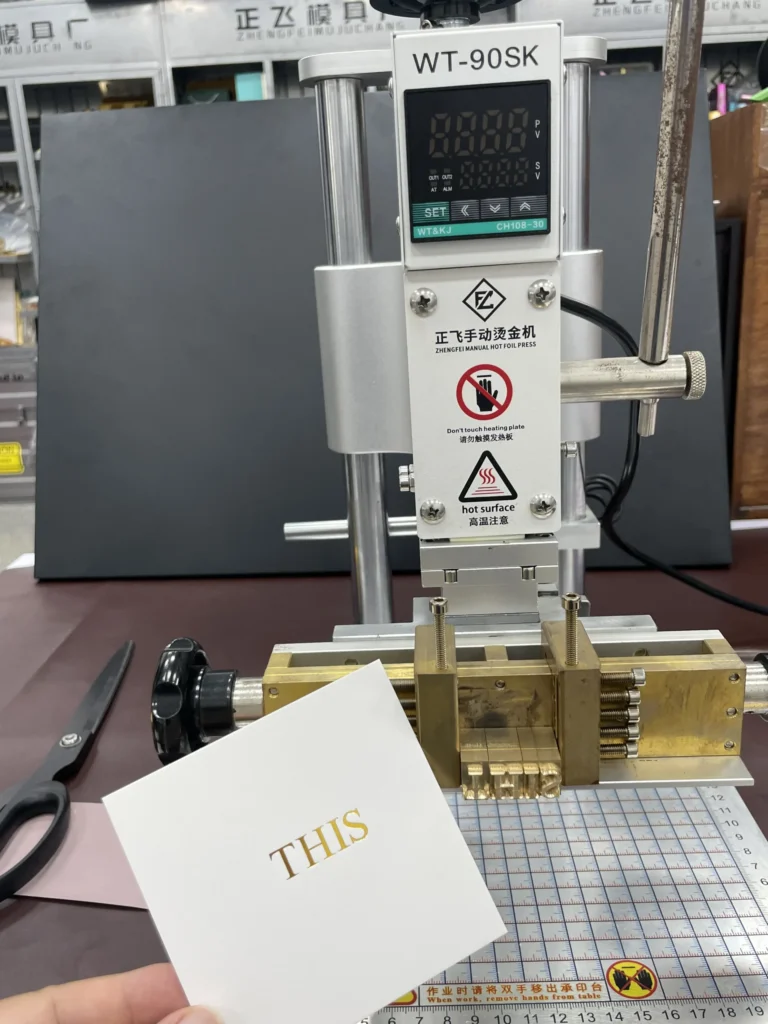
Choosing the right glossy cardstock foil stamping temperature matters because a smooth coated surface can show both incomplete transfer and excess foil very clearly. In a controlled comparison using the WT-90SK, 110°C gave the best overall result among the four tested settings: the lettering transferred completely, strokes stayed continuous, and edges remained clear.
This result is a reference for the cardstock, foil, die, and process used in this test. It is not a universal setting for every coated paper. The report does not specify numeric pressure or dwell-time values, so those should be confirmed for each new job.
Quick Result
Температура
Observed result
Assessment in this test
90°C
Extensive missing foil; incomplete lettering and unstable adhesion
Too low
100°C
Improved transfer, but missing foil and broken strokes remained
Still incomplete
110°C
Complete lettering, continuous strokes, clear edges, even adhesion
Best overall result
130°C
Thickened strokes, edge spread, localized bleed or sticking
Too high
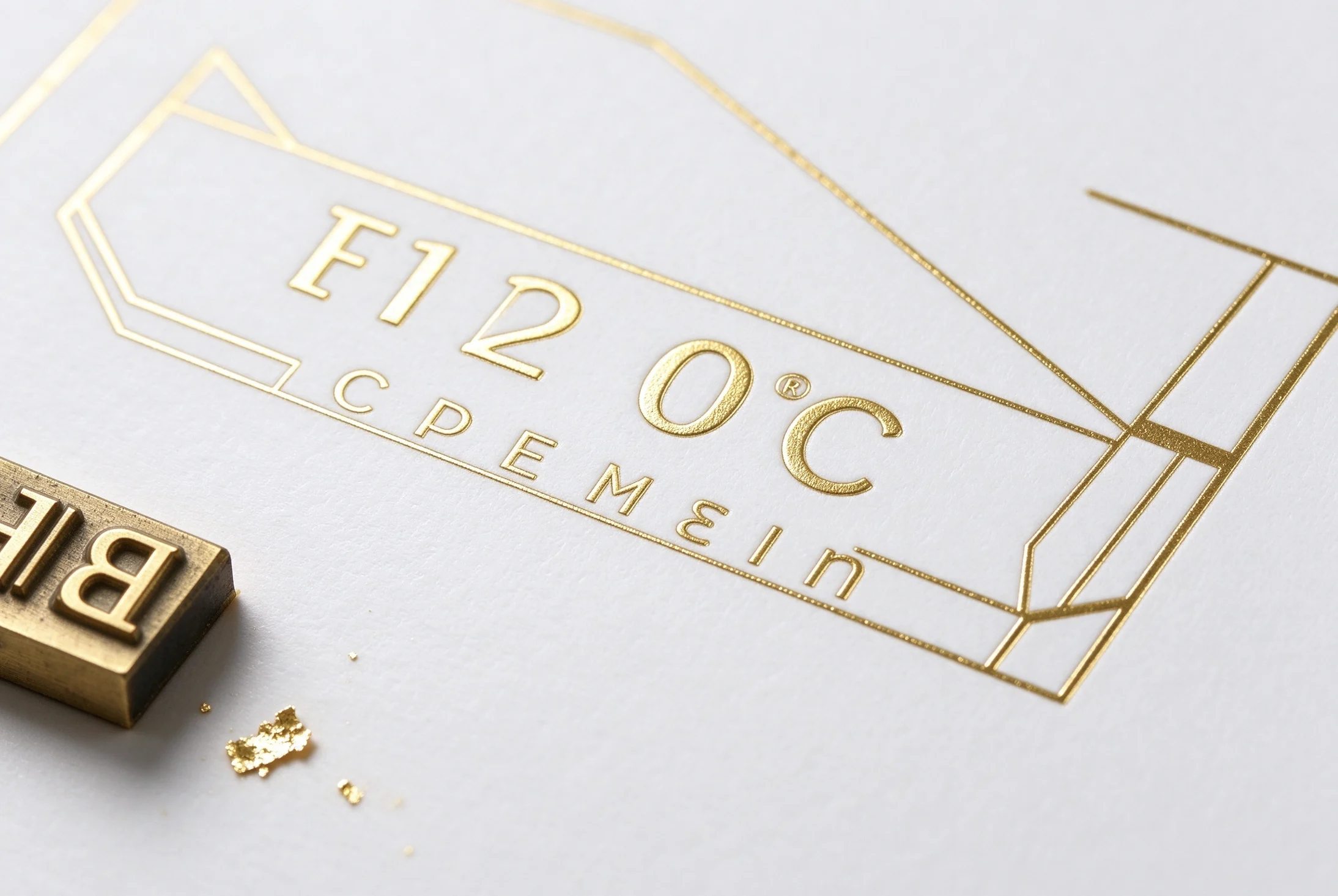
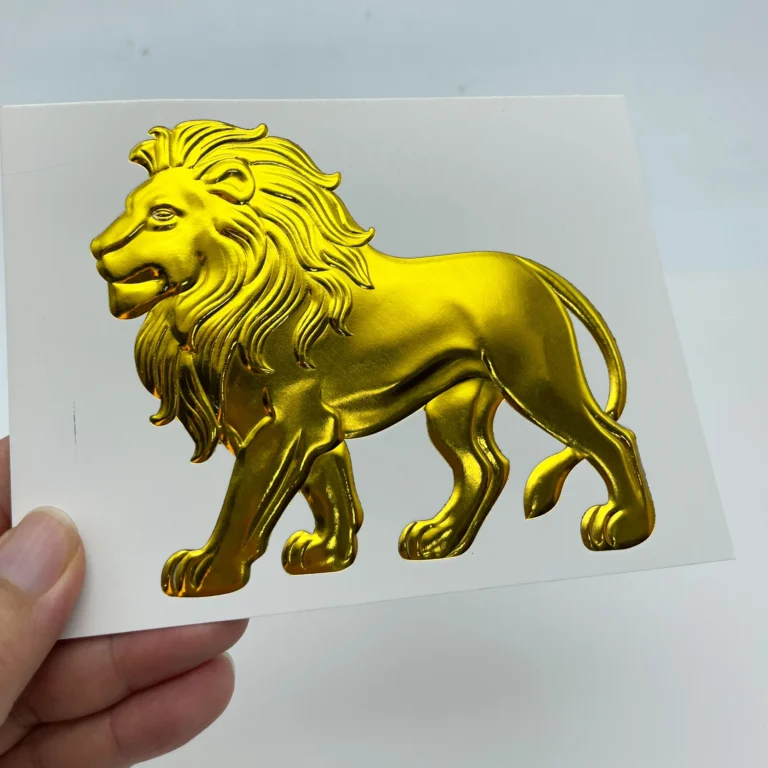
Custom brass tooling creates branded foil details for cardstock and paper packaging.
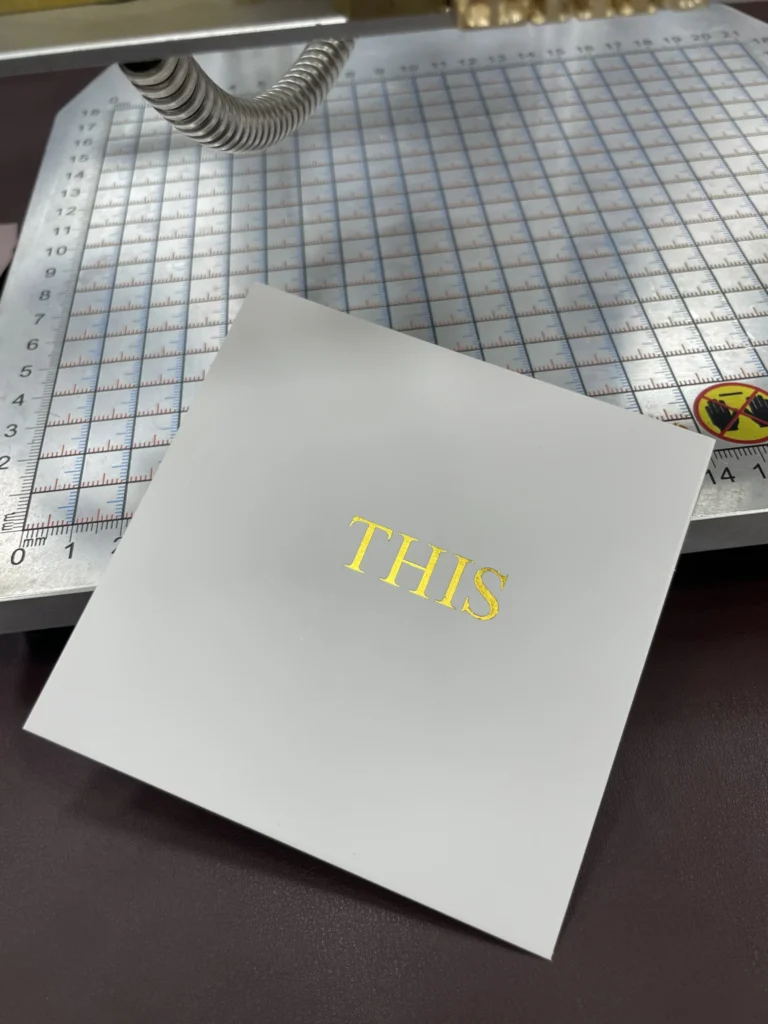
The 110°C sample showed complete lettering, continuous strokes, and clear edges in this glossy-cardstock test.
The report states that pressure, stamping time, foil type, die, and other conditions were kept consistent while temperature changed. That makes temperature the main comparison variable, although reproducing the test exactly requires the original materials and settings. Foil grades are substrate- and press-dependent: Foilco’s grade guide separates compatible surfaces and stamping methods, and presents its temperature ranges as guidance rather than a guarantee. That is why the 110°C result belongs to this test combination, not every glossy board.
Why Glossy Cardstock Needs a Balanced Setting
A smooth coated surface can show fine lettering well, but foil transfer still depends on the adhesive layer activating and releasing under the specific process conditions. If the setting is too low, gaps and broken lines can remain. If it is too high, the transferred strokes can widen and foil can move beyond the intended outline.
The test demonstrates both sides of that window: 90°C and 100°C did not transfer the artwork completely, while 130°C caused visible loss of edge definition. At 110°C, the report observed the best balance of transfer completeness, edge clarity, and adhesion for this particular cardstock, foil, die, and machine setup. If the foil transfers but leaves a gold halo or stray marks, use this foil edge-spread troubleshooting guide to check heat, pressure, and die contact rather than treating every defect as underheating.
Compare sample results before choosing a temperature for your cardstock and foil.
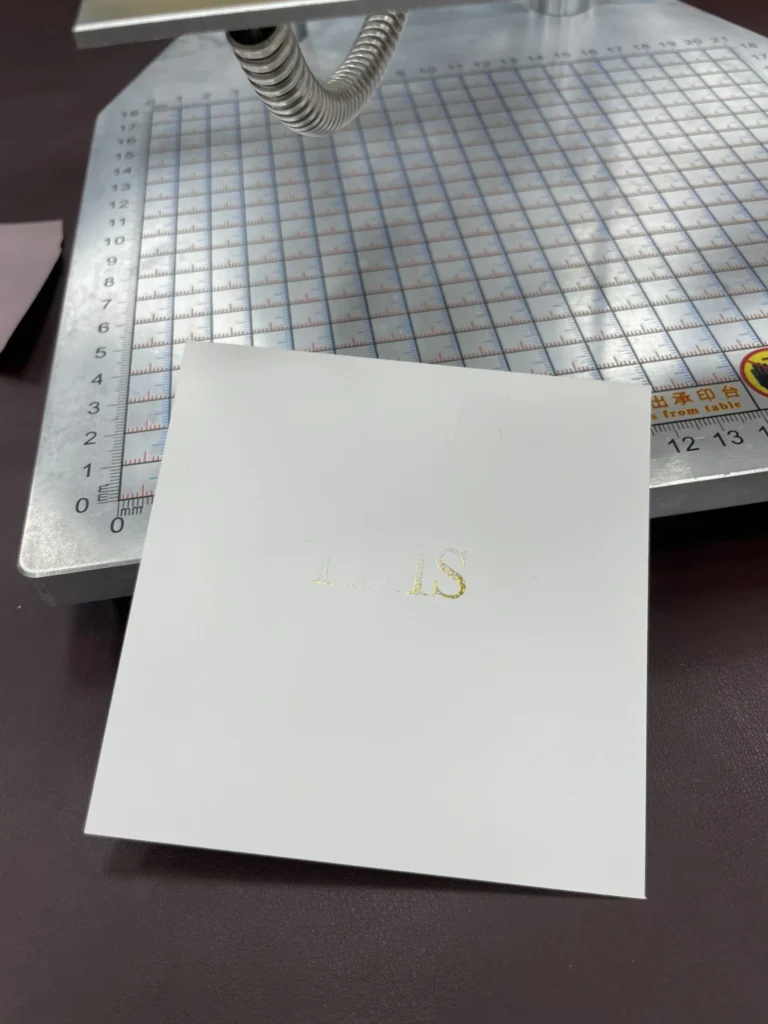
На 90°C, the foil adhesive was under-activated in this setup. Large areas of the design were missing, only portions of the lettering transferred, and adhesion was described as unstable.
Temperature comparison helps identify a cleaner foil transfer before a production run.
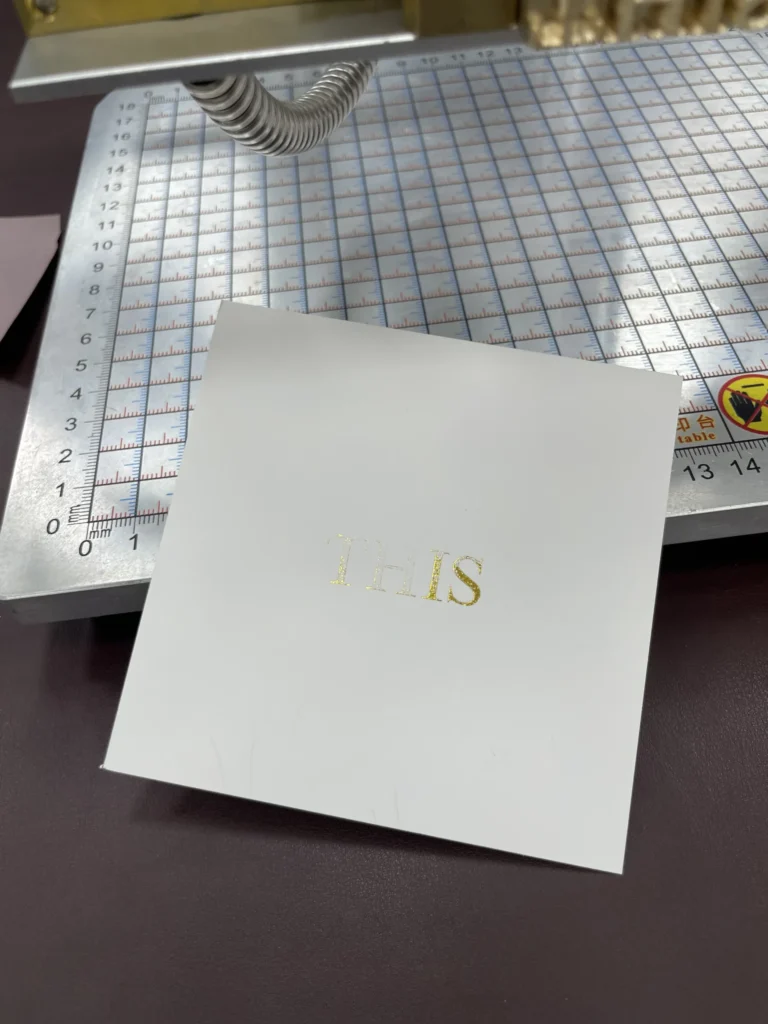
На 100°C, the result improved, but missing foil and incomplete strokes remained. The report considered this better than 90°C, but not yet a stable, complete transfer.
110°C produced the cleanest complete transfer in this test, offering a reference point for similar materials.
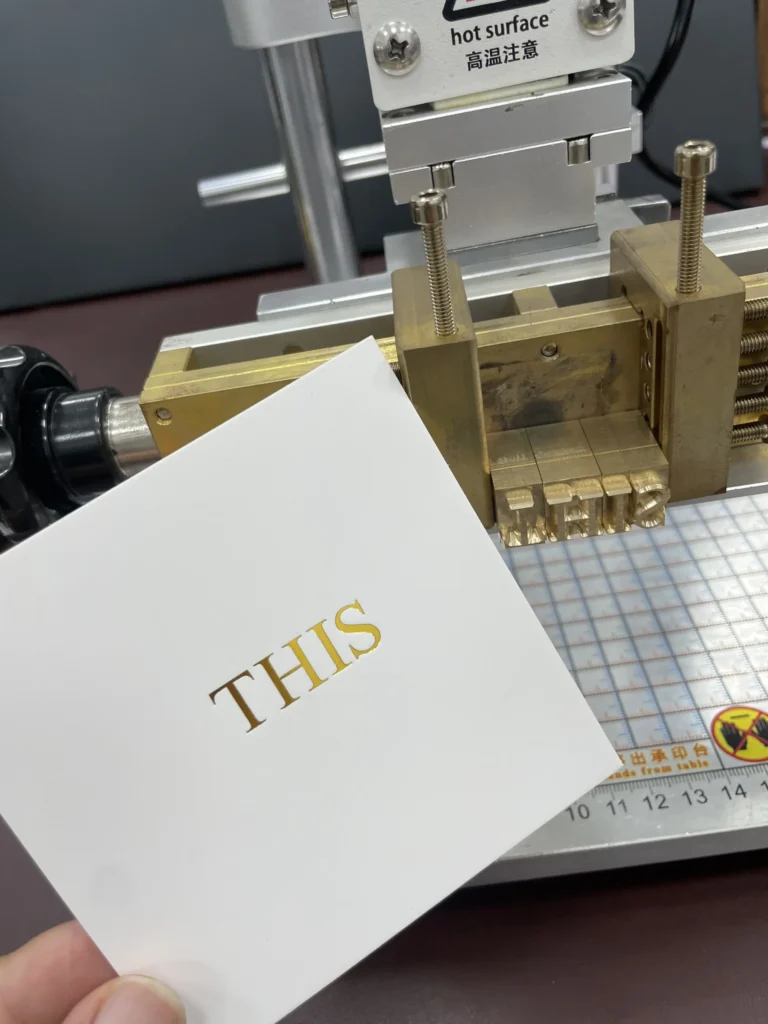
На 110°C, lettering transferred fully with continuous strokes, clear edges, and even adhesion. The report also notes no obvious yellowing, deformation, or excessive impression on the cardstock under the test conditions.
На 130°C, the design still transferred, but the strokes became thicker and spread beyond their intended edges. Some narrow areas and corners showed localized foil bleed or sticking, reducing detail quality.
What the 110°C Result Does and Does Not Mean
Factory-direct machine and custom tooling support branded foil details for paper packaging.
For the exact sample set in this report, 110°C was the preferred reference. It is a useful starting point for a comparable cardstock coating, foil, die, and machine configuration. It is not a guaranteed production recipe for a different stock, because coatings, thickness, foil formulation, artwork, backing, and contact can change the result.
If you are moving from glossy cardstock to another paper surface, compare the separate paper and napkin foil-stamping guide or the pearl-paper envelope test. Those pages cover different materials and test setups; their temperatures should not be substituted for this report. For a raised design, the 3D embossed paper test is another separate process comparison.
Before a production run, test the actual job stock and consumables. Keep the die, pressure, dwell time, and foil consistent while evaluating temperature, and change one variable at a time. If the image is incomplete, check alignment, die contact, surface cleanliness, and consumable compatibility before making a large temperature adjustment.
Это FSEA designer’s guide to foil stamping and embossing recommends involving suppliers while planning the process. A proof made with the specified paper, foil, and die is the practical bridge between this reference test and production approval.
Practical Sample-Test Checklist
Identify the exact cardstock brand, thickness, and surface coating.
Record the foil type and batch, die artwork, and backing material.
Ensure the sheet is flat and clean, and the die face is free of residue.
Keep pressure and dwell time constant while comparing temperatures.
Inspect both transfer completeness and edge spread; do not judge only by gold coverage.
Re-test when stock, foil, die, or batch changes.
Часто задаваемые вопросы
What temperature worked best in the WT-90SK glossy cardstock test?
110°C gave the best overall result among 90°C, 100°C, 110°C, and 130°C. It produced complete lettering and clear edges in the tested combination. Treat it as a reference, then test the actual production stock and foil.
Why was 130°C not recommended?
The report records thicker strokes, edge spread, and localized foil bleed or sticking at 130°C. Although the design transferred, its detail and edge definition declined.
Can I use 110°C for every glossy cardstock?
No. Coating, stock thickness, foil, die geometry, pressure, and dwell time affect transfer. The report supports 110°C only as the best setting for its specific test setup.
Does the report specify pressure and dwell time?
No numeric values are provided. It says those conditions were held consistent during the comparison, so a new job should be sampled with its own documented process settings.
Conclusion
The WT-90SK glossy cardstock test found 110°C to be the best reference among the four tested settings. Lower temperatures left missing foil, while 130°C caused stroke thickening and edge spread. Use the result as a starting point for a comparable setup, then confirm transfer and edge quality on the exact stock, foil, and die planned for production. Review the WT-90SK machine details, then contact ZHENGFEI with your cardstock, foil, die size, and target artwork if you need a sample assessment.
ZHENGFEI Technical Team shares practical hot stamping knowledge from real production tests, including brass die design, foil stamping parameters, machine setup, leather, paper, acrylic, plastic, wood and packaging applications.






 English
 Japanese
 Spanish
 French
 Korean
 German
 Russian