Nous utilisons des cookies pour nous assurer que nous vous offrons la meilleure expérience possible sur notre site.
Contacter le fondateur
Vous avez encore des doutes ?
Échangez directement avec notre fondateur. Qu’il s’agisse de tarifs ou de détails techniques, obtenez une réponse claire et un « Bonus du fondateur » exclusif pour votre première commande.
Plus de 900 clients satisfaits
🏆 Plus de 1000 projets sur mesure livrés avec succès.
0.01mm CNC relief brass molds paired with WT-QY300 deliver full gold coverage and crisp raised details for luxury card & packaging.
WT-QY300 Foil Stamping on Glossy Cardstock: Why 140°C Won This Test
A WT-QY300 test compared four temperatures for 3D embossed foil stamping on glossy cardstock. 140°C gave the cleanest, most complete result in this specific test.
What temperature should you start with for foil stamping and embossing on glossy cardstock? In a documented WT-QY300 foil stamping on glossy cardstock test, 140°C gave the best overall result among the four settings compared: 100°C, 120°C, 140°C and 150°C. At 100°C, large areas of the lion design had missing foil; at 120°C, transfer improved but some details remained incomplete; at 140°C, the foil coverage and relief looked clean and complete; and at 150°C, foil spread beyond parts of the design edge.
This guide is for print finishers and packaging teams producing raised metallic graphics on coated cards or similar paper stocks. It explains what the test showed, how to interpret the temperature comparison, and which setup checks to make before repeating the result. 140°C is a starting reference for this tested combination—not a universal setting for every cardstock, foil or embossing die.
Key takeaways
Machine named in the report: WT-QY300, 3-ton pressure.
Substrate and process: glossy cardstock with an embossing die and hot-stamping foil.
Temperatures compared: 100°C, 120°C, 140°C and 150°C.
Best result in this test: 140°C, with complete-looking foil coverage, clear relief and tidy edges.
The report does not state numerical stamping pressure, dwell time, cardstock weight or foil model; confirm settings with a controlled sample run.
WT-QY300 test setup at a glance
The report compared a lion relief design stamped on glossy cardstock using the WT-QY300. Pressure, stamping time, foil, die and other conditions were held constant across the temperature comparison, so the samples could be judged against the same setup. The report does not provide the numerical values or product identifiers for those held variables.
Test item
Reported condition
Machine
WT-QY300 hot stamping machine
Rated pressure stated in report
3 tons
Substrate
Glossy cardstock
Tooling
Embossing die for a lion design
Temperatures compared
100°C, 120°C, 140°C and 150°C
Best result in this test
140°C
Variables kept consistent
Pressure, stamping time, foil, die and other conditions
For current machine specifications, see the WT-QY300 3-ton pneumatic-hydraulic foil stamping machine. Its product page lists a 200 × 300 mm heating plate and a 50–350°C control range; these are product specifications, not additional test conditions from this report.
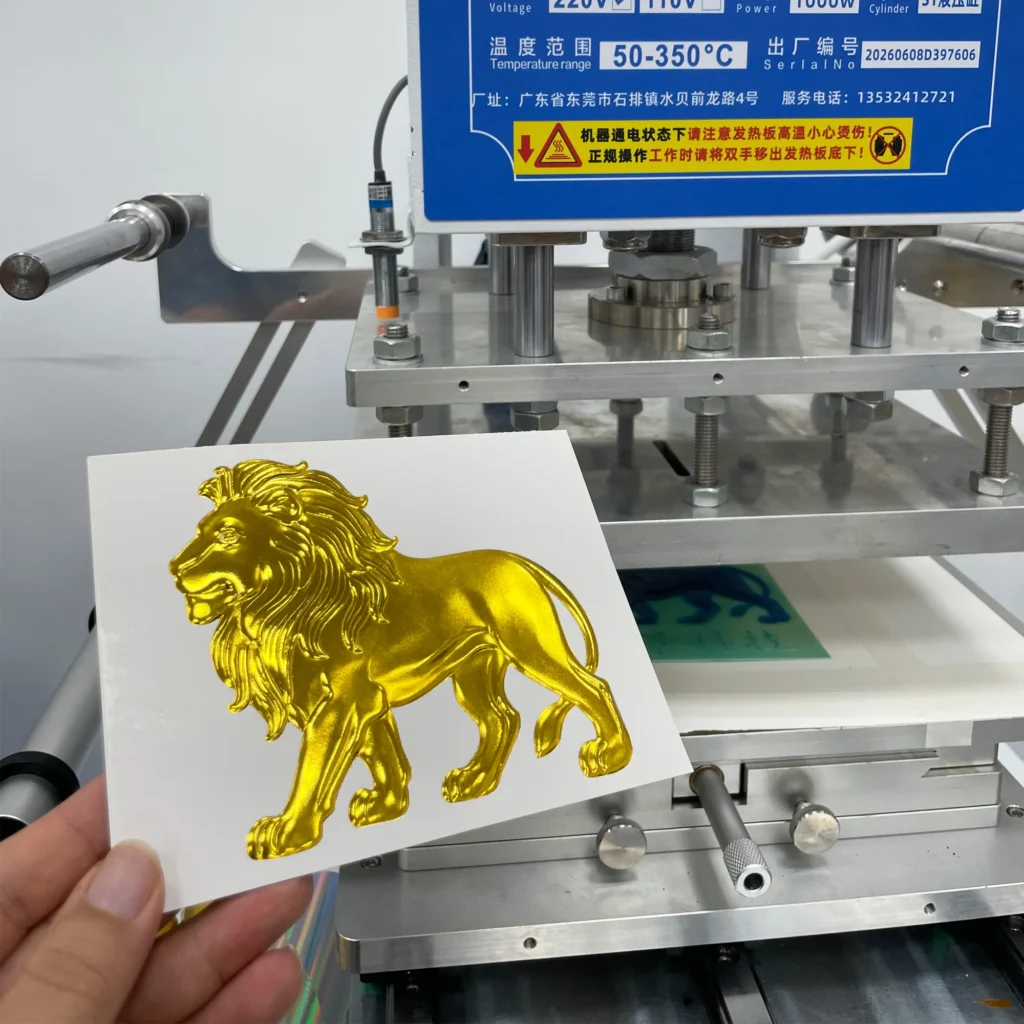
0.01mm high precision 3D relief foil stamping, factory direct WT-QY300 machine delivers clean, full raised gold foil for premium packaging.
WT-QY300 machine view from the supplied process-test report. The product specifications are listed on the WT-QY300 product page.
Temperature comparison: 100°C, 120°C, 140°C and 150°C
The best setting was judged by more than whether gold foil appeared. The report compared foil coverage, relief definition, edge clarity and the visible condition of the glossy cardstock. This matters for combination work: a design can transfer much of its foil and still fall short if fine areas are missing or the outer edges become untidy.
Set temperature
Result described in the report
Assessment for this test
100°C
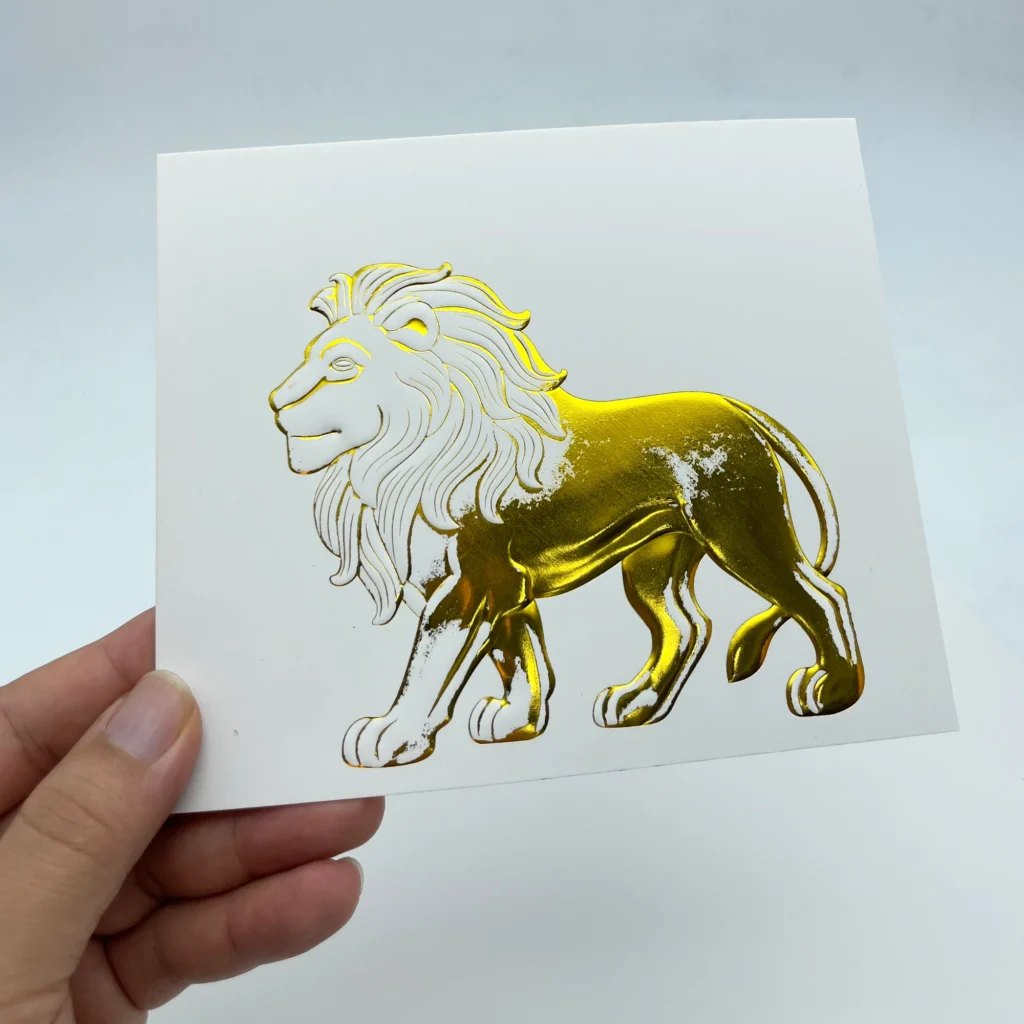
Large areas of the lion were incomplete, with missing foil on the head, mane and legs.
Too low; not suitable for production in this test.
120°C
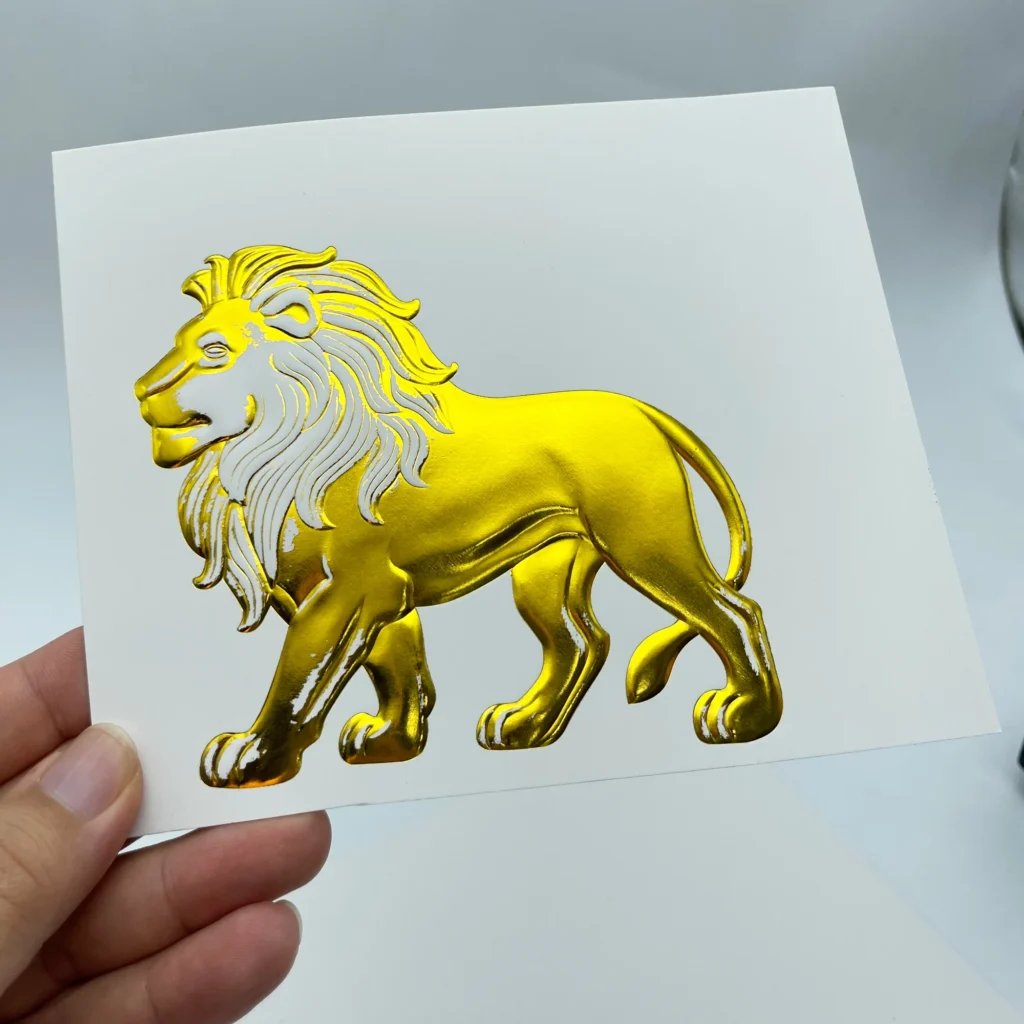
Most of the design transferred, and the relief became clearer, but the mane, face and some local details still had missing foil.
Improved, but coverage and stability were still insufficient.
140°C
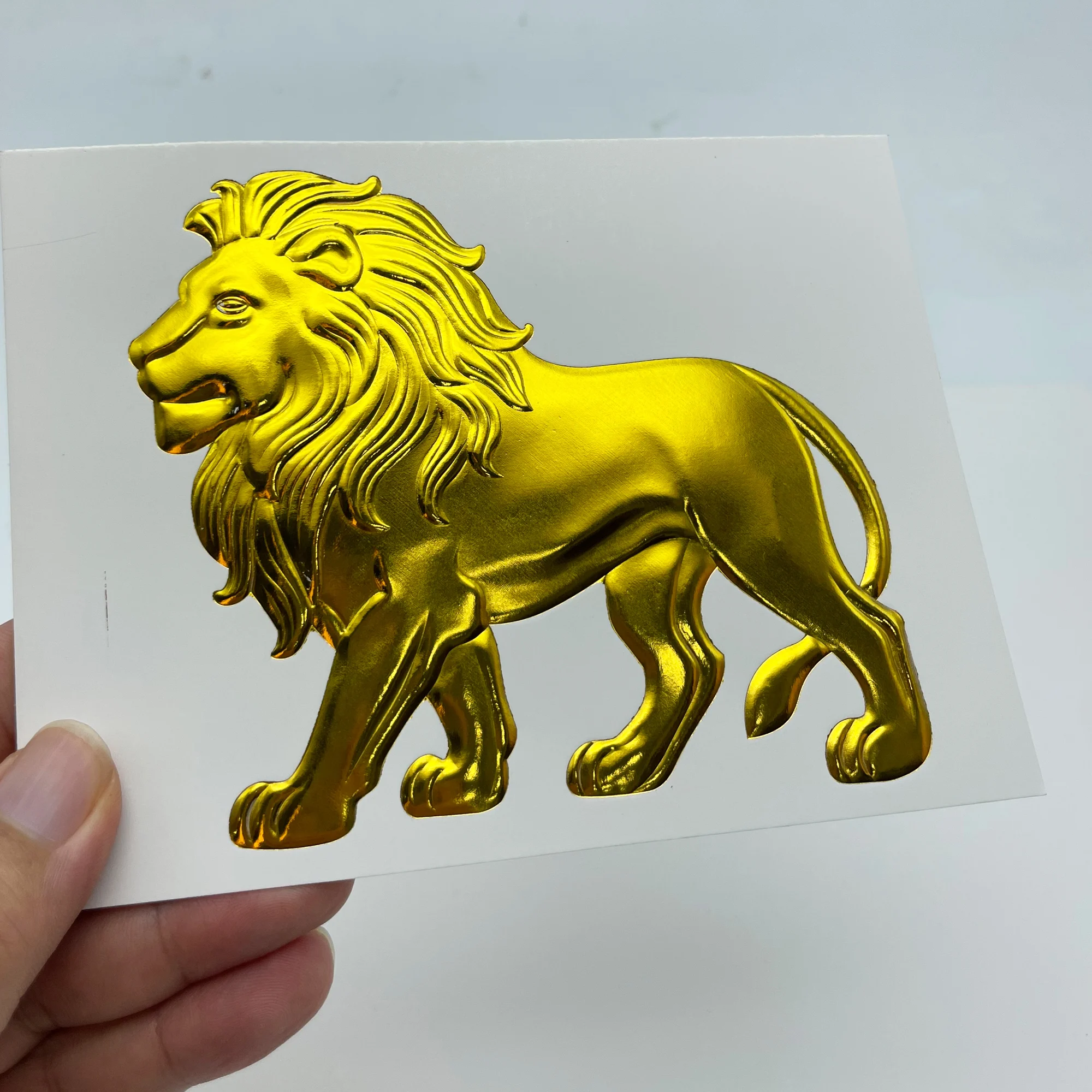
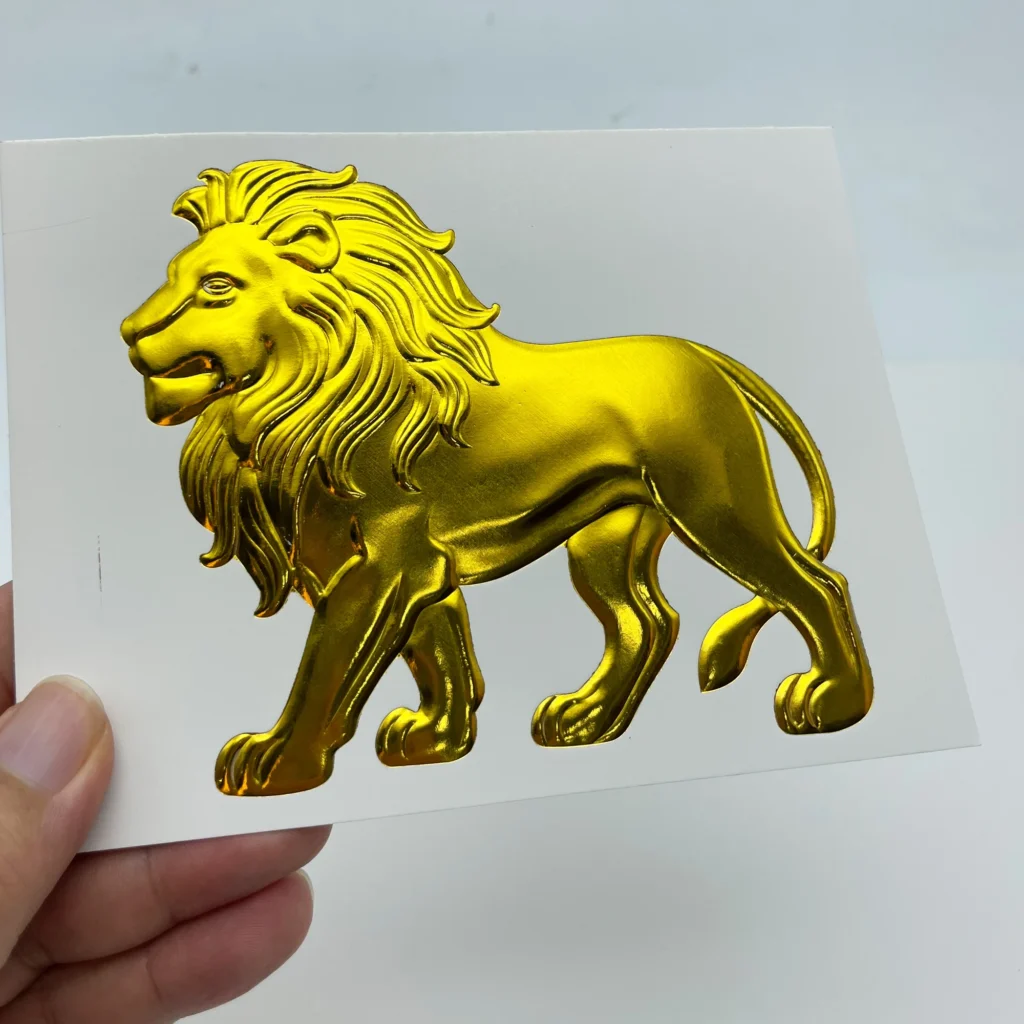
Foil coverage looked complete and even; mane, limbs and contour details were clear; relief was full and edges were neat. No obvious yellowing or damage to the cardstock was reported.
Best overall result in this test; use as the first sampling reference for a closely matched setup.
150°C
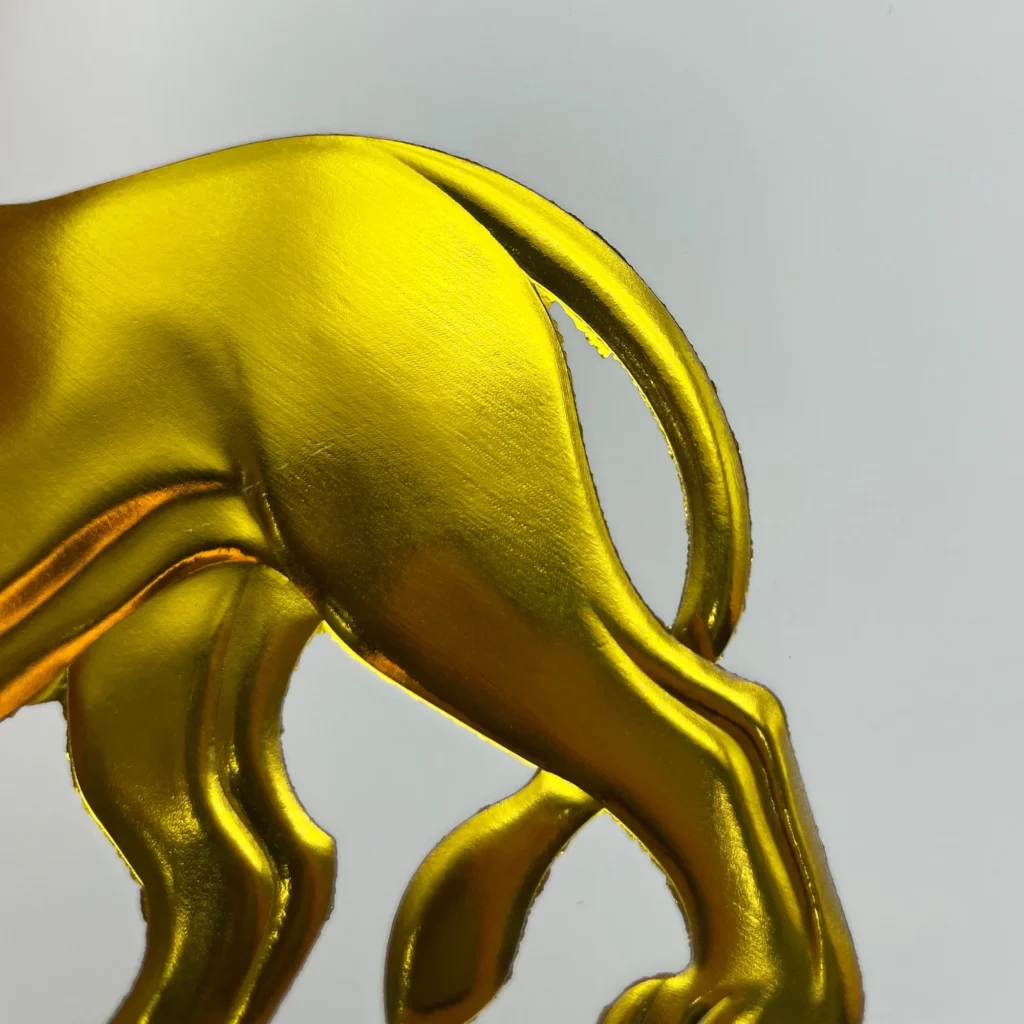
The main image transferred, but visible foil spread appeared outside parts of the contour, especially at the tail, legs and narrow edges.
Too high for this test; fine edge quality declined.
The sample photos make the change easier to see: 100°C left substantial untransferred areas, 120°C improved the overall image but missed details, 140°C produced the cleanest complete relief, and 150°C showed foil beyond some narrow outlines. These are visual observations, not measured adhesion-strength or durability results.
100°C: incomplete foil coverage
At 100°C, the report describes insufficient activation for the tested foil and glossy-cardstock combination. Parts of the lion formed a visible impression, but the metallic layer did not cover the whole design. A raised outline alone is not enough when the finished artwork requires an even gold surface.
Insufficient heat at 100°C leads to missing foil; our WT-QY300 lets you fine-tune temperature for full, uniform relief foil coverage.
100°C: visible gaps in the transferred foil on the lion design.
120°C: better transfer, but details still missing
At 120°C, the stamped image improved substantially, but the test report still notes missing foil around parts of the mane, face and other details. This intermediate result shows why a single visual check of the solid center can be misleading: inspect thin lines, small spaces and the full outline as well.
120°C improves foil transfer yet retains fine detail gaps; WT-QY300 supports precise thermal adjustment for packaging relief stamping.
120°C: more of the design transferred, while some detail areas remained incomplete.
140°C: the best balance in the comparison
At 140°C, the report records even-looking coverage, clear detail in the mane and limbs, full relief and neat edges. It also reports no obvious yellowing or damage to the cardstock surface. Based on these stated inspection criteria, 140°C was the strongest result in this four-temperature test.
0.01mm CNC relief brass molds paired with WT-QY300 deliver full gold coverage and crisp raised details for luxury card & packaging.
140°C: complete-looking gold coverage and a clearly defined raised design in the tested sample.
150°C: complete transfer with unwanted edge spread
The main image transferred at 150°C, but the report noted foil extending outside portions of the contour. The tail, legs and narrow edge areas were especially vulnerable, reducing the precision of the design. If fine lines are important, a fuller transfer does not automatically mean a better setting.
Zoom in to witness ultra-fine contour definition; our high precision brass relief dies maintain sharp edges on complex 3D foil artwork.
150°C: close-up of foil outside the intended contour in the tested sample.
Why can glossy cardstock need a different setting from other paper?
Glossy cardstock is identified in the report as a smooth, tightly coated surface. Foil adhesion depends on the coating, the foil’s adhesive layer, the die and the combined heat and pressure at the point of contact. A foil grade and temperature that work on an uncoated sheet, envelope or another coated board may not produce the same result on this stock.
Le Foilco foil grade guide describes its own foil grades and directs users to select products for their application and substrate. That is useful for material selection, but it does not validate 140°C for every foil or coated paper. Confirm compatibility with the foil supplier and test the actual stock and finish.
Le FSEA guide to foil stamping and embossing design distinguishes flat foil stamping from foil embossing and explains that paper, die and foil selection all affect the finished piece. The WT-QY300 report likewise evaluates both the metallic transfer and the raised relief, so the trial should inspect both outcomes.
Practical setup checks before sampling
Use the test result as a disciplined starting point. Before changing heat, confirm that the material, die and support are representative of the finished job.
Identify the cardstock. Record supplier, product name, weight if known, coating/finish and sheet batch. The source report does not state cardstock weight or brand.
Confirm foil compatibility. Match the foil to the coated paper surface and the intended stamping method. Record its product code and batch for repeat testing.
Inspect and clean the die. Remove paper fibers, foil residue and dust that could obscure fine relief details or create uneven contact.
Support the sheet evenly. Use a flat backing with suitable firmness. Keep the sheet flat under the stamping area so pressure does not vary across the image.
Check alignment and contact. Inspect the full design, including the mane, feet and narrow contour areas; do not judge only the large central foil area.
Allow the setup to stabilize. Follow the machine and tooling supplier’s instructions and sample only when the die is stable at the chosen setting.
Start at 140°C only for a closely matched trial. Keep pressure, dwell time, die and foil fixed while making a temperature comparison.
Adjust one variable at a time. If you see missing foil or edge spread, record the result and make a small controlled change rather than changing heat, pressure and time together.
Retest after material changes. New cardstock, foil, coating, die geometry or backing can shift the best process window.
Approve repeat samples before production. Keep a signed or otherwise identifiable sample and record the conditions used; do not infer durability from appearance alone.
If the impression is weak or uneven, review why a paper embosser may not make a clear impression before raising temperature. That can help separate pressure, support and tooling issues from a foil-transfer issue.
Common defects and what to check first
Defect
First checks
Large areas of missing foil
Foil compatibility, actual die temperature, die contact, sheet cleanliness and sample pressure/time consistency.
Some fine features are still missing
Inspect die detail, artwork line widths, alignment and local contact; compare the same feature on repeat samples.
Foil extends past a narrow edge
Review temperature, pressure and dwell independently; inspect the die and foil release behavior.
Relief appears shallow or inconsistent
Check die condition, backing flatness, sheet support and pressure distribution.
Cardstock shows yellowing, crushing or deformation
Stop the trial and reassess heat, pressure and dwell; inspect whether the coating or board is appropriate for the process.
Results change after a stock or foil replacement
Treat it as a new material combination and run another sample comparison.
For tooling choices and custom die discussion, see custom brass molds for foil stamping. Die construction needs to match the artwork, relief requirements and substrate; the report does not identify the die material or provide its design dimensions.
Is 140°C the right setting for every WT-QY300 cardstock job?
No. It is the best result in this report for one glossy cardstock, one lion embossing die, one foil and the process conditions used during the test. The report does not give the foil model, cardstock weight, exact pressure, dwell time or numerical adhesion measurements. Those limits matter because a different coating, foil adhesive, die area, relief depth or backing can change both transfer and paper condition.
Do not transfer the 140°C result to soft PVC or another material. In a separate WT-QY300 soft-PVC test, 90°C was the best balance among the settings compared for a 5 × 19 cm die. The different outcome is a useful reminder that the temperature belongs to the complete material–foil–die setup, not to the machine alone. See the WT-QY300 soft PVC large-die test after that companion article is published.
Frequently asked questions
What temperature worked best for WT-QY300 foil stamping on glossy cardstock?
In the supplied test report, 140°C gave the best overall result among 100°C, 120°C, 140°C and 150°C. The sample showed complete-looking gold foil, clear raised details and neat edges, without obvious yellowing or damage to the cardstock. Treat 140°C as a reference for similar materials and tooling, then test your own stock.
Why did 100°C leave missing foil?
The report describes 100°C as too low for the tested foil and glossy cardstock. Much of the lion image remained incomplete even though a relief outline could be seen. Before increasing heat, also confirm foil compatibility and even die contact.
Why was 150°C not recommended?
At 150°C, the main image transferred, but foil extended beyond parts of the design, especially near the tail, legs and narrow contours. The report judged the edge detail less precise, so it did not recommend 150°C for this test’s production setting.
Does the report provide pressure and dwell time?
No numerical values are given. It says pressure and stamping time were held constant during the comparison, but does not state what those values were. Record your actual settings during sampling rather than copying an assumed figure.
Does “3-ton pressure” mean every job should use maximum pressure?
No. The report identifies the WT-QY300 as a 3-ton machine, but it does not state the force applied during this test. Set pressure according to the die, stock and impression needed; excessive pressure can damage paper even when temperature is appropriate.
Does the test prove long-term adhesion or durability?
No. The report compares visual coverage, relief, edges and visible cardstock condition. It does not include quantified peel, rub, abrasion, aging or production-run consistency tests. Define separate acceptance tests if the product has durability requirements.
Conclusion
For the tested WT-QY300 glossy-cardstock embossing and foil-stamping setup, 140°C produced the cleanest overall result. The 100°C sample had substantial missing foil, 120°C improved but remained incomplete in some details, and 150°C showed edge spread. Use 140°C as a first sampling point only when your cardstock, foil, die and support are close to the test combination; then verify the complete impression on representative production stock.
ZHENGFEI Technical Team shares practical hot stamping knowledge from real production tests, including brass die design, foil stamping parameters, machine setup, leather, paper, acrylic, plastic, wood and packaging applications.







 English
 Japanese
 Spanish
 French
 Korean
 German
 Russian