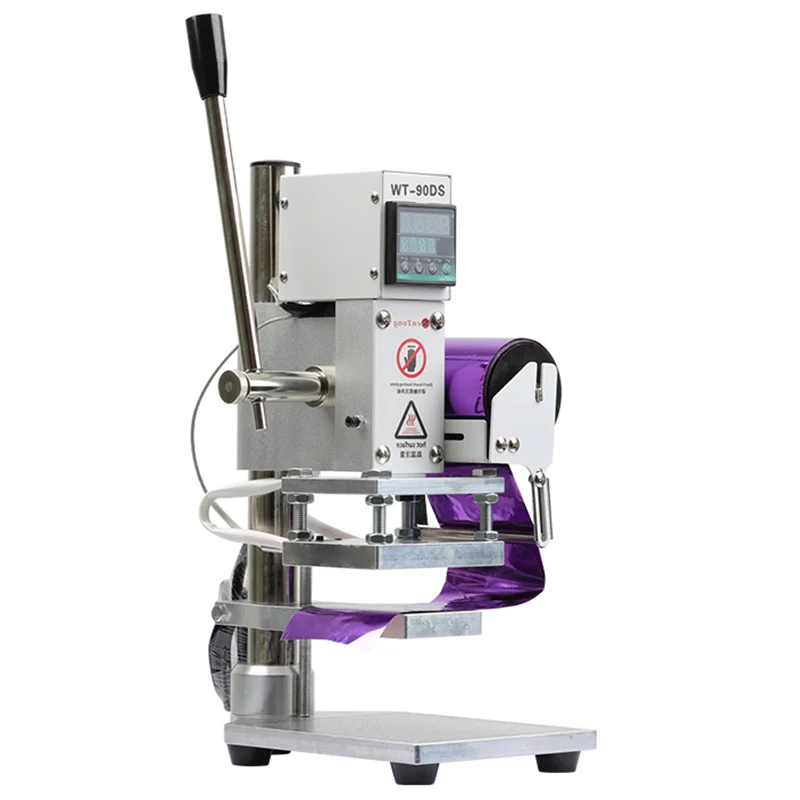
Branding a thin wood piece requires enough heat to reveal fine lines without spreading heat into the surrounding grain. The WT-90DS is a manual hot stamping machine evaluated in a thin-wood branding test at three temperature settings. The comparison provides a documented starting point for craft workshops and small manufacturers considering heated logo or text marking on wood.The supplied report compared
200°C, 290°C, and 350°C with the other test conditions held consistent.
290°C produced the best overall result in that test: the main design and fine lines were visible, color was moderate, edges were reasonably clean, and the wood showed no obvious scorching. The report does not identify a universal wood species or thickness range, so this temperature must not be presented as a setting for all wood products.
Thin-Wood Branding Test Results
| Test temperature | Observed result | Test assessment |
|---|
| 200°C | Pale mark, incomplete areas, and missing fine detail | Too low for the tested setup |
| 290°C | Complete, clear design with balanced color and no obvious scorching | Best result in this test |
| 350°C | Severe charring, dark heat spread, and loss of fine detail | Too high for the tested setup |
The test report recommends beginning near 290°C for a comparable setup and making small adjustments only after checking contact, pressure, and dwell time. Wood species, thickness, moisture, grain, coating, and die geometry all affect the result. Sample each new material batch before production.
Applications
The verified application is heated branding on thin wood. Potential jobs include small wooden tags, craft pieces, packaging components, and logo marks, provided the workpiece dimensions and die fit the machine. These examples are use-case suggestions rather than additional completed tests. Confirm the material, mark size, and required throughput with a sample before selecting the machine configuration.
Process Guidance
- Begin near the 290°C reference only for a setup comparable to the supplied test.
- Keep pressure, dwell time, die, wood thickness, and placement consistent while comparing samples.
- If the mark is faint, first check contact and alignment; avoid a large temperature increase that could scorch the wood.
- If the surrounding area darkens or fine lines blur, reduce heat and review dwell time and pressure.
- Allow for heat build-up during repeated cycles and inspect samples periodically.
- Remove residue from the die and keep the workpiece stable and flat.
- Re-test whenever wood species, moisture, thickness, surface treatment, die, or production rhythm changes.
Specifications
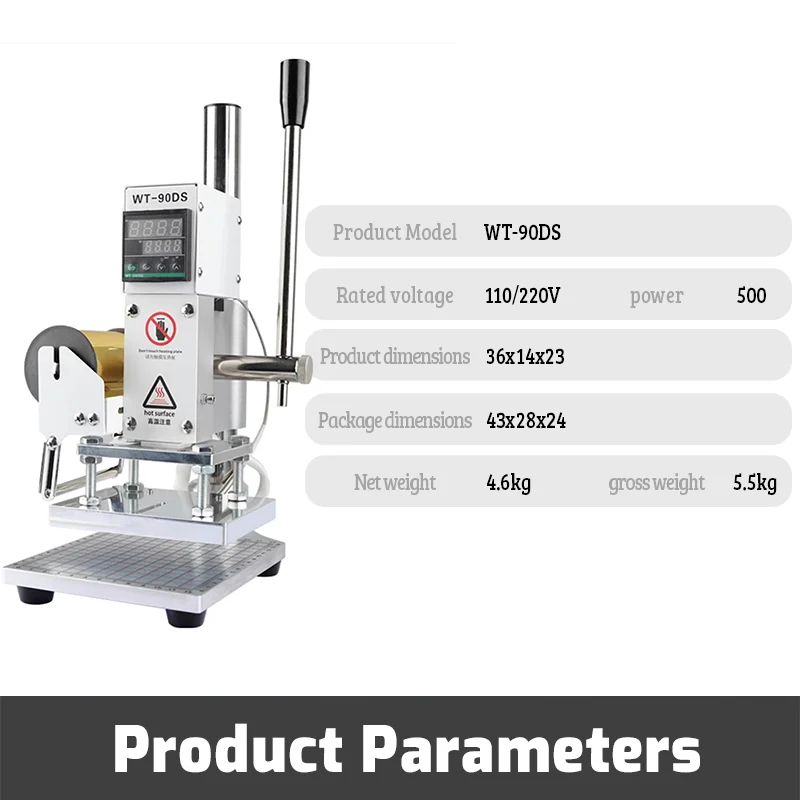
| Paramètre | Confirmed information |
|---|
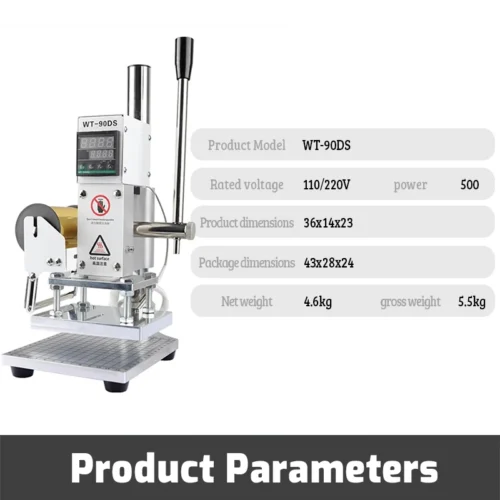
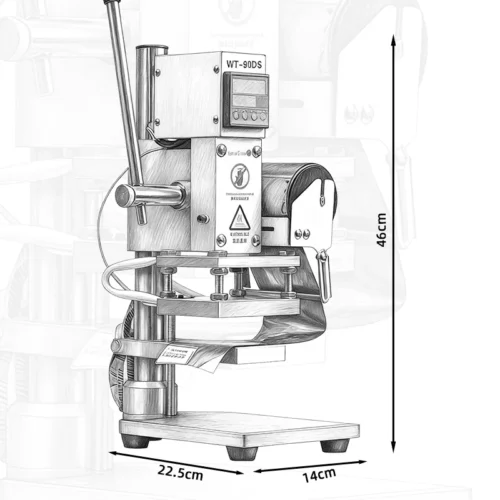
| Modèle | WT-90DS |
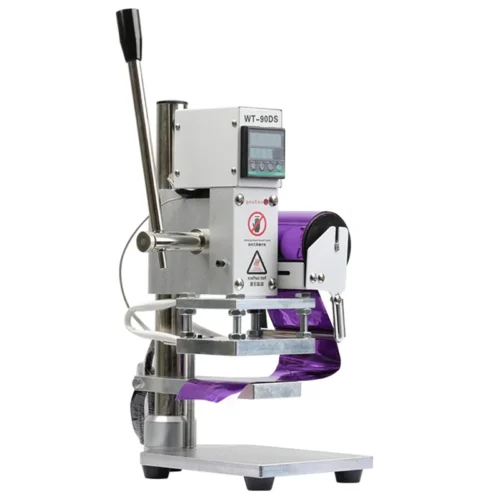
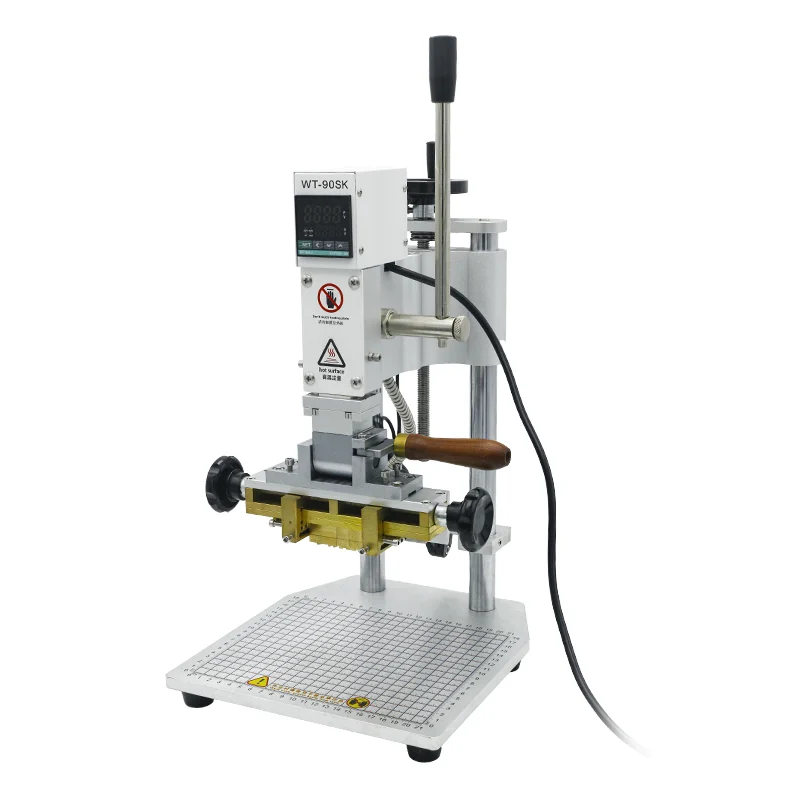
| Opération | Manual press lever |
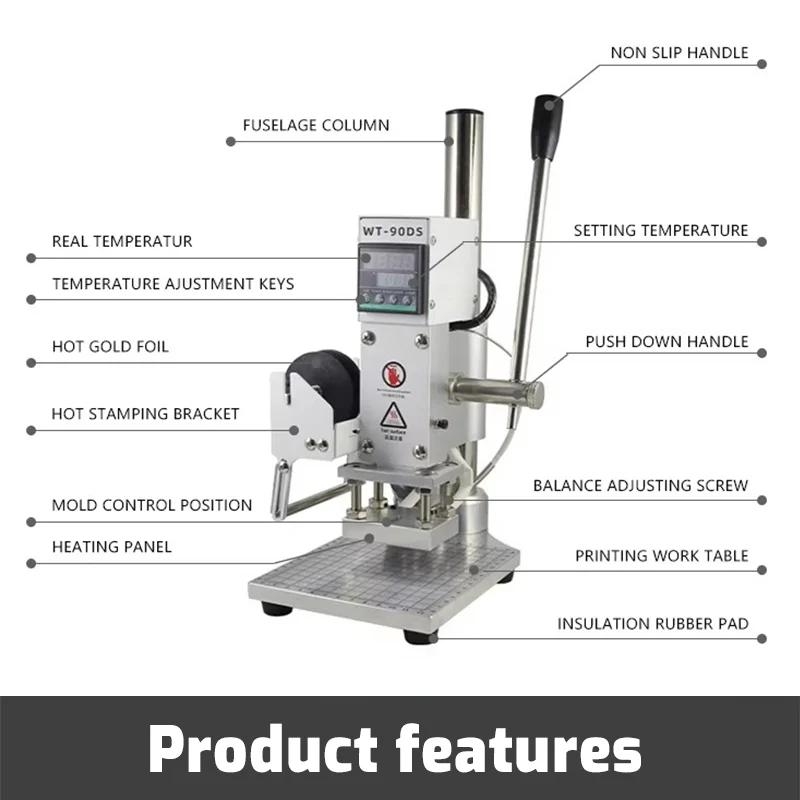
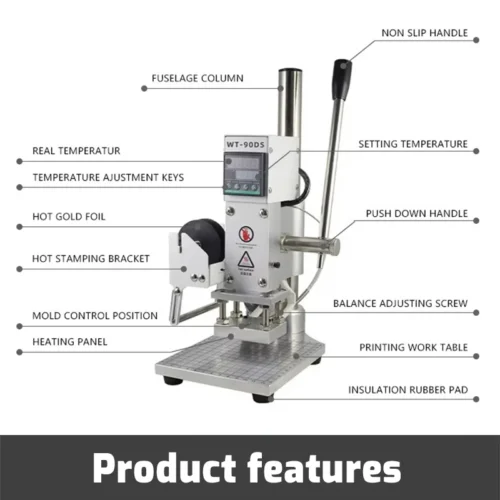
| Support frame | 30 mm hollow stainless steel tube |
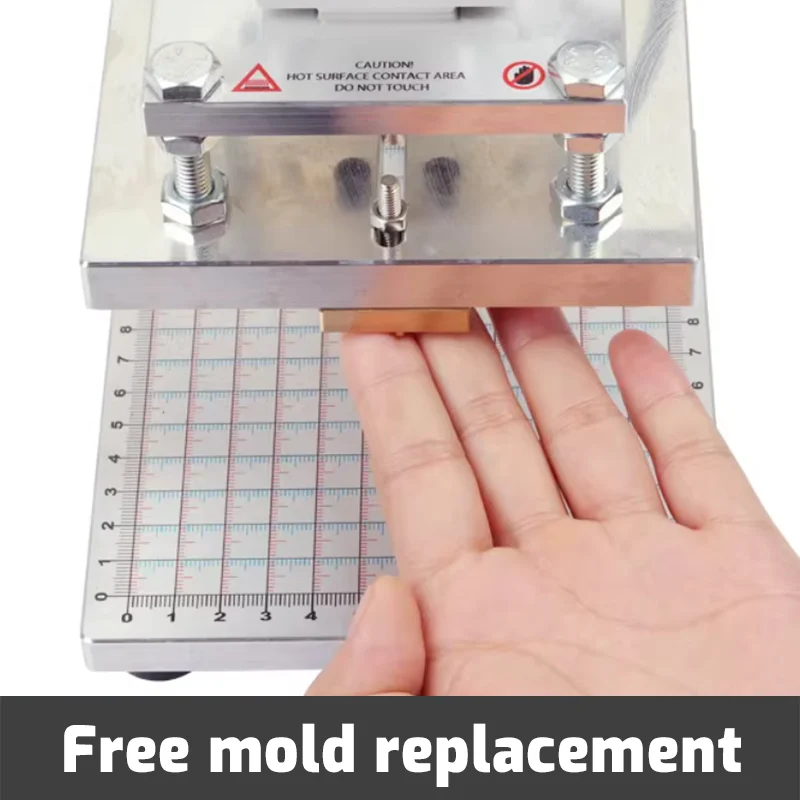
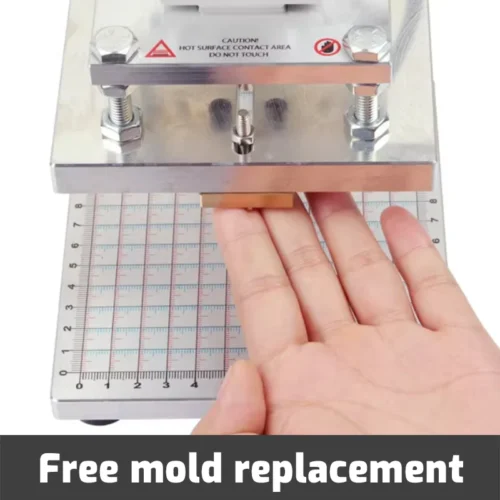
| Optional heating plate sizes | 5 × 7 cm, 8 × 10 cm, 10 × 13 cm |
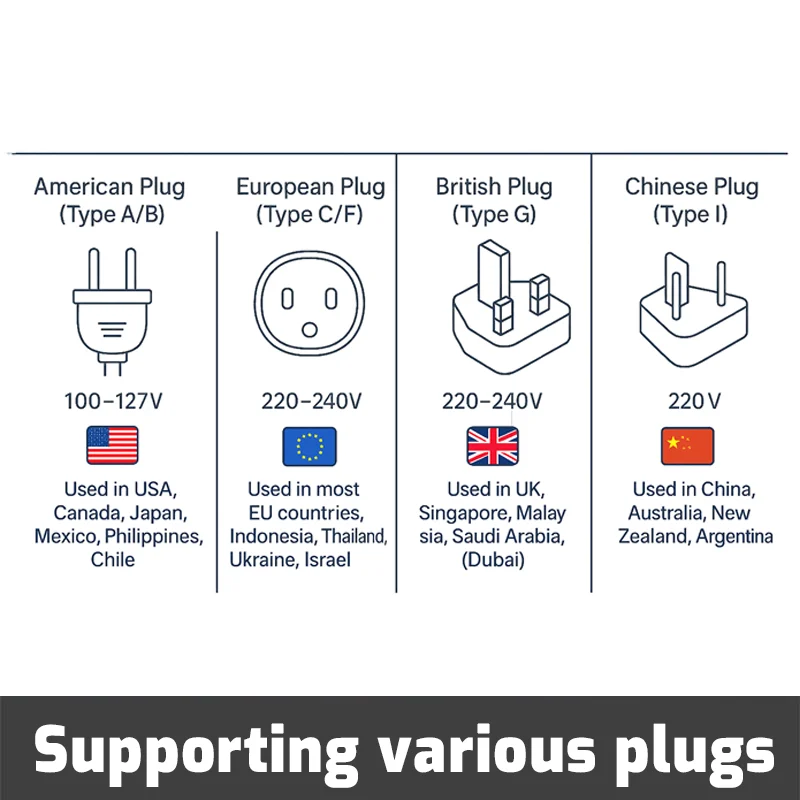
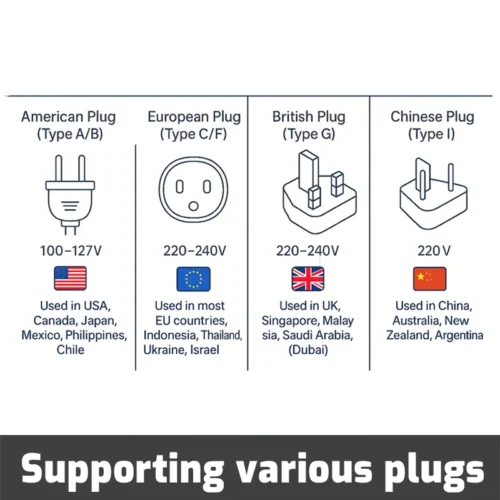
| Operating voltage | 110 V or 220 V version; specify the required version when ordering |
| Puissance | 500 W; 300 W with the 5 × 7 cm heating plate |
| Temperature control | Digital temperature display, 50–350°C |
| Downward stroke | 45 mm |
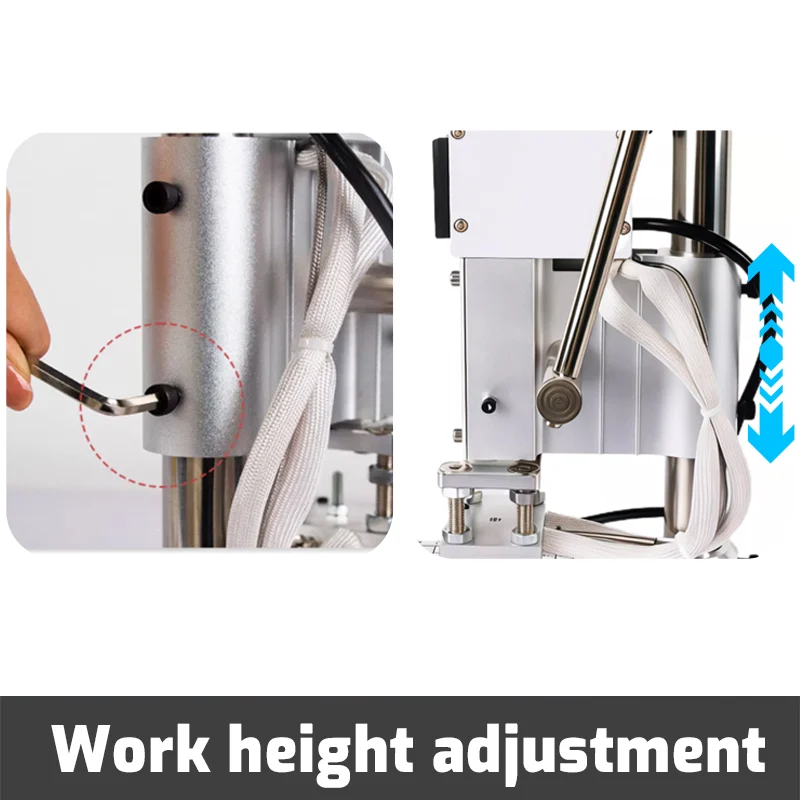
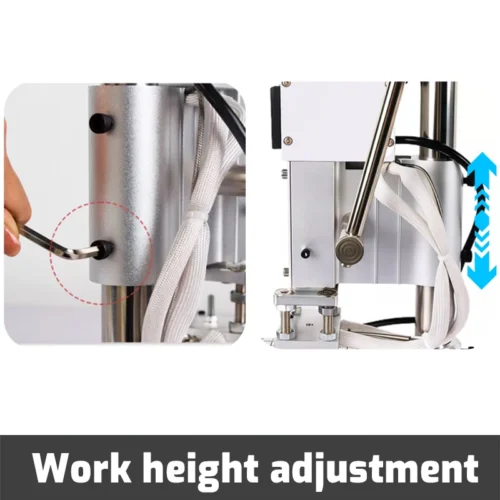
| Height adjustment | Adjustable up to 170 mm (confirm whether this is working clearance before publishing) |
| Worktable | Fixed, 140 × 170 mm |
| Net weight | 4.6 kg |
| Gross weight | 5.5 kg |
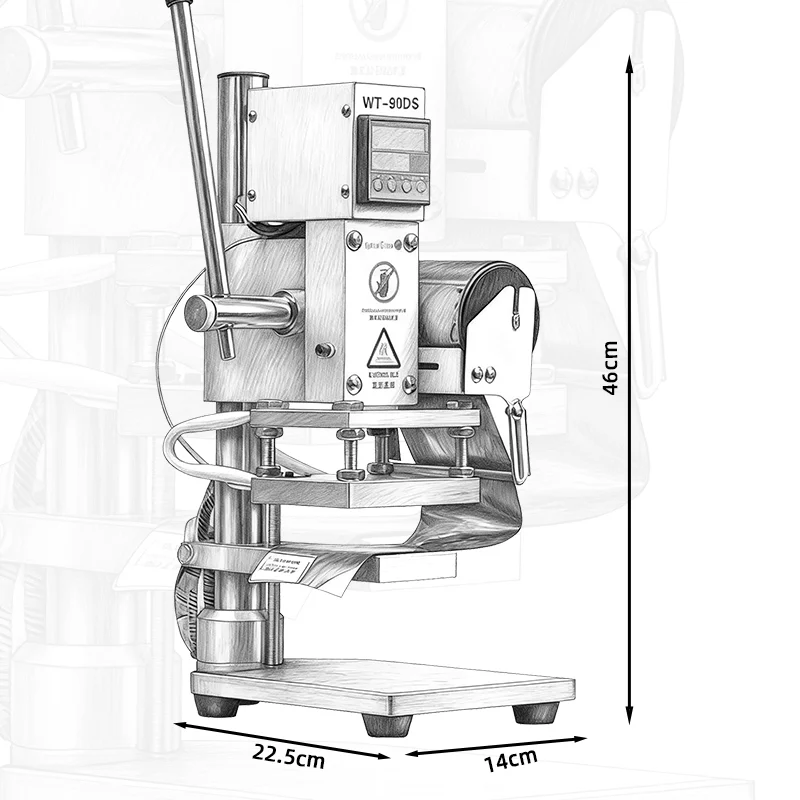
| Machine dimensions | 360 × 140 × 230 mm (confirm width × depth × height order) |
| Package dimensions | 430 × 280 × 240 mm |
| Documented application | Thin-wood branding |
| Tested temperatures | 200°C, 290°C, 350°C |
| Best result in supplied test | 290°C reference temperature |
Questions fréquemment posées
What temperature was best for branding thin wood with the WT-90DS?
The supplied test identified 290°C as the best result among 200°C, 290°C, and 350°C. This applies to the tested wood, die, pressure, and dwell time; different wood may require a new sample test.
Why was 350°C unsuitable in the test?
The report describes pronounced charring and heat spread at 350°C, which darkened surrounding areas and obscured fine details.
Is the WT-90DS a laser engraving replacement?
The report only documents heated die branding on thin wood. It does not compare the process with laser engraving or establish equivalent detail, speed, or materials, so those claims should not be made without a separate evaluation.
Can the WT-90DS stamp every type of wood?
No universal wood range is specified in the supplied report. Species, moisture, thickness, grain, surface finish, die size, and dwell time can change the result. Send a representative sample for evaluation.










 English
 Japanese
 Spanish
 French
 Korean
 German
 Russian